
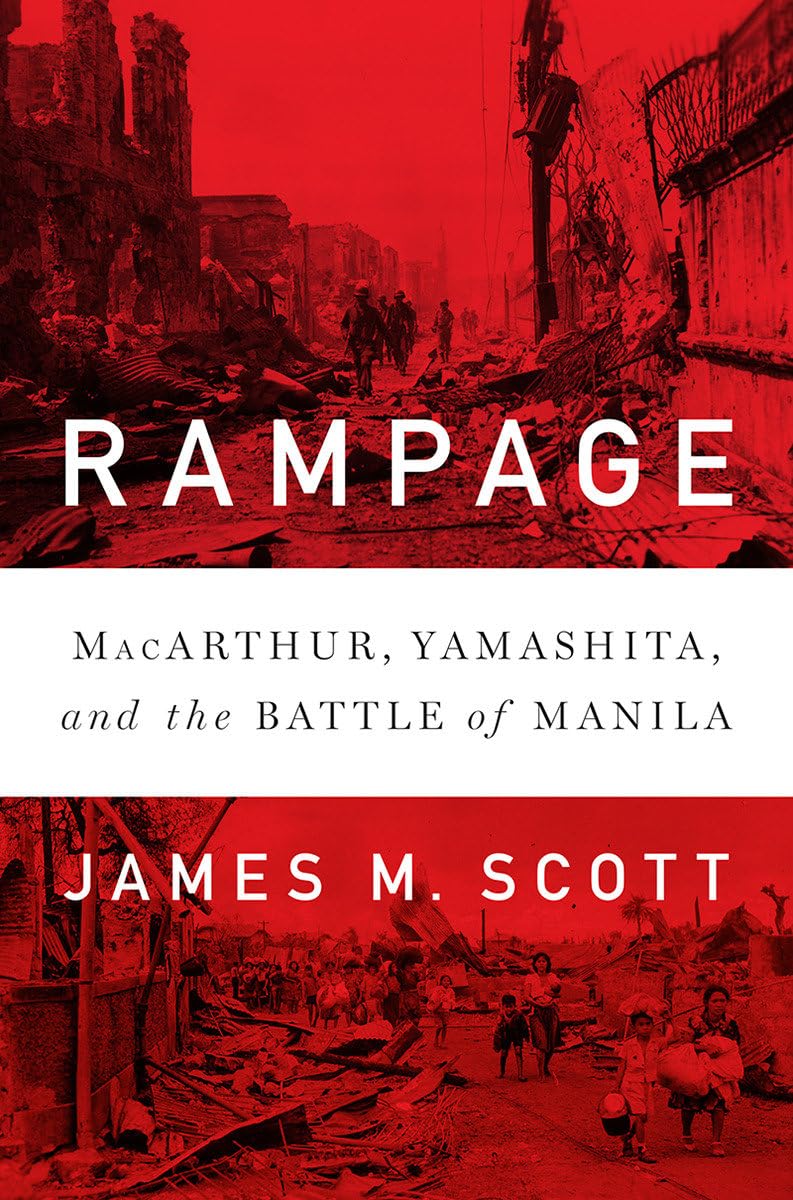
Title
Rampage: Macarthur, Yamashita, And The Battle Of Manila
Sold by Ergodebooks, an authorized reseller.
Returns accepted within 30 days | support@ergodebooks.com
Shipping Information
- Free Standard Shipping — United States only
- Processing Time: 3–5 business days
- Estimated Delivery: 6–10 business days after dispatch
- Double-boxed, fully insured & discreetly packaged
- Tracking number sent via email once dispatched
Returns & Refund
Returns accepted within 30 days of delivery.
Damaged or Defective Item
Free return shipping + replacement or full refund
Wrong Item Received
Free return shipping + replacement or full refund
Change of Mind
Return shipping at customer's expense · 25% restocking fee applies
Payment Option

The Definitive History Of One Of The Most Brutal Campaigns Of The War In The Pacific.Before World War Ii, Manila Was A Slice Of America In Asia, Populated With Elegant Neoclassical Buildings, Spacious Parks, And Home To Thousands Of U.S. Servicemen And Business Executives Who Enjoyed The Relaxed Pace Of The Tropics. The Outbreak Of The War, However, Brought An End To The Good Life. General Douglas Macarthur, Hoping To Protect The Pearl Of The Orient, Declared The Philippine Capital An Open City And Evacuated His Forces. The Japanese Seized Manila On January 2, 1942, Rounding Up And Interning Thousands Of Americans.Macarthur, Who Escaped Soon After To Australia, Famously Vowed To Return. For Nearly Three Years, He Clawed His Way North, Obsessed With Redeeming His Promise And Turning His Earlier Defeat Into Victory. By Early 1945, He Prepared To Liberate Manila, A City Whose Residents By Then Faced Widespread Starvation. Convinced The Japanese Would Abandon The City As He Did, Macarthur Planned A Victory Parade Down Dewey Boulevard. But The Enemy Had Other Plans. Determined To Fight To The Death, Japanese Marines Barricaded Intersections, Converted Buildings Into Fortresses, And Boobytrapped Stores, Graveyards, And Even Dead Bodies.The Twentynineday Battle To Liberate Manila Resulted In The Catastrophic Destruction Of The City And A Rampage By Japanese Forces That Brutalized The Civilian Population. Landmarks Were Demolished, Houses Were Torched, Suspected Resistance Fighters Were Tortured And Killed, Countless Women Were Raped, And Their Husbands And Children Were Murdered. American Troops Had No Choice But To Battle The Enemy, Floor By Floor And Even Room By Room, Through Schools, Hospitals, And Even Sports Stadiums. In The End, An Estimated 100,000 Civilians Lost Their Lives In A Massacre As Heinous As The Rape Of Nanking.Based On Extensive Research In The United States And The Philippines, Including Warcrimes Testimony, Afteraction Reports, And Survivor Interviews, Rampage Recounts One Of The Most Heartbreaking Chapters Of Pacific War History. 16 Pages Of Illustrations; 10 Maps
⚠️ WARNING (California Proposition 65):
This product may contain chemicals known to the State of California to cause cancer, birth defects, or other reproductive harm.
For more information, please visit www.P65Warnings.ca.gov.
- Q: What is the page count of this book? A: This book contains six hundred forty pages. It provides an in-depth exploration of a significant historical event during World War II.
- Q: What are the dimensions of this book? A: The book measures six and a half inches in length, one point seven inches in width, and nine and a half inches in height. These dimensions make it a standard hardcover size.
- Q: What binding type does this book have? A: This book is bound in hardcover. This type of binding ensures durability and a premium feel for readers.
- Q: Who is the author of this book? A: The author of this book is James M. Scott. He is known for his thorough research and engaging writing style.
- Q: What genre does this book belong to? A: This book is categorized as historical non-fiction. It focuses on the events of World War II in the Pacific.
- Q: Is this book suitable for young readers? A: No, this book is not suitable for young readers. The content addresses graphic historical events and themes that may not be appropriate for children.
- Q: What is the main theme of this book? A: The main theme of this book is the brutal Battle of Manila during World War II. It highlights the impact on civilians and military strategies.
- Q: How should I read this book? A: You can read this book at your own pace. It is recommended for those interested in military history and the Pacific War.
- Q: What is the recommended reading level for this book? A: This book is recommended for adult readers. It contains complex themes and detailed historical accounts.
- Q: How do I care for this hardcover book? A: To care for this hardcover book, store it upright in a cool, dry place. Avoid exposure to direct sunlight to preserve its condition.
- Q: Is this book safe to store with other books? A: Yes, this book is safe to store with other books. Ensure it is kept in a stable position to prevent damage.
- Q: What should I do if the book arrives damaged? A: If the book arrives damaged, you should contact the seller for a return or exchange. Most sellers have policies in place for damaged items.
- Q: Is there a warranty for this book? A: No, books typically do not come with warranties. However, check the seller's return policy for any guarantees.
- Q: Are there illustrations in this book? A: Yes, there are sixteen pages of illustrations included in the book. These visuals enhance the reading experience.
- Q: How many maps are included in this book? A: There are ten maps included in this book. They provide geographical context to the events described.
- Q: What type of research supports this book's content? A: The book is based on extensive research, including war-crimes testimony and survivor interviews. This adds credibility to its historical narrative.