If you have any questions, you are always welcome to contact us. We'll get back to you as soon as possible, withing 24 hours on weekdays.
Customer service
All questions about your order, return and delivery must be sent to our customer service team by e-mail at yourstore@yourdomain.com
Sale & Press
If you are interested in selling our products, need more information about our brand or wish to make a collaboration, please contact us at press@yourdomain.com
Help
If you have any questions, you are always welcome to contact us. We'll get back to you as soon as possible, withing 24 hours on weekdays.
Customer service
All questions about your order, return and delivery must be sent to our customer service team by e-mail at yourstore@yourdomain.com
Sale & Press
If you are interested in selling our products, need more information about our brand or wish to make a collaboration, please contact us at press@yourdomain.com
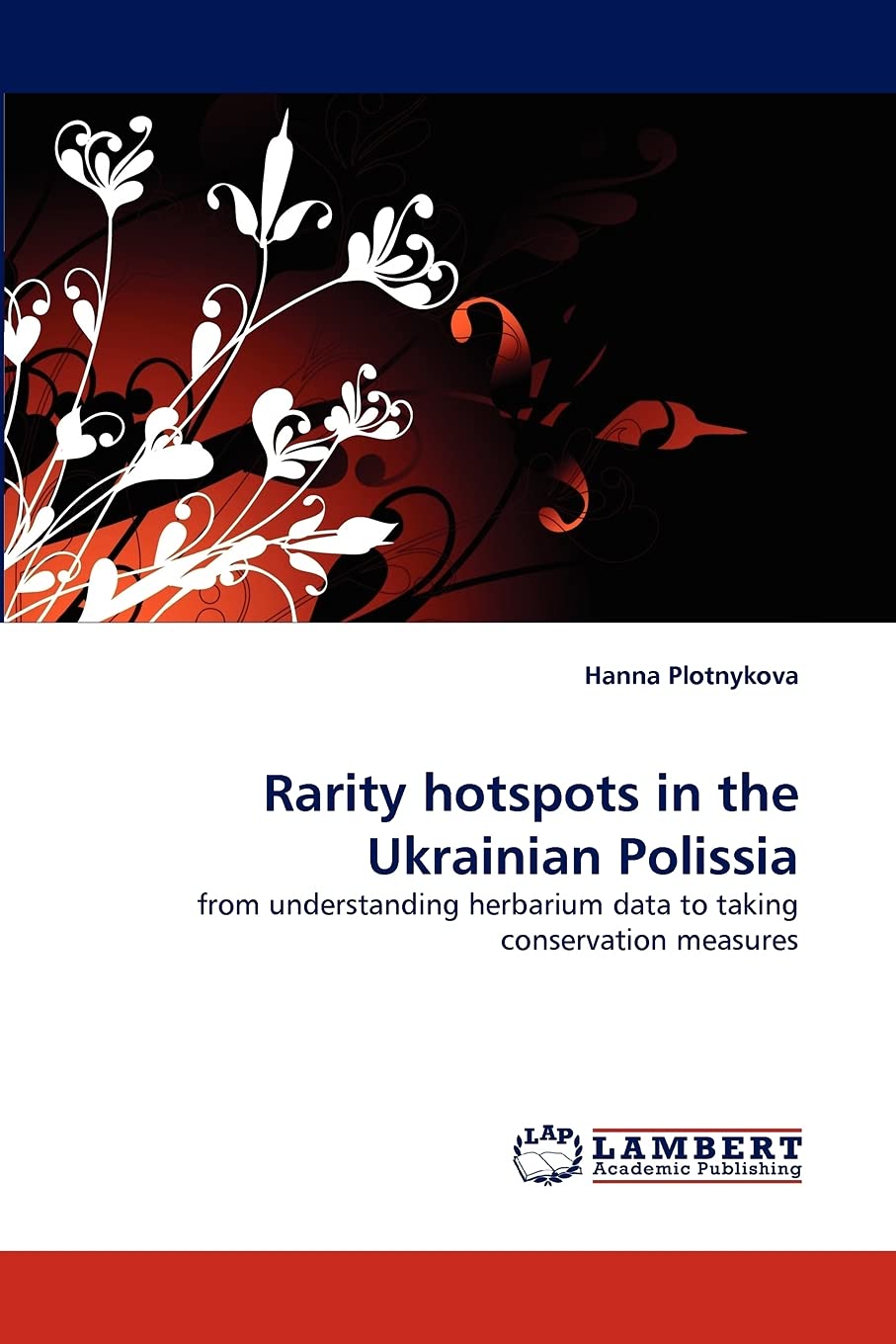
The aim of this study is to analyze how herbarium data from the National Herbarium of Ukraine could be used for conservation of rare plants. GISbased analysis of the density of rare plant species and the level of biodiversity knowledge for the Ukrainian Polissia was performed and 11 experts were interviewed. During two timeperiods (1945 1986 and 19872006) rarity hotspots did not overlap. Positive correlation between species density and biodiversity knowledge was found. Factors (proximity to protected areas, cities and roads) that could encourage scientific research in a certain area were assessed. It was found that state and local large protected areas are more researched than small protected areas. Such problems as lack of botanists, insufficient number of botanical field trips, location of botanical data in different sources and lack of electronic available datasets cause gaps in biodiversity knowledge. Therefore, digitizing herbarium specimens, creation of electronic data sets and involvement of local communities into collection process should be a national priority.
⚠️ WARNING (California Proposition 65):
This product may contain chemicals known to the State of California to cause cancer,
birth defects, or other reproductive harm.
For MAP (Minimum Advertised Price) violations and Intellectual Property (IP) or Trademark concerns, please contact:
support@ergodebooks.com
⚠️ California Proposition 65 Warning: Some products sold on this website may expose you to chemicals known to the State of California to cause cancer, birth defects, or other reproductive harm. For more information, visit www.P65Warnings.ca.gov.