
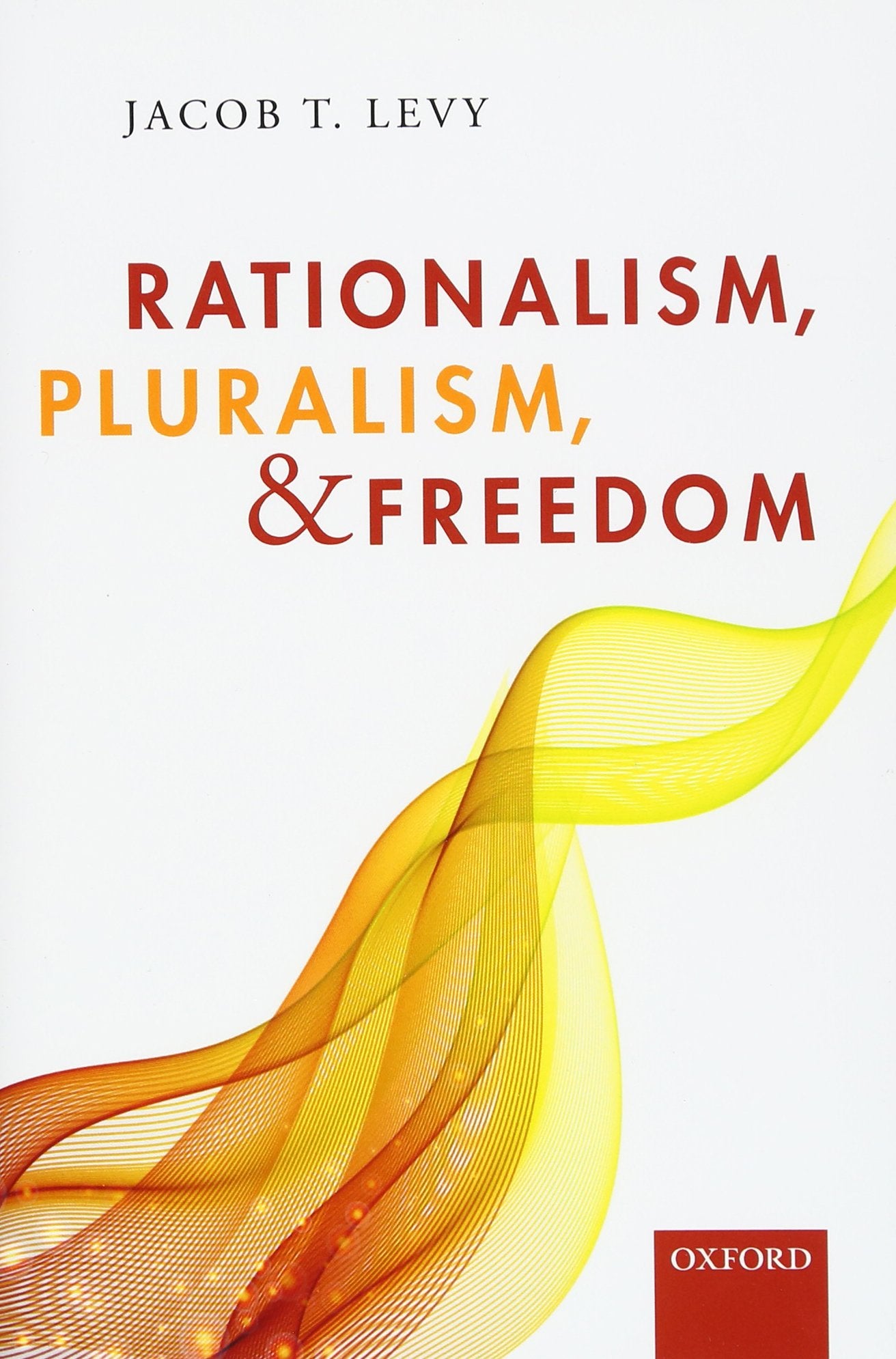
Title
Rationalism, Pluralism, And Freedom,Used
Sold by Ergodebooks, an authorized reseller.
Returns accepted within 30 days | support@ergodebooks.com
Shipping Information
- Free Standard Shipping — United States only
- Processing Time: 3–5 business days
- Estimated Delivery: 6–10 business days after dispatch
- Double-boxed, fully insured & discreetly packaged
- Tracking number sent via email once dispatched
Returns & Refund
Returns accepted within 30 days of delivery.
Damaged or Defective Item
Free return shipping + replacement or full refund
Wrong Item Received
Free return shipping + replacement or full refund
Change of Mind
Return shipping at customer's expense · 25% restocking fee applies
Payment Option

Intermediate groups voluntary associations, churches, ethnocultural groups, universities, and morecan both protect threaten individual liberty. The same is true for centralized state action against such groups. This wideranging book argues that, both normatively and historically, liberal political thought rests on a deep tension between a rationalist suspicion of intermediate and local group power, and a pluralism favorable toward intermediate group life, and preserving the bulk of its suspicion for the centralizing state.The book studies this tension using tools from the history of political thought, normative political philosophy, law, and social theory. In the process, it retells the history of liberal thought and practice in a way that moves from the birth of intermediacy in the High Middle Ages to the British Pluralists of the twentieth century. In particular it restores centrality to the tradition of ancient constitutionalism and to Montesquieu, arguing that social contract theory's contributions to the development of liberal thought have been mistaken for the whole tradition.It discusses the real threats to freedom posed both by local group life and by state centralization, the ways in which those threats aggravate each other. Though the state and intermediate groups can check and balance each other in ways that protect freedom, they may also aggravate each other's worst tendencies. Likewise, the elements of liberal thought concerned with the threats from each cannot necessarily be combined into a single satisfactory theory of freedom. While the book frequently reconstructs and defends pluralism, it ultimately argues that the tension is irreconcilable and not susceptible of harmonization or synthesis; it must be lived with, not overcome.
⚠️ WARNING (California Proposition 65):
This product may contain chemicals known to the State of California to cause cancer, birth defects, or other reproductive harm.
For more information, please visit www.P65Warnings.ca.gov.