
Title
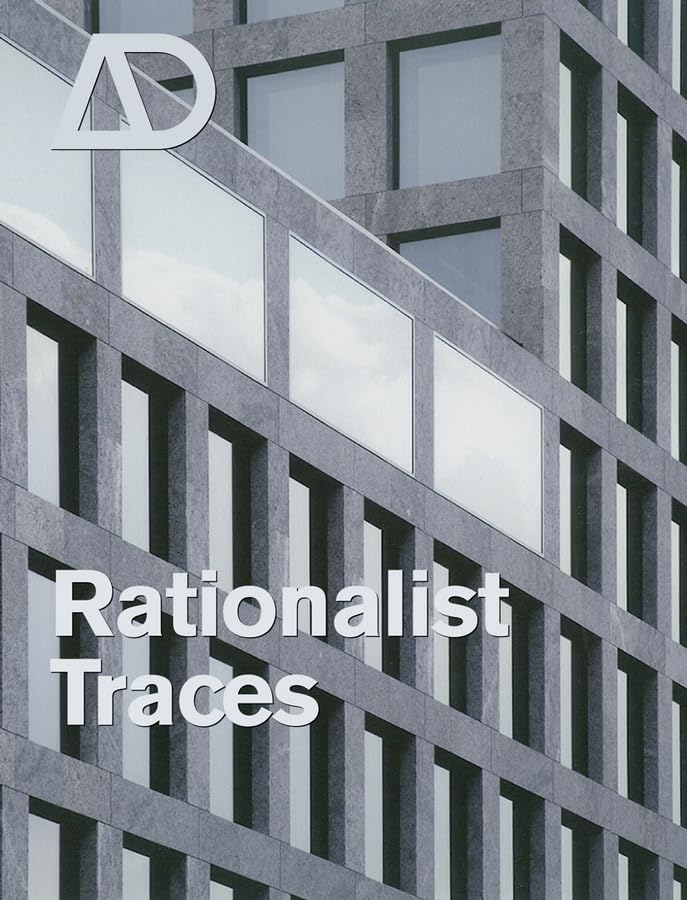
Rationalist Traces (Architectural Design),Used
Sold by Ergodebooks, an authorized reseller.
Returns accepted within 30 days | support@ergodebooks.com
Shipping Information
- Free Standard Shipping — United States only
- Processing Time: 1–3 business days
- Estimated Delivery: 3–5 business days after dispatch
- Double-boxed, fully insured & discreetly packaged
- Tracking number sent via email once dispatched
- Orders over $250 require signature upon delivery. Taxes calculated at checkout.
Returns & Refund
Returns accepted within 30 days of delivery.
Damaged or Defective Item
Free return shipping + replacement or full refund
Wrong Item Received
Free return shipping + replacement or full refund
Change of Mind
Return shipping at customer's expense · 25% restocking fee applies
Payment Option

From the Inside Flap Modern European architecture has been characterised by a strong undercurrent of rationalist thought. Rationalist Traces aims to examine this legacy by establishing a crosssection of contemporary European architecture, placed in selected national contexts by critics including kos Moravnszky and Josep Maria Montaner. Subsequent interviews discuss the theoretical contributions of Giorgio Grassi and OM Ungers, and a survey of Max Dudler and De Architekten Cie.s work sets out a consistency at one remove from avantgarde spectacle or everyday expediency. In Germany Rationalism offers a considered representation of state institutions, while elsewhere outstanding work reveals different approaches to rationality in architecture often recalling canonical Modernism or the Rational Architecture of the later postwar period. Whether evident in patterns of thinking, a particular formal repertoire, a prevailing consistency or exemplified in individual buildings, this relationship informs the mature work of Patrick Berger, Claus en Kaan Architecten, Carlos Ferrater, Cino Zucchi or Hans Kollhoff. The buildings and projects of a younger generation Javier Garca Solera, GWJ Architekten AG, biq, Andrea Bassi or Beniamino Servino present a Rationalism less conditioned by a concern to promote a unifying aesthetic. While often sharing a deliberate economy of means, or a sensual sobriety, they present a more oblique or distanced relationship with the defining work of the 20th century. Product Description Modern European architecture has been characterised by a strong undercurrent of rationalist thought. Rationalist Traces aims to examine this legacy by establishing a crosssection of contemporary European architecture, placed in selected national contexts by critics including kos Moravnszky and Josep Maria Montaner. Subsequent interviews discuss the theoretical contributions of Giorgio Grassi and OM Ungers, and a survey of Max Dudler and De Architekten Cie.'s work sets out a consistency at one remove from avantgarde spectacle or everyday expediency. In Germany Rationalism offers a considered representation of state institutions, while elsewhere outstanding work reveals different approaches to rationality in architecture often recalling canonical Modernism or the 'Rational Architecture' of the later postwar period. Whether evident in patterns of thinking, a particular formal repertoire, a prevailing consistency or exemplified in individual buildings, this relationship informs the mature work of Patrick Berger, Claus en Kaan Architecten, Carlos Ferrater, Cino Zucchi or Hans Kollhoff. The buildings and projects of a younger generation Javier Garca Solera, GWJ Architekten AG, biq, Andrea Bassi or Beniamino Servino present a Rationalism less conditioned by a concern to promote a unifying aesthetic. While often sharing a deliberate economy of means, or a sensual sobriety, they present a more oblique or distanced relationship with the defining work of the 20th century. From the Back Cover Modern European architecture has been characterised by a strong undercurrent of rationalist thought. Rationalist Traces aims to examine this legacy by establishing a crosssection of contemporary European architecture, placed in selected national contexts by critics including kos Moravnszky and Josep Maria Montaner. Subsequent interviews discuss the theoretical contributions of Giorgio Grassi and OM Ungers, and a survey of Max Dudler and De Architekten Cie.s work sets out a consistency at one remove from avantgarde spectacle or everyday expediency. In Germany Rationalism offers a considered representation of state institutions, while elsewhere outstanding work reveals different approaches to rationality in architecture often recalling canonical Modernism or the Rational Architecture of the later postwar period. Whether evident in patterns of thinking, a particular formal repertoire, a prevailing consisten
⚠️ WARNING (California Proposition 65):
This product may contain chemicals known to the State of California to cause cancer, birth defects, or other reproductive harm.
For more information, please visit www.P65Warnings.ca.gov.