
Title
Rationality and the Reflective Mind,Used
Sold by Ergodebooks, an authorized reseller.
Returns accepted within 30 days | support@ergodebooks.com
Shipping Information
- Free Standard Shipping — United States only
- Processing Time: 3–5 business days
- Estimated Delivery: 6–10 business days after dispatch
- Double-boxed, fully insured & discreetly packaged
- Tracking number sent via email once dispatched
Returns & Refund
Returns accepted within 30 days of delivery.
Damaged or Defective Item
Free return shipping + replacement or full refund
Wrong Item Received
Free return shipping + replacement or full refund
Change of Mind
Return shipping at customer's expense · 25% restocking fee applies
Payment Option

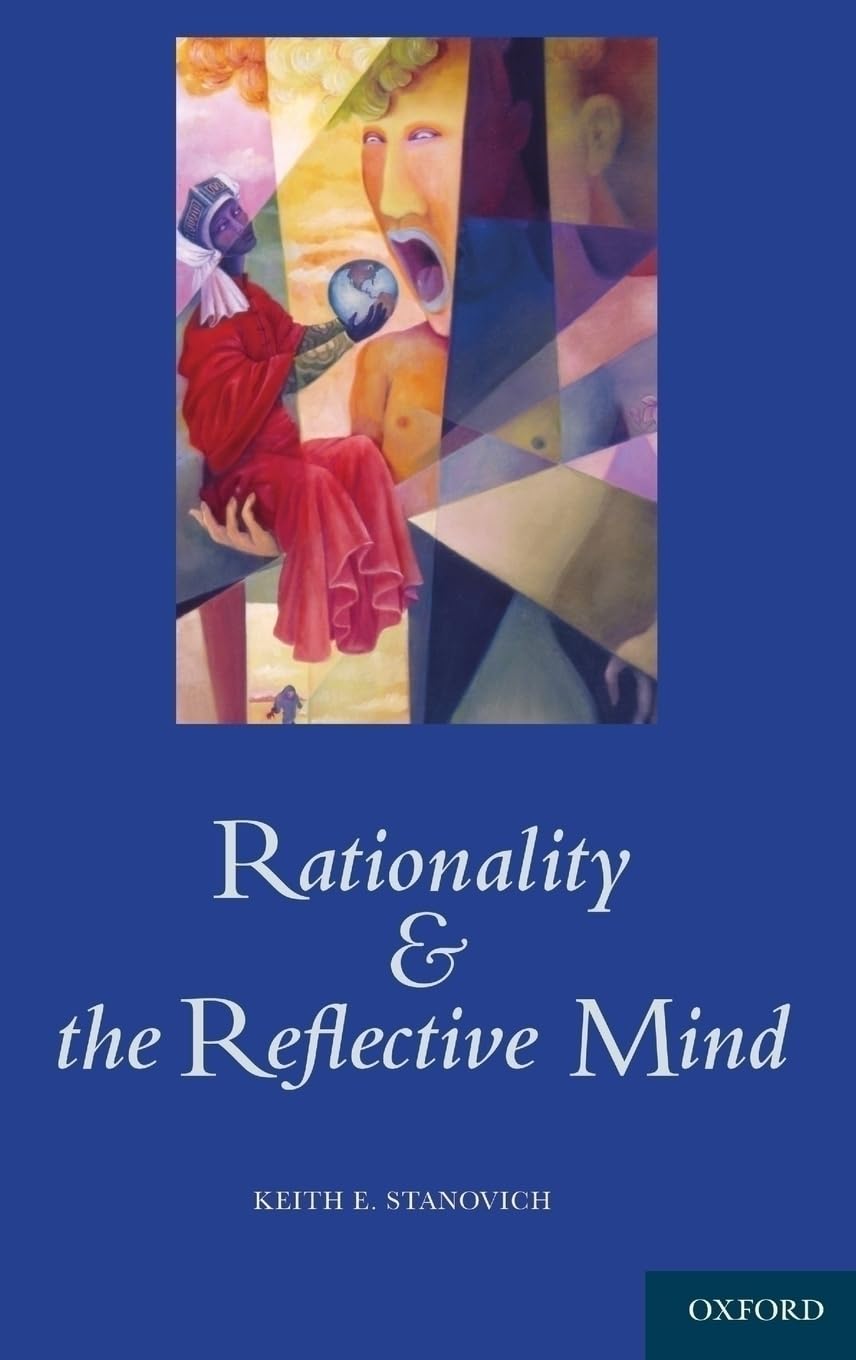
In Rationality and the Reflective Mind, Keith Stanovich attempts to resolve the Great Rationality Debate in cognitive sciencethe debate about how much irrationality to ascribe to human cognition. He shows how the insights of dualprocess theory and evolutionary psychology can be combined to explain why humans are sometimes irrational even though they possess remarkably adaptive cognitive machinery. Stanovich argues that to fully characterize differences in rational thinking, we need to replace dualprocess theories with tripartite models of cognition. Using a unique individual differences approach, he shows that the traditional second system (System 2) of dualprocess theory must be further divided into the reflective mind and the algorithmic mind. Distinguishing them will allow us to better appreciate the significant differences in their key functions: The key function of the reflective mind is to detect the need to interrupt autonomous processing and to begin simulation activities, whereas that of the algorithmic mind is to sustain the processing of decoupled secondary representations in cognitive simulation.Stanovich then uses this algorithmic/reflective distinction to develop a taxonomy of cognitive errors made on tasks in the heuristics and biases literature. He presents the empirical data to show that the tendency to make these thinking errors is not highly related to intelligence. Using his tripartite model of cognition, Stanovich shows how, when both are properly defined, rationality is a more encompassing construct than intelligence, and that IQ tests fail to assess individual differences in rational thought. He then goes on to discuss the types of thinking processes that would be measured if rational thinking were to be assessed as IQ has been.
⚠️ WARNING (California Proposition 65):
This product may contain chemicals known to the State of California to cause cancer, birth defects, or other reproductive harm.
For more information, please visit www.P65Warnings.ca.gov.