If you have any questions, you are always welcome to contact us. We'll get back to you as soon as possible, withing 24 hours on weekdays.
Customer service
All questions about your order, return and delivery must be sent to our customer service team by e-mail at yourstore@yourdomain.com
Sale & Press
If you are interested in selling our products, need more information about our brand or wish to make a collaboration, please contact us at press@yourdomain.com
Help
If you have any questions, you are always welcome to contact us. We'll get back to you as soon as possible, withing 24 hours on weekdays.
Customer service
All questions about your order, return and delivery must be sent to our customer service team by e-mail at yourstore@yourdomain.com
Sale & Press
If you are interested in selling our products, need more information about our brand or wish to make a collaboration, please contact us at press@yourdomain.com
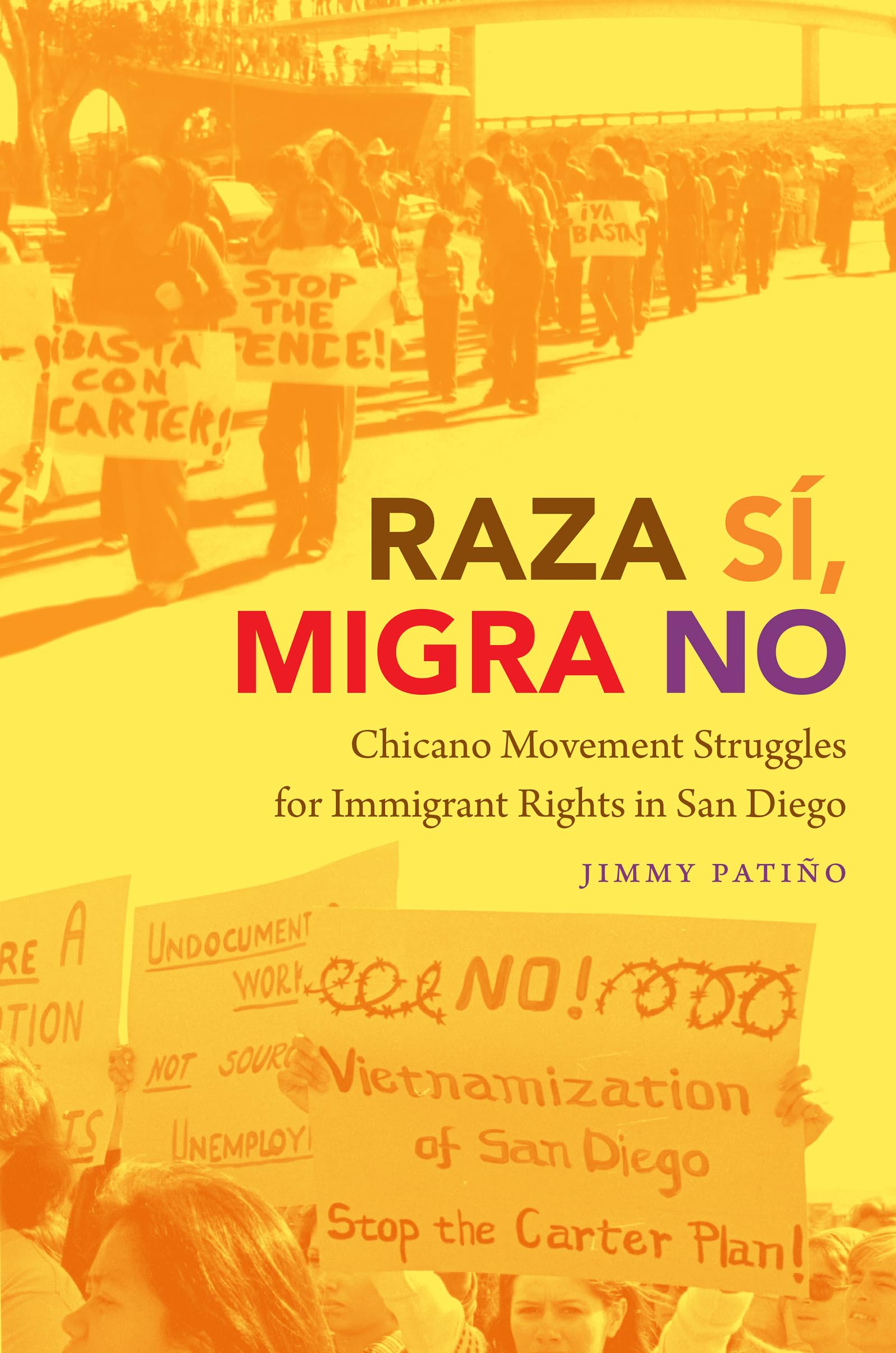
As immigration from Mexico to the United States grew through the 1970s and 1980s, the Border Patrol, police, and other state agents exerted increasing violence against ethnic Mexicans in San Diego's volatile border region. In response, many San Diego activists rallied around the leadership of the smallscale print shop owner Herman Baca in the Chicano movement to empower Mexican Americans through Chicano selfdetermination. The combination of increasing repression and Chicano activism gradually produced a new conception of ethnic and racial community that included both established Mexican Americans and new Mexican immigrants. Here, Jimmy Patino narrates the rise of this Chicano/Mexicano consciousness and the dawning awareness that Mexican Americans and Mexicans would have to work together to fight border enforcement policies that subjected Latinos of all statuses to legal violence.By placing the Chicano and Latino civil rights struggle on explicitly transnational terrain, Patino fundamentally reorients the understanding of the Chicano movement. Ultimately, Patino tells the story of how Chicano/Mexicano politics articulated an 'abolitionist' position on immigrationgoing beyond the agreed upon assumptions shared by liberals and conservatives alike that deportations are inherent to any solutions to the still burgeoning immigration debate.
⚠️ WARNING (California Proposition 65):
This product may contain chemicals known to the State of California to cause cancer,
birth defects, or other reproductive harm.
For MAP (Minimum Advertised Price) violations and Intellectual Property (IP) or Trademark concerns, please contact:
support@ergodebooks.com
⚠️ California Proposition 65 Warning: Some products sold on this website may expose you to chemicals known to the State of California to cause cancer, birth defects, or other reproductive harm. For more information, visit www.P65Warnings.ca.gov.