
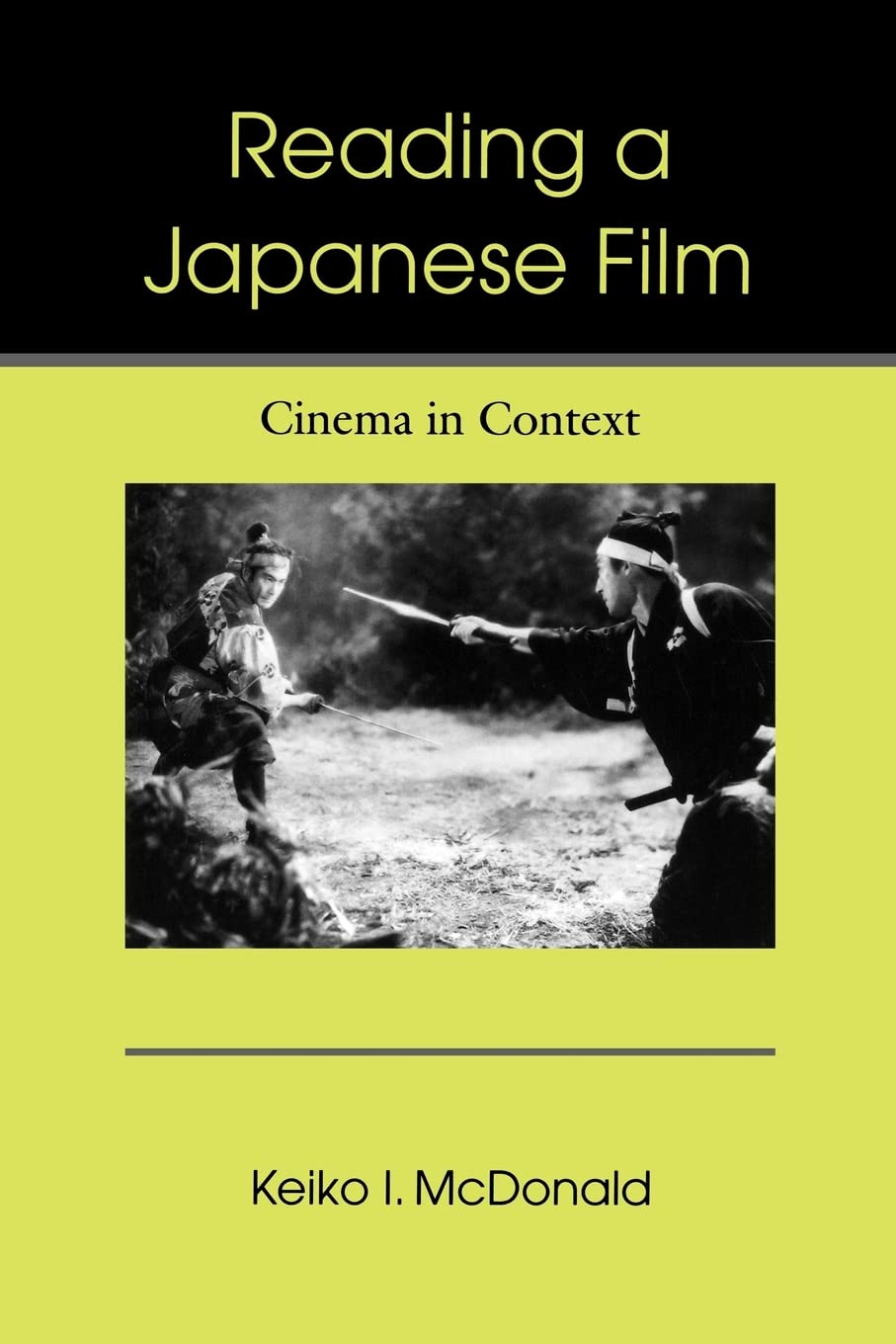
Title
Reading A Japanese Film: Cinema In Context,New
Sold by Ergodebooks, an authorized reseller.
Returns accepted within 30 days | support@ergodebooks.com
Shipping Information
- Free Standard Shipping — United States only
- Processing Time: 3–5 business days
- Estimated Delivery: 6–10 business days after dispatch
- Double-boxed, fully insured & discreetly packaged
- Tracking number sent via email once dispatched
Returns & Refund
Returns accepted within 30 days of delivery.
Damaged or Defective Item
Free return shipping + replacement or full refund
Wrong Item Received
Free return shipping + replacement or full refund
Change of Mind
Return shipping at customer's expense · 25% restocking fee applies
Payment Option

Reading A Japanese Film, Written By A Pioneer Of Japanese Film Studies In The United States, Provides Viewers New To Japanese Cinema With The Necessary Tools To Construct A Deeper Understanding Of Some Of The Most Critically Acclaimed And Thoroughly Entertaining Films Ever Made. In Her Introduction, Keiko Mcdonald Presents A Historical Overview And Outlines A Unified Approach To Film Analysis. Sixteen 'Readings' Of Films Currently Available On Dvd With English Subtitles Put Theory Into Practice As She Considers A Wide Range Of Work, From Familiar Classics By Ozu And Kurosawa To The Films Of A Younger Generation Of Directors.
⚠️ WARNING (California Proposition 65):
This product may contain chemicals known to the State of California to cause cancer, birth defects, or other reproductive harm.
For more information, please visit www.P65Warnings.ca.gov.
- Q: What are the dimensions of the book? A: The book measures six point four two inches in length, zero point seven six inches in width, and eight point nine four inches in height.
- Q: How many pages does the book have? A: The book contains three hundred twelve pages, providing a comprehensive exploration of Japanese cinema.
- Q: What is the binding type of the book? A: The book features a paperback binding, making it lightweight and easy to handle.
- Q: How do I approach reading this book? A: To use this book effectively, read it alongside the films it discusses, as it provides context and analysis for each.
- Q: Is this book suitable for beginners in film studies? A: Yes, this book is suitable for beginners as it offers essential tools for understanding Japanese cinema.
- Q: What age group is this book intended for? A: This book is intended for adults and older teens interested in film studies and Japanese cinema.
- Q: How should I care for this book? A: To keep the book in good condition, store it in a cool, dry place and avoid exposing it to direct sunlight.
- Q: Can I clean the book if it gets dirty? A: Yes, you can gently wipe the cover with a dry cloth to remove dust and fingerprints.
- Q: How should I store the book? A: Store the book upright on a shelf to prevent warping and damage to the spine.
- Q: Is this book a good choice for film students? A: Yes, this book is an excellent choice for film students as it combines theory with practical analysis of films.
- Q: How does this book compare to other film studies texts? A: This book is unique as it focuses specifically on Japanese cinema, providing a distinct cultural perspective.
- Q: Is this book appropriate for casual readers? A: Yes, casual readers interested in cinema will find valuable insights in this book about Japanese films.
- Q: What if I receive a damaged copy of the book? A: If you receive a damaged copy, contact the seller for a return or replacement as per their return policy.
- Q: Are there any special instructions for using this book? A: No special instructions are needed, but viewing the recommended films while reading can enhance understanding.
- Q: Can I return this book if I'm not satisfied? A: Yes, you can return the book within the seller's specified return period if you're not satisfied.
- Q: What if I have questions while reading the book? A: Feel free to seek answers online or in film study groups to enrich your understanding of the material.