If you have any questions, you are always welcome to contact us. We'll get back to you as soon as possible, withing 24 hours on weekdays.
Customer service
All questions about your order, return and delivery must be sent to our customer service team by e-mail at yourstore@yourdomain.com
Sale & Press
If you are interested in selling our products, need more information about our brand or wish to make a collaboration, please contact us at press@yourdomain.com
Help
If you have any questions, you are always welcome to contact us. We'll get back to you as soon as possible, withing 24 hours on weekdays.
Customer service
All questions about your order, return and delivery must be sent to our customer service team by e-mail at yourstore@yourdomain.com
Sale & Press
If you are interested in selling our products, need more information about our brand or wish to make a collaboration, please contact us at press@yourdomain.com
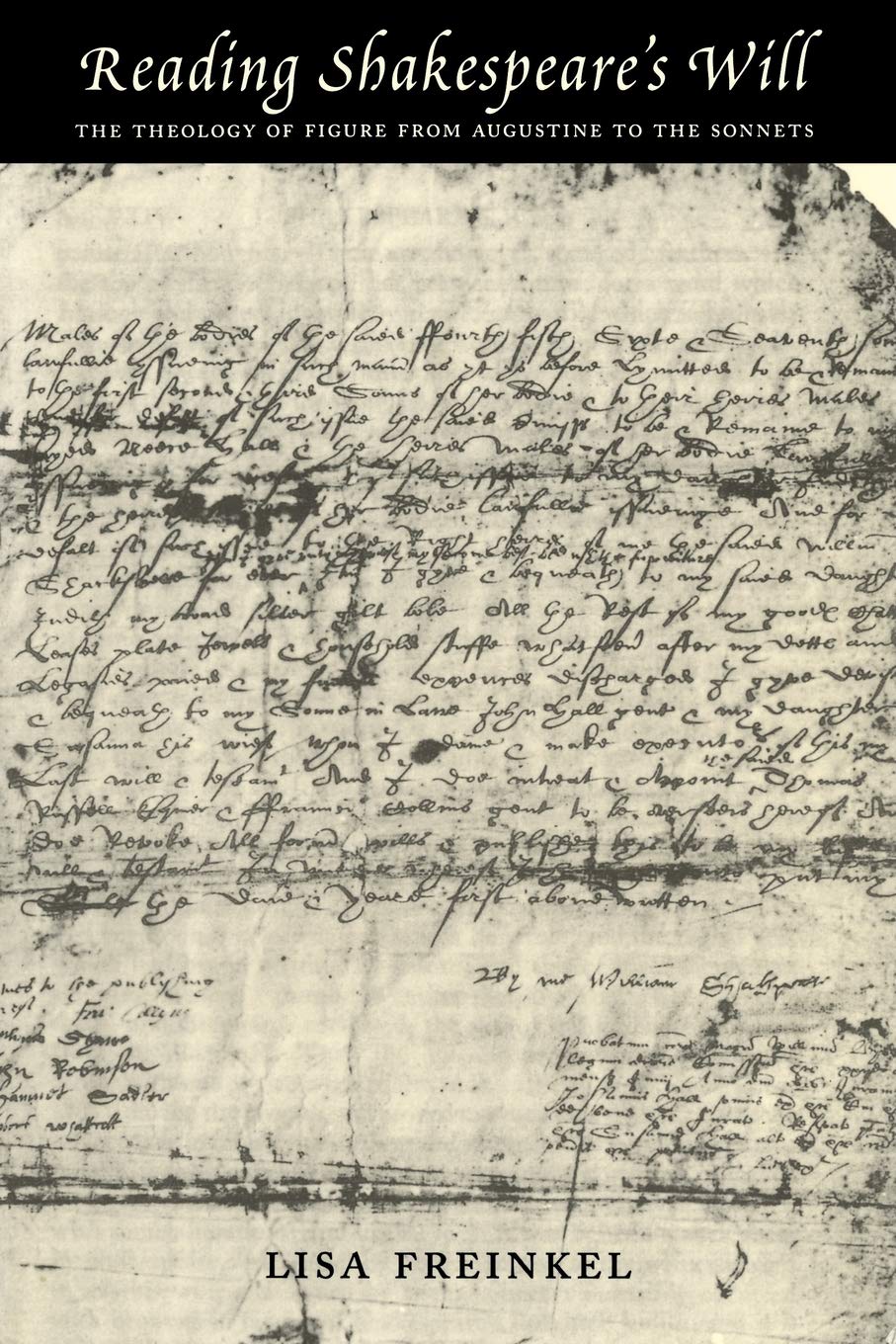
The most influential treatments of Shakespeare's Sonnets have ignored the impact of theology on his poetics, examining instead the poet's 'secular' emphasis on psychology and subjectivity. Reading Shakespeare's Will offers the first systematic account of the theology behind the poetry. Investigating the poetic stakes of Christianity's efforts to assimilate Jewish scripture, the book reads Shakespeare through the history of Christian allegory.To 'read Shakespeare's will,' Freinkel argues, is to read his bequest to and from a literary history saturated by religious doctrine. Freinkel thus challenges the common equation of subjectivity with secularity, and defines Shakespeare's poetic voice in theological rather than psychoanalytic terms. Tracing from Augustine to Luther the religious legacy that informs Shakespeare's work, Freinkel suggests that we cannot properly understand his poetry without recognizing it as a response to Luther's Reformation. Delving into the valences and repercussions of this response, Reading Shakespeare's Will charts the notion of a 'theology of figure' that helped to shape the themes, tropes, and formal structures of Renaissance literature and thought.
⚠️ WARNING (California Proposition 65):
This product may contain chemicals known to the State of California to cause cancer,
birth defects, or other reproductive harm.
For MAP (Minimum Advertised Price) violations and Intellectual Property (IP) or Trademark concerns, please contact:
support@ergodebooks.com
⚠️ California Proposition 65 Warning: Some products sold on this website may expose you to chemicals known to the State of California to cause cancer, birth defects, or other reproductive harm. For more information, visit www.P65Warnings.ca.gov.