If you have any questions, you are always welcome to contact us. We'll get back to you as soon as possible, withing 24 hours on weekdays.
Customer service
All questions about your order, return and delivery must be sent to our customer service team by e-mail at yourstore@yourdomain.com
Sale & Press
If you are interested in selling our products, need more information about our brand or wish to make a collaboration, please contact us at press@yourdomain.com
Help
If you have any questions, you are always welcome to contact us. We'll get back to you as soon as possible, withing 24 hours on weekdays.
Customer service
All questions about your order, return and delivery must be sent to our customer service team by e-mail at yourstore@yourdomain.com
Sale & Press
If you are interested in selling our products, need more information about our brand or wish to make a collaboration, please contact us at press@yourdomain.com
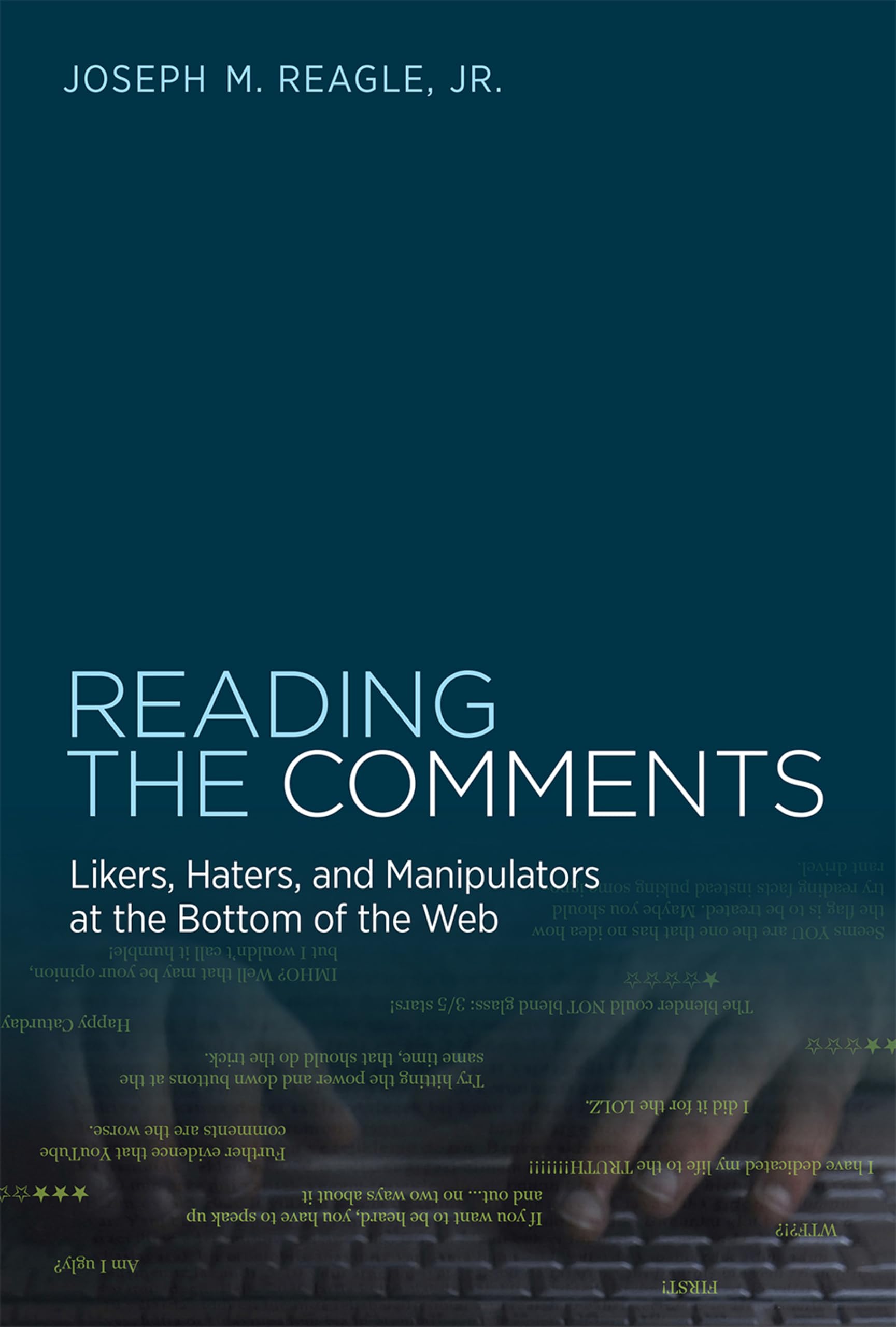
What we can learn about human nature from the informative, manipulative, confusing, and amusing messages at the bottom of the web.Online comment can be informative or misleading, entertaining or maddening. Haters and manipulators often seem to monopolize the conversation. Some comments are offtopic, or even topicless. In this book, Joseph Reagle urges us to read the comments. Conversations on the bottom half of the Internet, he argues, can tell us much about human nature and social behavior.Reagle visits communities of Amazon reviewers, fan fiction authors, online learners, scammers, freethinkers, and mean kids. He shows how comment can inform us (through reviews), improve us (through feedback), manipulate us (through fakery), alienate us (through hate), shape us (through social comparison), and perplex us. He finds preInternet historical antecedents of online comment in Michelin stars, professional criticism, and the wisdom of crowds. He discusses the techniques of online fakery (distinguishing makers, fakers, and takers), describes the emotional work of receiving and giving feedback, and examines the culture of trolls and haters, bullying, and misogyny. He considers the way commenta nonstop stream of social quantification and rankingaffects our selfesteem and wellbeing. And he examines how comment is puzzlingshort and asynchronous, these messages can be slapdash, confusing, amusing, revealing, and weird, shedding context in their passage through the Internet, prompting readers to comment in turn, WTF?!?
⚠️ WARNING (California Proposition 65):
This product may contain chemicals known to the State of California to cause cancer,
birth defects, or other reproductive harm.
For MAP (Minimum Advertised Price) violations and Intellectual Property (IP) or Trademark concerns, please contact:
support@ergodebooks.com
⚠️ California Proposition 65 Warning: Some products sold on this website may expose you to chemicals known to the State of California to cause cancer, birth defects, or other reproductive harm. For more information, visit www.P65Warnings.ca.gov.