
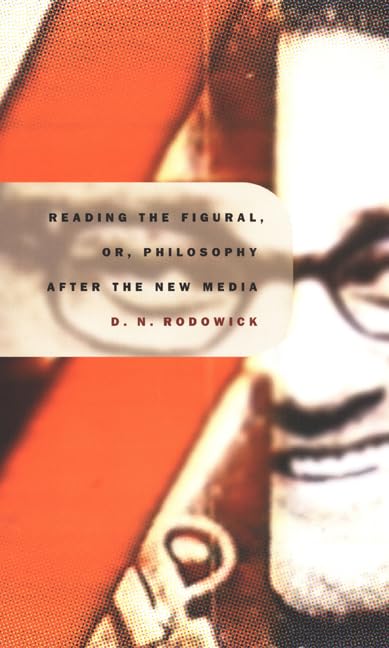
Title
Reading the Figural, or, Philosophy after the New Media (PostContemporary Interventions),New
Sold by Ergodebooks, an authorized reseller.
Returns accepted within 30 days | support@ergodebooks.com
Shipping Information
- Free Standard Shipping — United States only
- Processing Time: 3–5 business days
- Estimated Delivery: 6–10 business days after dispatch
- Double-boxed, fully insured & discreetly packaged
- Tracking number sent via email once dispatched
Returns & Refund
Returns accepted within 30 days of delivery.
Damaged or Defective Item
Free return shipping + replacement or full refund
Wrong Item Received
Free return shipping + replacement or full refund
Change of Mind
Return shipping at customer's expense · 25% restocking fee applies
Payment Option

In Reading the Figural, or, Philosophy after the New Media D. N. Rodowick applies the concept of the figural to a variety of philosophical and aesthetic issues. Inspired by the aesthetic philosophy of JeanFranois Lyotard, the figural defines a semiotic regime where the distinction between linguistic and plastic representation breaks down. This opposition, which has been the philosophical foundation of aesthetics since the eighteenth century, has been explicitly challenged by the new electronic, televisual, and digital media. Rodowickone of the foremost film theorists writing todaycontemplates this challenge, describing and critiquing the new regime of signs and new ways of thinking that such media have inaugurated.To fully comprehend the emergence of the figural requires a genealogical critique of the aesthetic, Rodowick claims. Seeking allies in this effort to deconstruct the opposition of word and image and to create new concepts for comprehending the figural, he journeys through a range of philosophical writings: Thierry Kuntzel and MarieClaire RoparsWuilleumier on film theory; Jacques Derrida on the deconstruction of the aesthetic; Siegfried Kracauer and Walter Benjamin on the historical image as a utopian force in photography and film; and Gilles Deleuze and Michel Foucault on the emergence of the figural as both a semiotic regime and a new stratagem of power coincident with the appearance of digital phenomena and of societies of control.Scholars of philosophy, film theory, cultural criticism, new media, and art history will be interested in the original and sophisticated insights found in this book.
⚠️ WARNING (California Proposition 65):
This product may contain chemicals known to the State of California to cause cancer, birth defects, or other reproductive harm.
For more information, please visit www.P65Warnings.ca.gov.