
Title

Real World Fpga Design With Verilog,Used
Sold by Ergodebooks, an authorized reseller.
Returns accepted within 30 days | support@ergodebooks.com
Shipping Information
- Free Standard Shipping — United States only
- Processing Time: 3–5 business days
- Estimated Delivery: 6–10 business days after dispatch
- Double-boxed, fully insured & discreetly packaged
- Tracking number sent via email once dispatched
Returns & Refund
Returns accepted within 30 days of delivery.
Damaged or Defective Item
Free return shipping + replacement or full refund
Wrong Item Received
Free return shipping + replacement or full refund
Change of Mind
Return shipping at customer's expense · 25% restocking fee applies
Payment Option

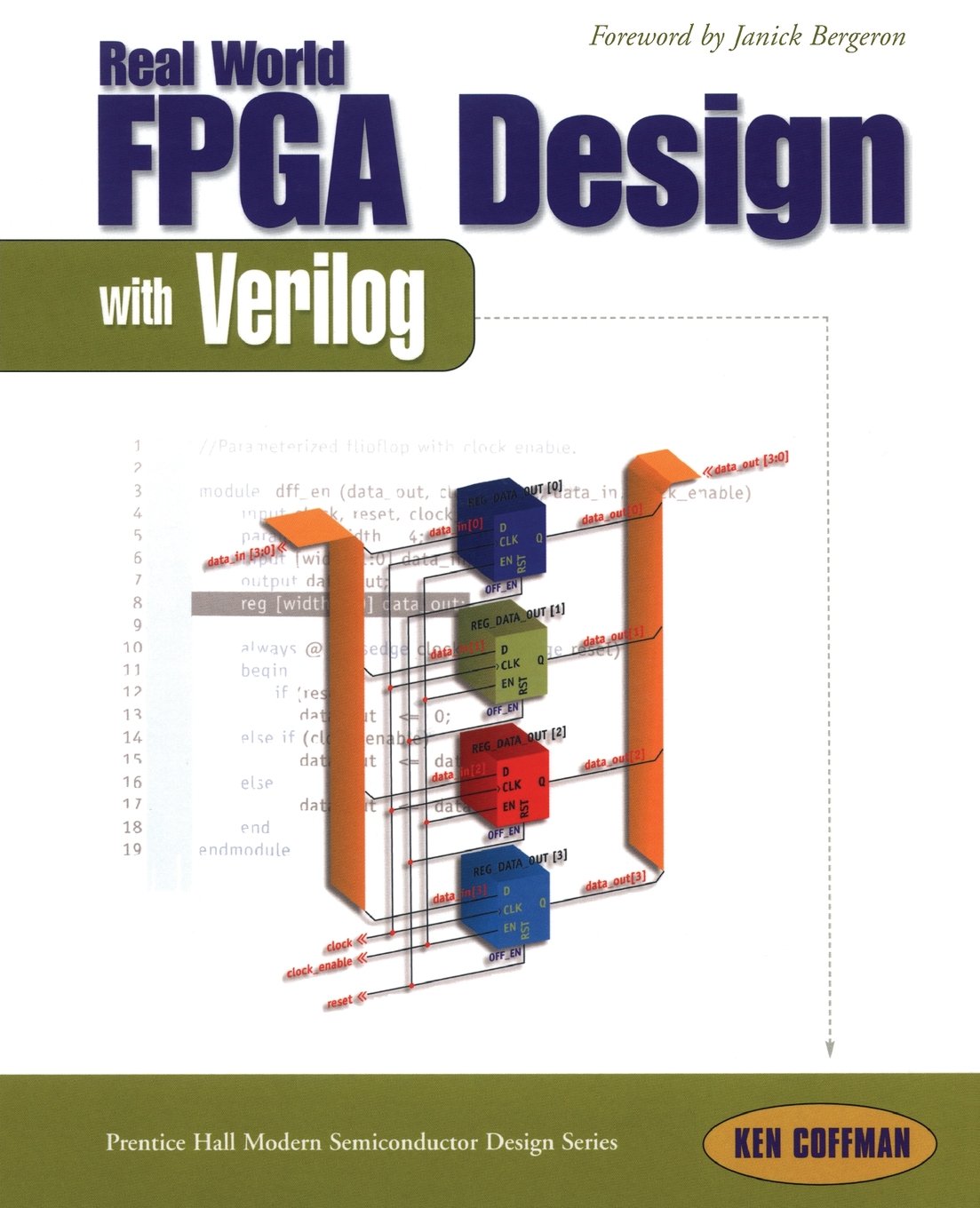
The Practical Guide For Every Circuit Designer Creating Fpga Designs With Verilog!Walk Through Design Stepbystepfrom Coding Through Silicon. Partitioning, Synthesis, Simulation, Test Benches, Combinatorial And Sequential Designs, And More.Real World Fpga Design With Verilog Guides You Through Every Key Challenge Associated With Designing Fpgas And Asics Using Verilog, One Of The World'S Leading Hardware Design Languages. You'Ll Find Irreverent, Yet Rigorous Coverage Of What It Really Takes To Translate Hdl Code Into Hardwareand How To Avoid The Pitfalls That Can Occur Along The Way. Ken Coffman Presents Nofrills, Realworld Design Techniques That Can Improve The Stability And Reliability Of Virtually Any Design. Start By Walking A Typical Verilog Design All The Way Through To Silicon; Then, Review Basic Verilog Syntax, Design; Simulation And Testing, Advanced Simulation, And More. Coverage Includes: Essential Digital Design Strategies: Recognizing The Underlying Analog Building Blocks Used To Create Digital Primitives; Implementing Logic With Luts; Clocking Strategies, Logic Minimization, And More Key Engineering Tradeoffs, Including Operating Speed Vs. Latency Combinatorial And Sequential Designs Verilog Test Fixtures: Compiler Directives And Automated Testing A Detailed Comparison Of Alternative Architectures And Softwareincluding A Neverbeforepublished Fpga Technology Selection Checklistreal World Fpga Design With Verilog Introduces Libraries And Reusable Modules, Points Out Opportunities To Reuse Your Own Code, And Helps You Decide When To Purchase Existing Ip Designs Instead Of Building From Scratch. Essential Rules For Designing With Asic Conversion In Mind Are Presented.If You'Re Involved With Digital Hardware Design With Verilog, Ken Coffman Is A Welcome Voice Of Experienceshowing You The Shortcuts, Helping You Over The Rough Spots, And Helping You Achieve Competence Faster Than You Ever Expected!
⚠️ WARNING (California Proposition 65):
This product may contain chemicals known to the State of California to cause cancer, birth defects, or other reproductive harm.
For more information, please visit www.P65Warnings.ca.gov.
- Q: What is the page count of 'Real World FPGA Design with Verilog'? A: The book has two hundred ninety-one pages. It provides extensive coverage of FPGA design techniques using Verilog.
- Q: What are the dimensions of this book? A: The book measures seven point two inches in length, one inch in width, and nine point twenty-nine inches in height. These dimensions make it a portable reference for designers.
- Q: What type of binding does this book have? A: This book is available in paperback binding. This allows for easy handling and flexibility during use.
- Q: Who is the author of 'Real World FPGA Design with Verilog'? A: The author is Ken Coffman. He brings extensive experience in digital hardware design and Verilog programming.
- Q: Is this book suitable for beginners in FPGA design? A: Yes, the book is suitable for beginners as well as experienced designers. It covers fundamental concepts and advanced techniques in a practical manner.
- Q: How can I use this book effectively for FPGA design? A: You can use this book as a step-by-step guide. It walks you through the design process, including coding, simulation, and testing.
- Q: Does this book include real-world examples? A: Yes, it includes numerous real-world examples of FPGA design. These examples help bridge the gap between theory and practical application.
- Q: What topics are covered in this book? A: The book covers topics like partitioning, synthesis, simulation, and Verilog test fixtures. It also discusses key engineering trade-offs.
- Q: How do I keep this book in good condition? A: To keep this book in good condition, store it in a cool, dry place and avoid exposure to direct sunlight. Handle it carefully to prevent wear.
- Q: Is there a warranty or return policy for this book? A: Yes, there is typically a return policy. Check with the retailer for specific return conditions.
- Q: What if the book arrives damaged? A: If the book arrives damaged, contact the seller for a return or exchange. Ensure to keep the original packaging for any claims.
- Q: Can I find additional resources or materials related to this book? A: Yes, you can find additional resources online, including forums and tutorials that complement the material covered in the book.
- Q: Does this book address common pitfalls in FPGA design? A: Yes, it discusses common pitfalls and offers strategies to avoid them. This insight is valuable for both novice and experienced designers.
- Q: Is this book focused on a specific FPGA brand or technology? A: No, the book provides a general overview applicable to various FPGA technologies. It emphasizes design principles rather than brand-specific details.
- Q: Are there exercises or practice problems in the book? A: Yes, the book includes exercises that reinforce the concepts taught. These are practical and help solidify your understanding of FPGA design.
- Q: How does this book compare to other FPGA design guides? A: This book is known for its practical approach and real-world insights. It stands out by focusing on hands-on techniques rather than purely theoretical concepts.