
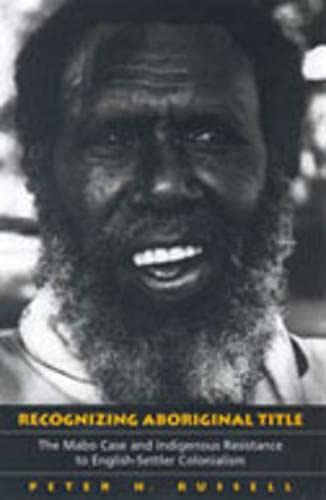
Title
Recognizing Aboriginal Title: The Mabo Case and Indigenous Resistance to EnglishSettler Colonialism,Used
Sold by Ergodebooks, an authorized reseller.
Returns accepted within 30 days | support@ergodebooks.com
Shipping Information
- Free Standard Shipping — United States only
- Processing Time: 3–5 business days
- Estimated Delivery: 6–10 business days after dispatch
- Double-boxed, fully insured & discreetly packaged
- Tracking number sent via email once dispatched
Returns & Refund
Returns accepted within 30 days of delivery.
Damaged or Defective Item
Free return shipping + replacement or full refund
Wrong Item Received
Free return shipping + replacement or full refund
Change of Mind
Return shipping at customer's expense · 25% restocking fee applies
Payment Option

A judicial revolution occurred in 1992 when Australia's highest court discarded a doctrine that had stood for two hundred years, that the country was a terra nullius a land of no one when the white man arrived. The proceedings were known as the Mabo Case, named for Eddie Koiki Mabo, the Torres Strait Islander who fought the notion that the Australian Aboriginal people did not have a system of land ownership before European colonization. The case had international repercussions, especially on the four countries in which Englishsettlers are the dominant population: Australia, Canada, New Zealand, and the United States.In Recognizing Aboriginal Title, Peter H. Russell offers a comprehensive study of the Mabo case, its background, and its consequences, contextualizing it within the international struggle of Indigenous peoples to overcome their colonized status. Russell weaves together an historical narrative of Mabo's life with an account of the legal and ideological premises of European imperialism and their eventual challenge by the global forces of decolonization. He traces the development of Australian law and policy in relation to Aborigines, and provides a detailed examination of the decade of litigation that led to the Mabo case.Mabo died at the age of fiftysix just five months before the case was settled. Although he had been exiled from his land over a dispute when he was a teenager, he was buried there as a hero. Recognizing Aboriginal Title is a work of enormous importance by a legal and constitutional scholar of international renown, written with a passion worthy of its subject a man who fought hard for his people and won.
⚠️ WARNING (California Proposition 65):
This product may contain chemicals known to the State of California to cause cancer, birth defects, or other reproductive harm.
For more information, please visit www.P65Warnings.ca.gov.