If you have any questions, you are always welcome to contact us. We'll get back to you as soon as possible, withing 24 hours on weekdays.
Customer service
All questions about your order, return and delivery must be sent to our customer service team by e-mail at yourstore@yourdomain.com
Sale & Press
If you are interested in selling our products, need more information about our brand or wish to make a collaboration, please contact us at press@yourdomain.com
Help
If you have any questions, you are always welcome to contact us. We'll get back to you as soon as possible, withing 24 hours on weekdays.
Customer service
All questions about your order, return and delivery must be sent to our customer service team by e-mail at yourstore@yourdomain.com
Sale & Press
If you are interested in selling our products, need more information about our brand or wish to make a collaboration, please contact us at press@yourdomain.com
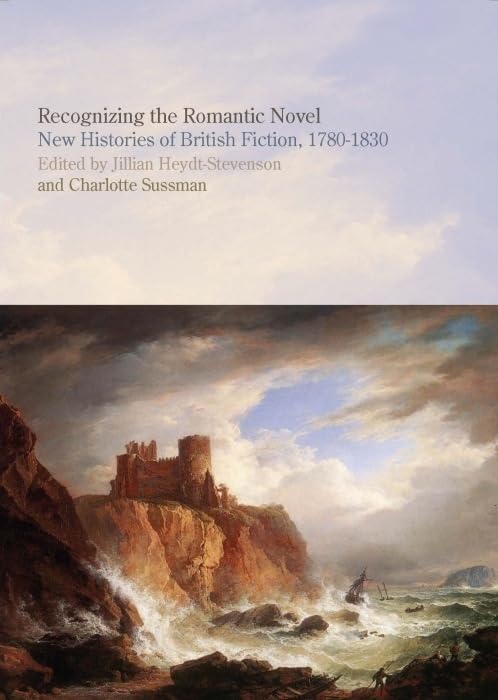
The British Romantic era was a vibrant and exciting time in the history of the novel. Yet, aside from a few iconic books Pride and Prejudice, Frankensteinit has been ignored or dismissed by later readers and critics. Bringing this rich but neglected body of works to the fore, Recognizing the Romantic Novel: New Histories of British Fiction, 17801830 challenges us to rethink our ideas of the novel as a genre, as well as our longheld assumptions about the literary movement of Romanticism. Ranging from preRevolution to postWaterloo, this volume celebrates the experimental drive and revisionary spirit of the Romantic novel. With essays on authors ranging from Burney to Austen to Hogg, it argues that the Romanticera novel can be understood as a field, not simply a heterogeneous mass of fictional formsa field, furthermore, that can hold its own against more widely read eighteenthcentury and Victorian novels. Eleven essays by prominent scholars in the field demonstrate that previously unexplored contexts can help us recognize even familiar Romanticera novels in new and fuller ways. These essays thoughtfully explore such varied concerns as the critique of Enlightenment ideals, the close affiliation between poetry and prose, a fraught engagement with politicoethical issues, the limits of our access to and understanding of the past, and a rethinking of communities outside the conventions of the marriage plot.
⚠️ WARNING (California Proposition 65):
This product may contain chemicals known to the State of California to cause cancer,
birth defects, or other reproductive harm.
For MAP (Minimum Advertised Price) violations and Intellectual Property (IP) or Trademark concerns, please contact:
support@ergodebooks.com
⚠️ California Proposition 65 Warning: Some products sold on this website may expose you to chemicals known to the State of California to cause cancer, birth defects, or other reproductive harm. For more information, visit www.P65Warnings.ca.gov.