
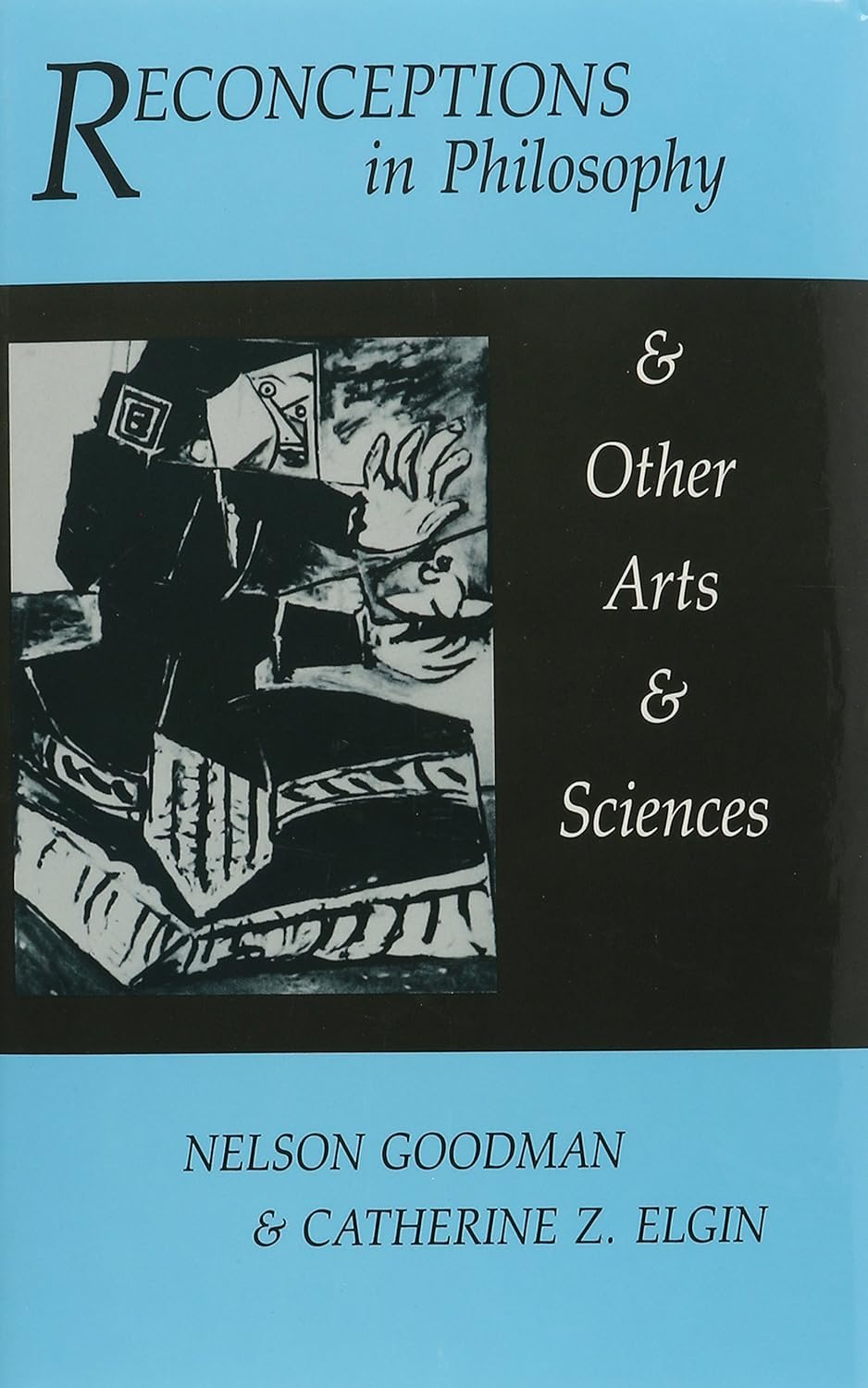
Title
Reconceptions In Philosophy And Other Arts And Sciences (Hackett Readings In Philosophy)
Sold by Ergodebooks, an authorized reseller.
Returns accepted within 30 days | support@ergodebooks.com
Shipping Information
- Free Standard Shipping — United States only
- Processing Time: 3–5 business days
- Estimated Delivery: 6–10 business days after dispatch
- Double-boxed, fully insured & discreetly packaged
- Tracking number sent via email once dispatched
Returns & Refund
Returns accepted within 30 days of delivery.
Damaged or Defective Item
Free return shipping + replacement or full refund
Wrong Item Received
Free return shipping + replacement or full refund
Change of Mind
Return shipping at customer's expense · 25% restocking fee applies
Payment Option

The Authors Argue Against Certain Philosophical Distinctions Between Art And Science; Between Verbal And Nonverbal Meaning; And Between The Affective And The Cognitive. The Book Continues Goodman'S Argument Against One Traditional Mode Of Philosophizing Which Privileges The Notions Of 'Truth' And 'Knowledge'. Hence, The Book Is In A Broadly Pragmatic Tradition. It Also Deals In Detail With Such Topics As Meaning In Architecture And The Concept Of 'Variation' In Art, And Contains A Superb Critique Of Some Important Views In Contemporary Epistemology. This Work Will Be Savored Even By Those Who Will Not Accept All Aspects Of Goodman And Elgin'S Approach. Essential For All Undergraduate Philosophy Collections. Stanley Bates, Choice
⚠️ WARNING (California Proposition 65):
This product may contain chemicals known to the State of California to cause cancer, birth defects, or other reproductive harm.
For more information, please visit www.P65Warnings.ca.gov.
- Q: What is the page count of the book? A: The book contains one hundred eighty-eight pages. It provides a comprehensive exploration of philosophical ideas related to art and science.
- Q: What is the binding type of this book? A: This book is hardcover bound. The durable binding enhances its longevity and makes it suitable for frequent use.
- Q: Who is the author of this book? A: The author is Nelson Goodman. He is a prominent philosopher known for his work in aesthetics and epistemology.
- Q: How should I read this book? A: You can read this book at your own pace. It's suitable for both casual readers and students studying philosophy.
- Q: Is this book appropriate for beginners? A: Yes, this book is suitable for beginners. It presents philosophical concepts in an accessible manner, making it an excellent introduction.
- Q: What themes are explored in this book? A: The book explores themes such as the relationship between art and science, meaning in architecture, and contemporary epistemology. These themes encourage critical thinking.
- Q: How do I keep this book in good condition? A: To maintain the book's condition, store it in a cool, dry place. Avoid exposing it to direct sunlight to prevent fading.
- Q: Can I clean the book's cover? A: Yes, you can clean the cover gently. Use a soft, dry cloth to remove dust and avoid any liquid cleaners.
- Q: Is this book safe for children? A: While the book is not specifically targeted at children, it can be suitable for mature teens. Parents should consider the philosophical content.
- Q: How do I handle a damaged book? A: If the book arrives damaged, you should contact the seller immediately for a return or exchange. Most sellers have a customer service policy for such issues.
- Q: What if I want to return the book? A: You can return the book within the seller's return policy timeframe. Always check the specific return conditions before making a purchase.
- Q: Is this book a good choice for academic use? A: Yes, this book is an excellent resource for academic use. It is essential for undergraduate philosophy collections and can enrich course discussions.
- Q: What philosophical perspectives does this book offer? A: The book offers a pragmatic perspective on philosophical distinctions, critiquing traditional notions of truth and knowledge. It encourages readers to think critically about these distinctions.
- Q: Does the book include illustrations? A: No, this book does not include illustrations. It primarily focuses on text to convey complex philosophical ideas.
- Q: What is the publisher of this book? A: The book is published by Hackett Publishing Company, Inc. They are known for their quality publications in philosophy and the humanities.