
Title
Reconstructing Reconstruction: The Supreme Court And The Production Of Historical Truth,New
Sold by Ergodebooks, an authorized reseller.
Returns accepted within 30 days | support@ergodebooks.com
Shipping Information
- Free Standard Shipping — United States only
- Processing Time: 3–5 business days
- Estimated Delivery: 6–10 business days after dispatch
- Double-boxed, fully insured & discreetly packaged
- Tracking number sent via email once dispatched
Returns & Refund
Returns accepted within 30 days of delivery.
Damaged or Defective Item
Free return shipping + replacement or full refund
Wrong Item Received
Free return shipping + replacement or full refund
Change of Mind
Return shipping at customer's expense · 25% restocking fee applies
Payment Option

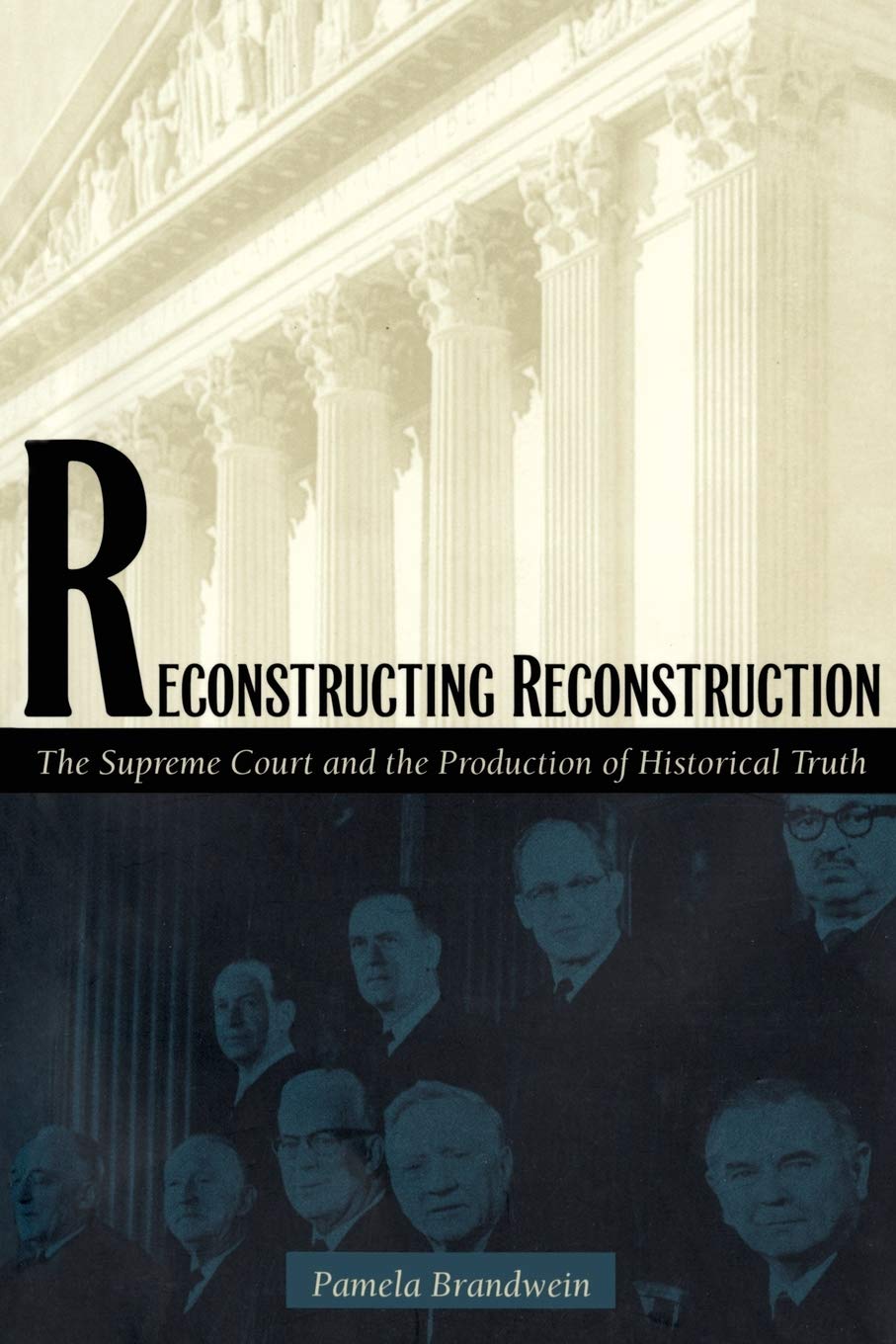
Was Slavery Over When Slaves Gained Formal Emancipation? Was It Over When The Social, Economic, And Political Situation For African Americans No Longer Mimicked The Conditions Of Slavery? If The Thirteenth Amendment Abolished It In 1865, Why Did Most Of The Disputed Points During The Reconstruction Debates Of 186675 Concern Issues Of Slavery? In This Book Pamela Brandwein Examines The Postcivil War Struggle Between Competing Political And Legal Interpretations Of Slavery And Reconstruction To Reveal How Accepted Historical Truth Was Established.Delving Into The Circumstances, Assumptions, And Rhetoric That Shaped The Official Story Of Reconstruction, Brandwein Describes Precisely How A Dominant Interpretation Of Events Ultimately Emerged And What Its Implications Have Been For Twentiethcentury Judicial Decisions, Particularly For Supreme Court Rulings On Civil Rights. While Analyzing Interpretive Disputes About Slavery, Brandwein Offers A Detailed Rescoring Of Postcivil War Legislative And Constitutional History, Including Analysis Of The Original Understanding Of The Fourteenth Amendment. She Identifies The Perspectives On Reconstruction That Were Endorsed Or Rejected By The Supreme Court. Explaining What It Meanttheoretically And Practicallyto Resolve Reconstruction Debates With A Particular Definition Of Slavery, Brandwein Recounts How The Northern Democratic Definition Of Ending Slavery Was Not The Only Definition, Just The One That Prevailed. Using A Familiar Historical Moment To Do New Interpretive Work, She Outlines A Sociology Of Constitutional Law, Showing How Subjective Narrative Construction Can Solidify Into Opaque Institutional Memory.
⚠️ WARNING (California Proposition 65):
This product may contain chemicals known to the State of California to cause cancer, birth defects, or other reproductive harm.
For more information, please visit www.P65Warnings.ca.gov.