
Title
Record of Oral Language New Edition Update: New Edition,Used
Sold by Ergodebooks, an authorized reseller.
Returns accepted within 30 days | support@ergodebooks.com
Shipping Information
- Free Standard Shipping — United States only
- Processing Time: 3–5 business days
- Estimated Delivery: 6–10 business days after dispatch
- Double-boxed, fully insured & discreetly packaged
- Tracking number sent via email once dispatched
Returns & Refund
Returns accepted within 30 days of delivery.
Damaged or Defective Item
Free return shipping + replacement or full refund
Wrong Item Received
Free return shipping + replacement or full refund
Change of Mind
Return shipping at customer's expense · 25% restocking fee applies
Payment Option

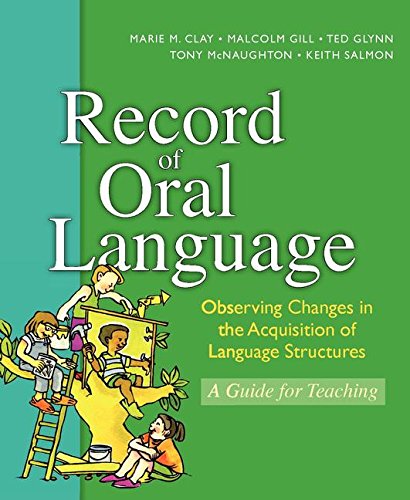
Proficiency in oral language has long been considered important by teachers for selfexpression and for communicating ideas.Children who are learning to speak English catch on to the rules: first by grasping the early structures then those of medium difficulty and finally those of greater difficulty.Awareness of features that will allow a learner to master a wide range of structural knowledge about English sentences should help teachers develop more powerful language programmes.This book describes a technique for recording and assessing change in children's oral language development. It was developed for research studies of young children from three ethnic groups but has been widely used in New Zealand, Australia, Britain, and the United States. Experience has shown that Record of Oral Language helps practising teachers to observe and understand changes in young children's language. The book is directed towards teachers who wish to do this.Young children's control of English is assumed to increase gradually over most of their school years. The changes occurring can be monitored through the use of this Record of Oral Language and of another assessment called Biks and Gutches, which you will find in a companion volume. Teachers could judge from either or both of these assessments which children have made poor, average, or good progress. These techniques are appropriate: for children of four to seven years of age with English as a mother tongue for up to five years after children begin to learn English as another language.Performance on these tasks can be used to select children for more intensive attention to oral language learning or to check what changes have occurred in children's language as a result of particular instruction. Change over time can be an important indicator of whether a particular child will know how to learn more about language for themselves in the future.
⚠️ WARNING (California Proposition 65):
This product may contain chemicals known to the State of California to cause cancer, birth defects, or other reproductive harm.
For more information, please visit www.P65Warnings.ca.gov.