If you have any questions, you are always welcome to contact us. We'll get back to you as soon as possible, withing 24 hours on weekdays.
Customer service
All questions about your order, return and delivery must be sent to our customer service team by e-mail at yourstore@yourdomain.com
Sale & Press
If you are interested in selling our products, need more information about our brand or wish to make a collaboration, please contact us at press@yourdomain.com
Help
If you have any questions, you are always welcome to contact us. We'll get back to you as soon as possible, withing 24 hours on weekdays.
Customer service
All questions about your order, return and delivery must be sent to our customer service team by e-mail at yourstore@yourdomain.com
Sale & Press
If you are interested in selling our products, need more information about our brand or wish to make a collaboration, please contact us at press@yourdomain.com
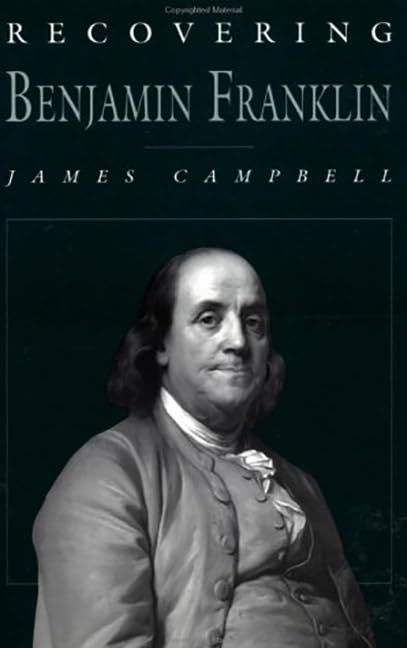
Is Benjamin Franklin, the familiar cultural icon whose face appears on coins, currency, and postage stamps, in addition to being an affable inventor, printer, and humorist also an important American philosopher? In Recovering Benjamin Franklin, James Campbell attempts to 'recover' Benjamin Franklin's role as philosopher. In the broad eighteenthcentury understanding of the term 'philosopher', most people would say that Franklin clearly qualifies as one. But since the beginning of the twentieth century, the meaning of the term has narrowed. What should be said about Franklin as philosopher in the current sense of the word?Part of the problem is that Franklin's thought is difficult to classify. Franklin is not a composer of lengthy, systematic treatises. Instead, we know him as the author of letters and essays, primarily short and often fragmentary, that were intended for diverse audiences. Was Franklin a thinker whose interests were nearly universal, or was he a dabbler who flew from topic to topic? Was he a minor intellectual who was incapable of sustained theoretical work, or was he a thinker who recognized that thought must function in the world?In answering these questions, Campbell provides a survey of the events in Franklin's rich life and explores his extraordinary place in American history, along the way challenging a series of popular misconceptions that are based upon narrow interpretations of Franklin's work. To foster a more adequate understanding, the author lays out in detail Franklin's ideas in four areas: science, religion, morality, and politics.
⚠️ WARNING (California Proposition 65):
This product may contain chemicals known to the State of California to cause cancer,
birth defects, or other reproductive harm.
For MAP (Minimum Advertised Price) violations and Intellectual Property (IP) or Trademark concerns, please contact:
support@ergodebooks.com
⚠️ California Proposition 65 Warning: Some products sold on this website may expose you to chemicals known to the State of California to cause cancer, birth defects, or other reproductive harm. For more information, visit www.P65Warnings.ca.gov.