If you have any questions, you are always welcome to contact us. We'll get back to you as soon as possible, withing 24 hours on weekdays.
Customer service
All questions about your order, return and delivery must be sent to our customer service team by e-mail at yourstore@yourdomain.com
Sale & Press
If you are interested in selling our products, need more information about our brand or wish to make a collaboration, please contact us at press@yourdomain.com
Help
If you have any questions, you are always welcome to contact us. We'll get back to you as soon as possible, withing 24 hours on weekdays.
Customer service
All questions about your order, return and delivery must be sent to our customer service team by e-mail at yourstore@yourdomain.com
Sale & Press
If you are interested in selling our products, need more information about our brand or wish to make a collaboration, please contact us at press@yourdomain.com
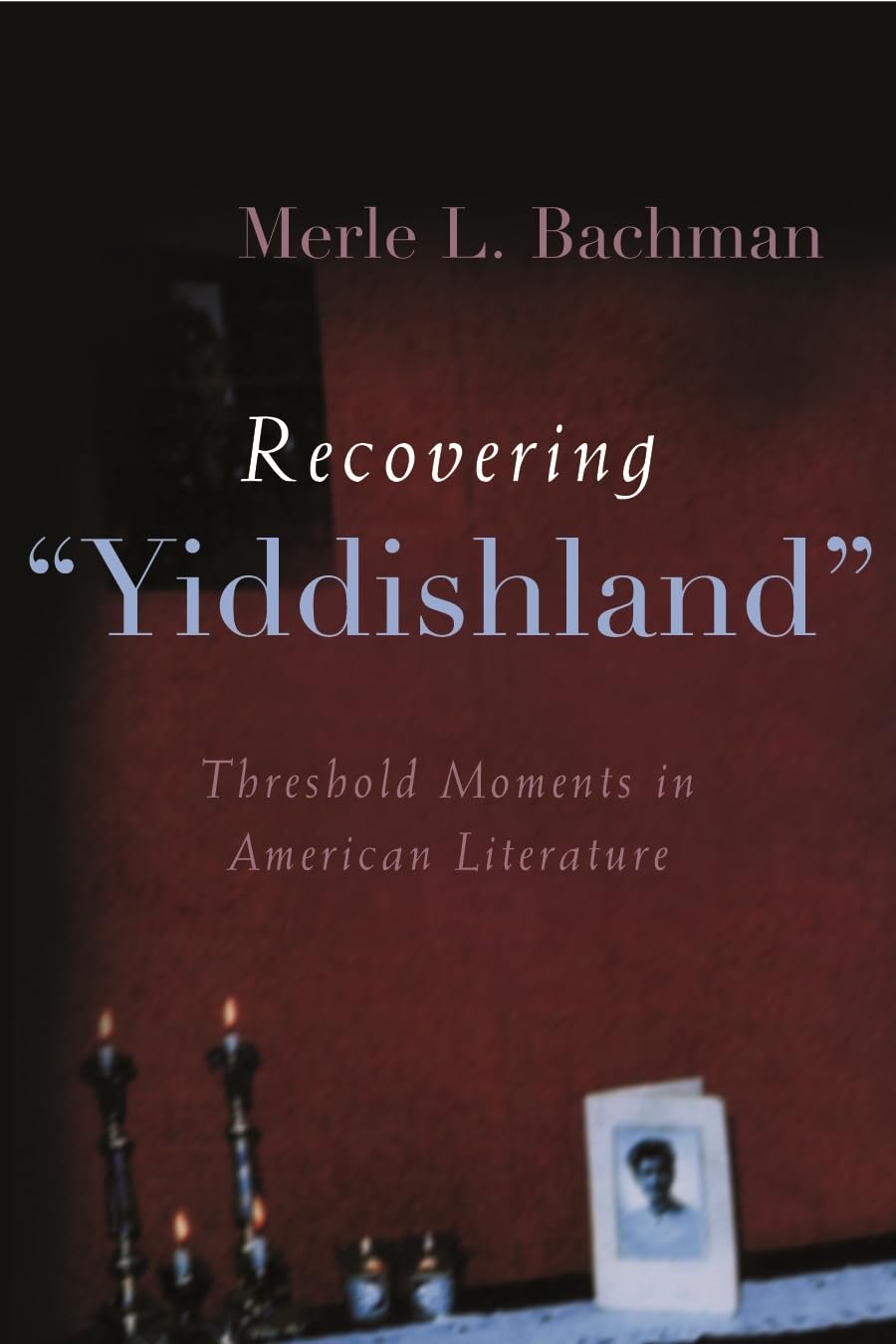
According to traditional narratives of assimilation, in the bargain made for an American identity, Jews freely surrendered Yiddish language and culture. Or did they? Recovering 'Yiddishland' seeks to return readers to a threshold where Americanization also meant ambivalence and resistance. It reconstructs Yiddishland as a cultural space produced by Yiddish immigrant writers from the 1890s through the 1930s, largely within the sphere of New York. Rejecting conventional literary history, the book spotlights threshold texts in the unjustly forgotten literary project of these writerstexts that reveal unexpected and illuminating critiques of Americanization. Merle Lyn Bachman takes a fresh look at Abraham Cahans Yekl and Anzia Yezierskas Hungry Hearts, tracing in them a reinscription of the Yiddish world that various characters seem to be committed to leaving behind. She also translates for the first time Yiddish poems featuring AfricanAmericans that reflect the writers confrontation with their passage, as Jews, into white identities. Finally, Bachman discusses the modernist poet Mikhl Likht, whose simultaneous embrace of American literature and resistance to assimilating into English marked him as the supreme threshold poet. Conscious of the risks of any postmodernpostassimilationattempt to recover the past, Bachman invents the figure of the Yiddish student, whose comments can reflectand keep in checkthe nostalgia and naivete of the returnee to Yiddish.
⚠️ WARNING (California Proposition 65):
This product may contain chemicals known to the State of California to cause cancer,
birth defects, or other reproductive harm.
For MAP (Minimum Advertised Price) violations and Intellectual Property (IP) or Trademark concerns, please contact:
support@ergodebooks.com
⚠️ California Proposition 65 Warning: Some products sold on this website may expose you to chemicals known to the State of California to cause cancer, birth defects, or other reproductive harm. For more information, visit www.P65Warnings.ca.gov.