
Title
Red Power Rising: The National Indian Youth Council And The Origins Of Native Activism (Volume 5) (New Directions In Native Amer,Used
Sold by Ergodebooks, an authorized reseller.
Returns accepted within 30 days | support@ergodebooks.com
Shipping Information
- Free Standard Shipping — United States only
- Processing Time: 3–5 business days
- Estimated Delivery: 6–10 business days after dispatch
- Double-boxed, fully insured & discreetly packaged
- Tracking number sent via email once dispatched
Returns & Refund
Returns accepted within 30 days of delivery.
Damaged or Defective Item
Free return shipping + replacement or full refund
Wrong Item Received
Free return shipping + replacement or full refund
Change of Mind
Return shipping at customer's expense · 25% restocking fee applies
Payment Option

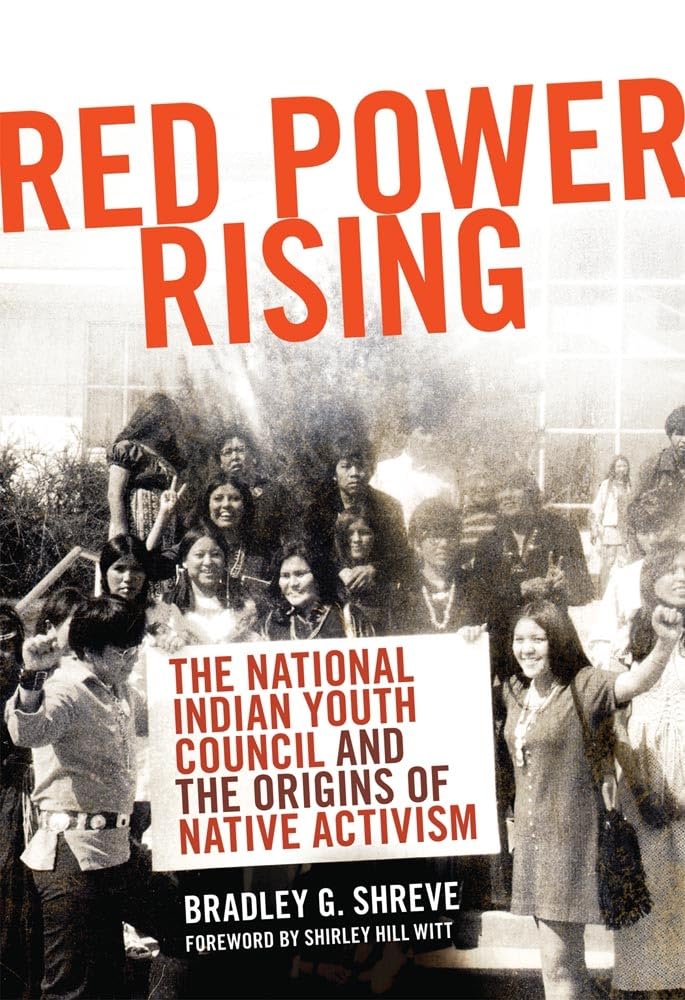
During the 1960s, American Indian youth were swept up in a movement called Red Powera civil rights struggle fueled by intertribal activism. While some define the movement as militant and others see it as peaceful, there is one common assumption about its history: Red Power began with the Indian takeover of Alcatraz in 1969. Or did it?In this groundbreaking book, Bradley G. Shreve sets the record straight by tracing the origins of Red Power further back in time: to the student activism of the National Indian Youth Council (NIYC), founded in Gallup, New Mexico, in 1961. Unlike other 1960s and 70s activist groups that challenged the fundamental beliefs of their predecessors, the students who established the NIYC were determined to uphold the cultures and ideals of their elders, building on a tradition of panIndian organization dating back to the early twentieth century. Their cornerstone principles of tribal sovereignty, self determination, treaty rights, and cultural preservation helped ensure their survival, for in contrast to other activist groups that came and went, the NIYC is still in operation today. But Shreve also shows that the NIYC was very much a product of 1960s idealistic ferment and its leaders learned tactics from other contemporary leftist movements.By uncovering the origins of Red Power, Shreve writes an important new chapter in the history of American Indian activism. And by revealing the ideology and accomplishments of the NIYC, he ties the Red Power Movement to the larger struggle for human rights that continues to this day both in the United States and across the globe.
⚠️ WARNING (California Proposition 65):
This product may contain chemicals known to the State of California to cause cancer, birth defects, or other reproductive harm.
For more information, please visit www.P65Warnings.ca.gov.