
Title
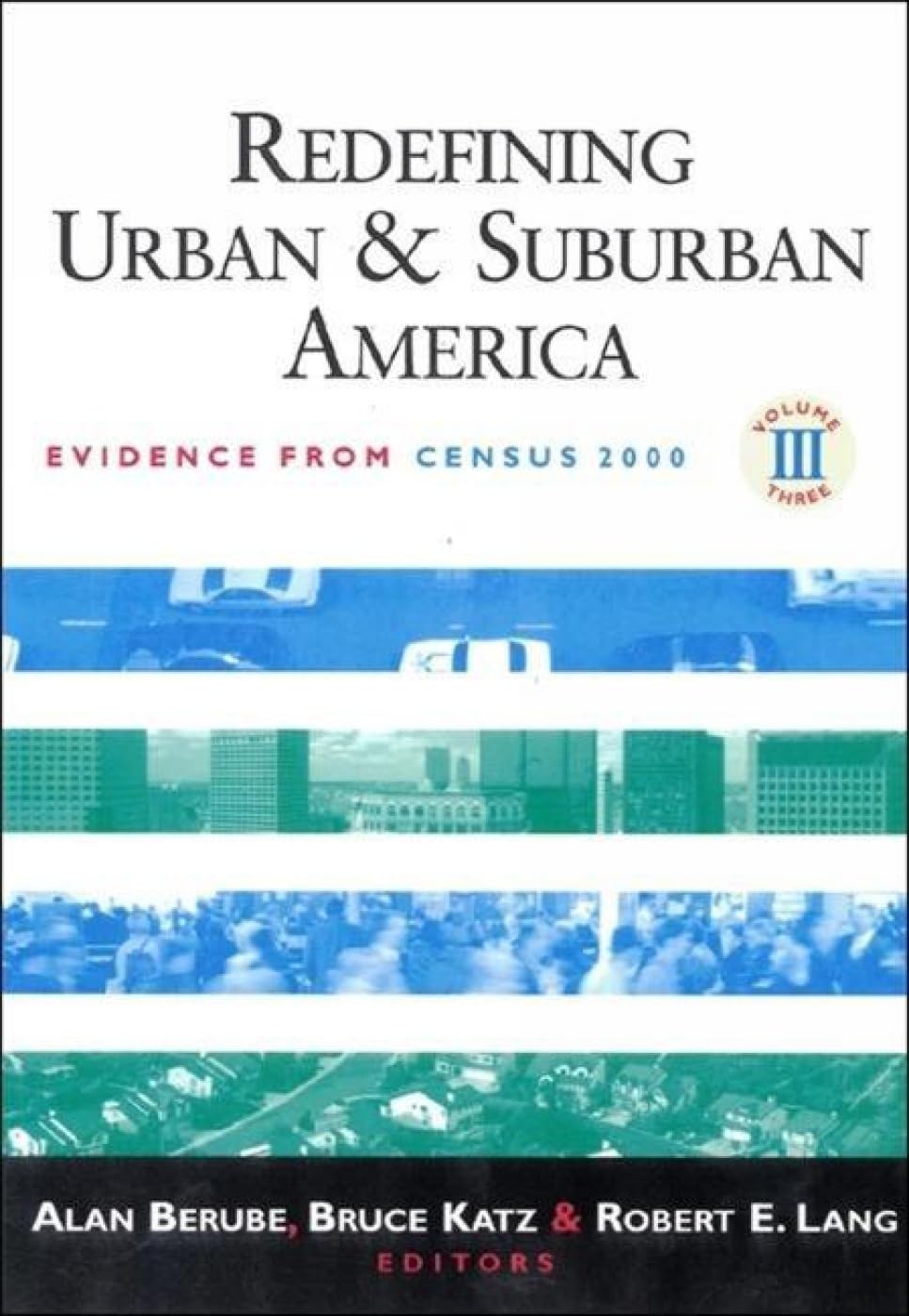
Redefining Urban And Suburban America: Evidence From Census 2000, Volume Three (James A. Johnson Metro Series, Volume Iii),Used
Sold by Ergodebooks, an authorized reseller.
Returns accepted within 30 days | support@ergodebooks.com
Shipping Information
- Free Standard Shipping — United States only
- Processing Time: 3–5 business days
- Estimated Delivery: 6–10 business days after dispatch
- Double-boxed, fully insured & discreetly packaged
- Tracking number sent via email once dispatched
Returns & Refund
Returns accepted within 30 days of delivery.
Damaged or Defective Item
Free return shipping + replacement or full refund
Wrong Item Received
Free return shipping + replacement or full refund
Change of Mind
Return shipping at customer's expense · 25% restocking fee applies
Payment Option

Results from Census 2000 have confirmed that American cities and metropolitan areas lie at the heart of the nation's most pronounced demographic and economic changes. The third volume in the Redefining Urban and Suburban America series describes anew the changing shape of metropolitan American and the consequences for policies in areas such as employment, public services, and urban revitalization. The continued decentralization of population and economic activity in most metropolitan areas has transformed oncesuburban places into new engines of metropolitan growth. At the same time, some traditional central cities have enjoyed a population renaissance, thanks to a recent book in 'living' downtowns. The contributors to this book probe the rise of these new growth centers and their impacts on the metropolitan landscape, including how recent patterns have affected the government's own methods for reporting information on urban, suburban, and rural areas. Volume 3 also provides a closer look at the social and economic impacts of growth patterns in cities and suburbs. Contributors examine how suburbanization has affected access to employment for minorities and lowerincome workers, how housing development trends have fueled population declines in some central cities, and how these patterns are shifting the economic balance between older and newer suburbs. Contributors include Thomas Bier (Cleveland State University), Peter Dreier (Occidental College), William Frey (Brookings), Robert Lang (Virginia Tech), Steven Raphael (University of California, Berkeley), Audrey Singer (Brookings), Michael Stoll (University of California, Los Angeles), Todd Swanstrom (St. Louis University), and Jill Wilson (Brookings).
⚠️ WARNING (California Proposition 65):
This product may contain chemicals known to the State of California to cause cancer, birth defects, or other reproductive harm.
For more information, please visit www.P65Warnings.ca.gov.