
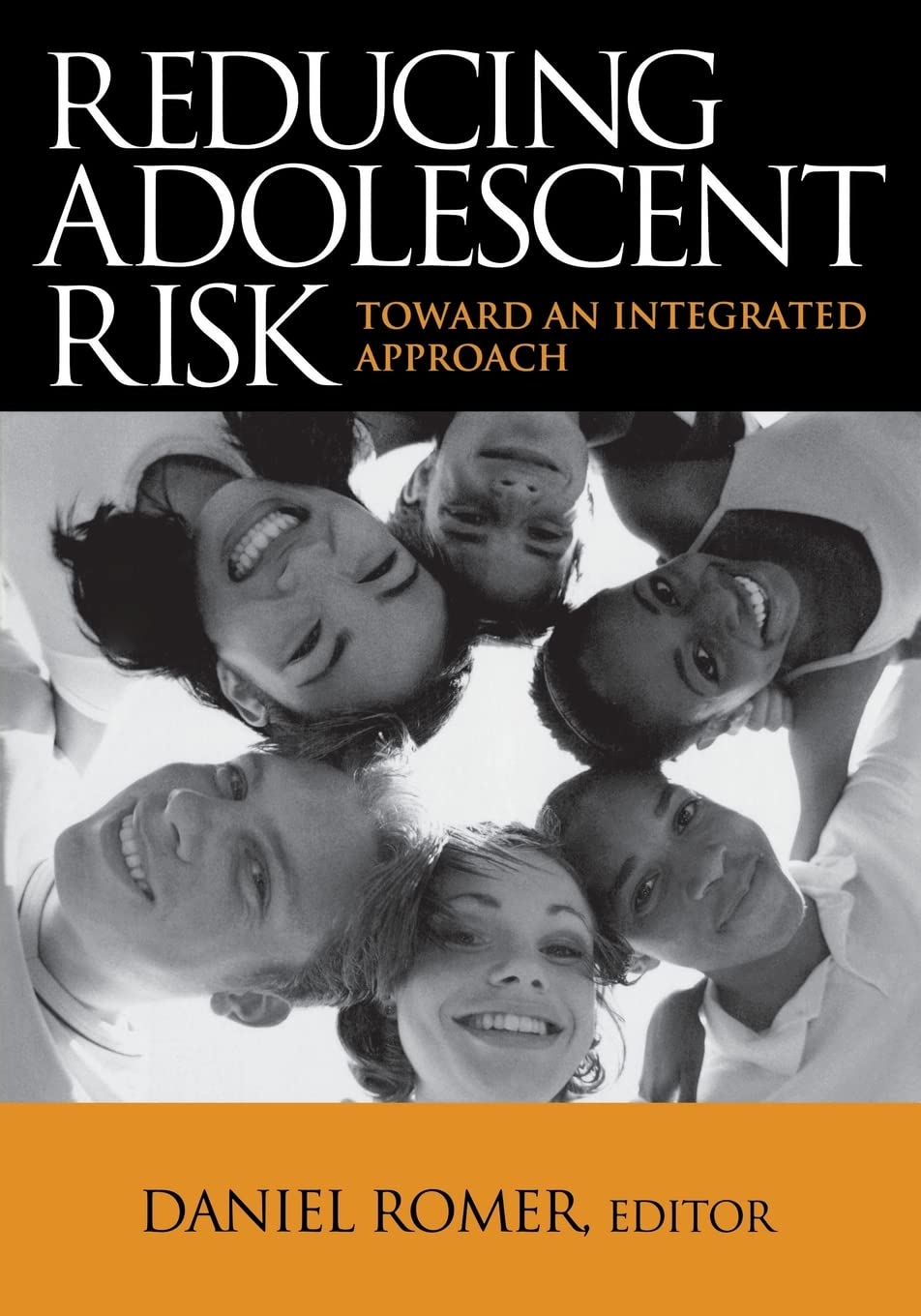
Title
Reducing Adolescent Risk: Toward an Integrated Approach,Used
Sold by Ergodebooks, an authorized reseller.
Returns accepted within 30 days | support@ergodebooks.com
Shipping Information
- Free Standard Shipping — United States only
- Processing Time: 3–5 business days
- Estimated Delivery: 6–10 business days after dispatch
- Double-boxed, fully insured & discreetly packaged
- Tracking number sent via email once dispatched
Returns & Refund
Returns accepted within 30 days of delivery.
Damaged or Defective Item
Free return shipping + replacement or full refund
Wrong Item Received
Free return shipping + replacement or full refund
Change of Mind
Return shipping at customer's expense · 25% restocking fee applies
Payment Option

Reducing Adolescent Risk: Toward an Integrated Approach focuses on common influences that result in a number of interrelated risk behaviors in order to design more unified, comprehensive prevention strategies. Edited by Daniel Romer, this book summarizes presentations and discussions held at the Adolescent Risk Communication Institute of the University of Pennsylvania Annenberg Public Policy Center. Concentrating on common causes for varied risk behaviors, a group of leading researchers and intervention specialists from different health traditions synthesize current knowledge about risks to adolescent health in several areas, including drugs and alcohol, tobacco, unprotected sex, suicide and depression, and gambling.Primarily intended for graduate students, scholars, and researchers in psychology, sociology, social work, and public health, Reducing Adolescent Risk is also an extraordinary resource for policy makers in government organizations and foundations.
⚠️ WARNING (California Proposition 65):
This product may contain chemicals known to the State of California to cause cancer, birth defects, or other reproductive harm.
For more information, please visit www.P65Warnings.ca.gov.
- Q: How many pages does the book have? A: The book has five hundred thirty-six pages. This length allows for a comprehensive exploration of adolescent risk behaviors.
- Q: What is the binding type of this book? A: This book is a paperback edition. Paperback bindings are flexible and lightweight, making it easy to carry.
- Q: What are the dimensions of the book? A: The book measures seven point zero one inches in length, one point two two inches in width, and ten inches in height. These dimensions make it a standard-sized book for easy handling.
- Q: Who is the author of this book? A: The book is edited by Daniel Romer. He is known for his expertise in adolescent risk communication and public health.
- Q: What category does this book fall under? A: The book is categorized under Adolescent Psychology. It addresses various aspects of adolescent health and risk behaviors.
- Q: What is the purpose of this book? A: The book aims to design unified prevention strategies for adolescent risks. It synthesizes knowledge from leading researchers in the field.
- Q: Is this book suitable for undergraduate students? A: No, this book is primarily intended for graduate students, scholars, and researchers. It covers advanced topics in psychology and public health.
- Q: Can policy makers benefit from this book? A: Yes, policy makers can find this book valuable. It provides insights into adolescent health that can inform policy decisions.
- Q: What topics are covered in the book? A: The book covers topics like drugs, alcohol, tobacco, unprotected sex, suicide, depression, and gambling. It focuses on interrelated risk behaviors.
- Q: What condition is the used book in? A: The book is in good condition. Used books may show some signs of wear but are still functional and readable.
- Q: Is this book focused on a specific health tradition? A: No, the book synthesizes knowledge from various health traditions. It includes insights from different fields related to adolescent health.
- Q: Does the book address prevention strategies? A: Yes, the book discusses comprehensive prevention strategies for adolescent risk behaviors. It aims to unify efforts across different health disciplines.
- Q: What kind of audience is this book aimed at? A: The book targets graduate students, scholars, and researchers in fields like psychology and sociology. It is also beneficial for practitioners.
- Q: Is this book a recent publication? A: The publication date is not specified, but it is a scholarly resource. You may want to verify the publication year for the most current insights.
- Q: How can this book help intervention specialists? A: This book provides insights and research findings that can aid intervention specialists. It synthesizes knowledge necessary for effective adolescent health interventions.