
Title
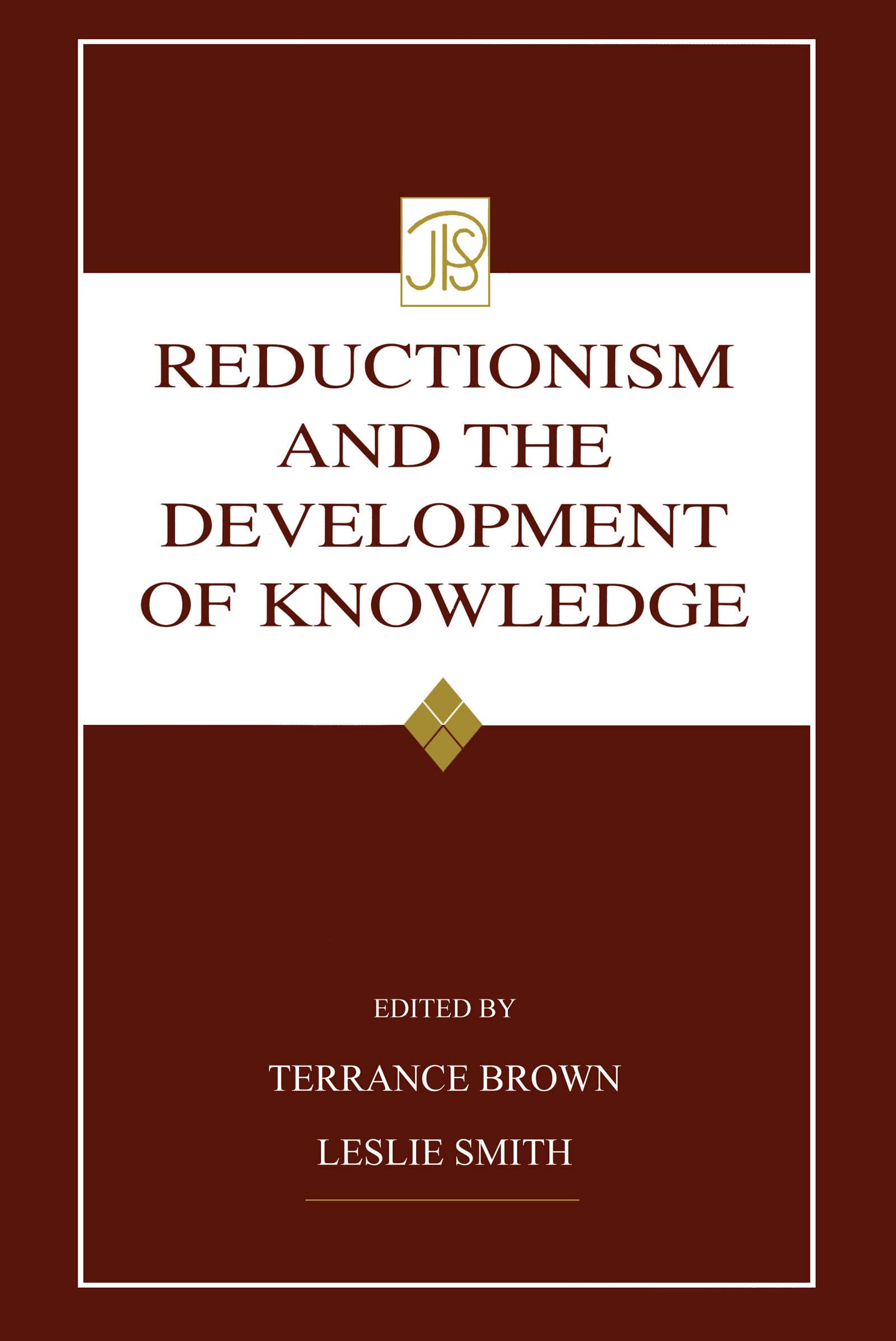
Reductionism And The Development Of Knowledge (Jean Piaget Symposia Series),New
Sold by Ergodebooks, an authorized reseller.
Returns accepted within 30 days | support@ergodebooks.com
Shipping Information
- Free Standard Shipping — United States only
- Processing Time: 3–5 business days
- Estimated Delivery: 6–10 business days after dispatch
- Double-boxed, fully insured & discreetly packaged
- Tracking number sent via email once dispatched
Returns & Refund
Returns accepted within 30 days of delivery.
Damaged or Defective Item
Free return shipping + replacement or full refund
Wrong Item Received
Free return shipping + replacement or full refund
Change of Mind
Return shipping at customer's expense · 25% restocking fee applies
Payment Option

Among the many conceits of modern thought is the idea that philosophy, tainted as it is by subjective evaluation, is a shaky guide for human affairs. People, it is argued, are better off if they base their conduct either on knowhow with its pragmatic criterion of truth (i.e., possibility) or on science with its universal criterion of rational necessity.Since Helmholtz, there has been increasing concern in the life sciences about the role of reductionism in the construction of knowledge. Is psychophysics really possible? Are biological phenomena just the deducible results of chemical phenomena? And if life can be reduced to molecular mechanisms only, where do these miraculous molecules come from, and how do they work? On a psychological level, people wonder whether psychological phenomena result simply from genetically hardwired structures in the brain or whether, even if not genetically determined, they can be identified with the biochemical processes of that organ. In sociology, identical questions arise.If physical or chemical reduction is not practicable, should we think in terms of other forms of reduction, say, the reduction of psychological to sociological phenomena or in terms of what Piaget has called the 'reduction of the lower to the higher' (e.g., teleology)? All in all, then, reductionism in both naive and sophisticated forms permeates all of human thought and may, at least in certain cases, be necessary to it. If so, what exactly are those cases?The papers collected in this volume are all derived from the 29th Annual Symposium of the Jean Piaget Society. The intent of the volume is to examine the issue of reductionism on the theoretical level in several sciences, including biology, psychology, and sociology. A complementary intent is to examine it from the point of view of the practical effects of reductionistic doctrine on daily life.
⚠️ WARNING (California Proposition 65):
This product may contain chemicals known to the State of California to cause cancer, birth defects, or other reproductive harm.
For more information, please visit www.P65Warnings.ca.gov.