
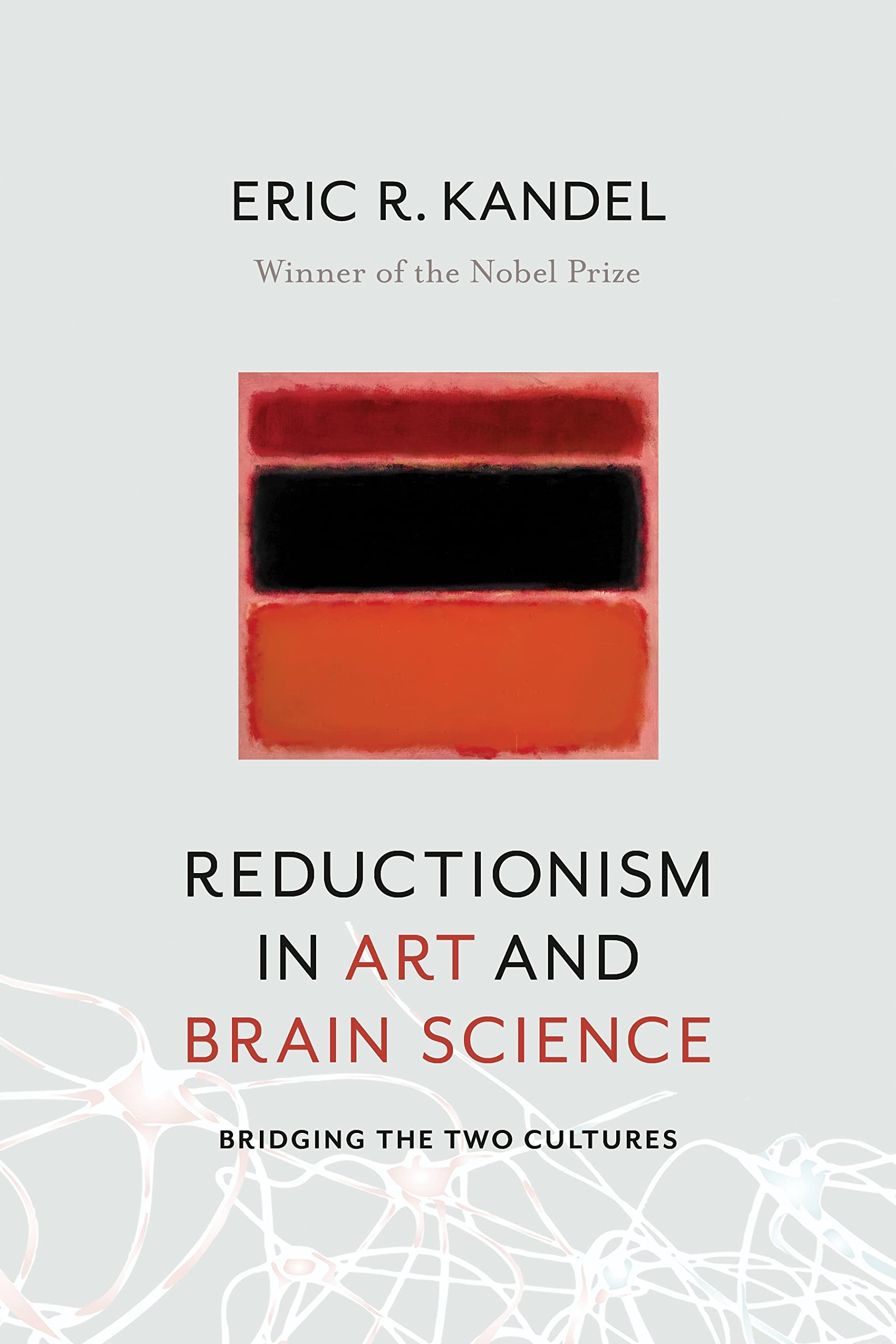
Title
Reductionism in Art and Brain Science: Bridging the Two Cultures,New
Sold by Ergodebooks, an authorized reseller.
Returns accepted within 30 days | support@ergodebooks.com
Shipping Information
- Free Standard Shipping — United States only
- Processing Time: 3–5 business days
- Estimated Delivery: 6–10 business days after dispatch
- Double-boxed, fully insured & discreetly packaged
- Tracking number sent via email once dispatched
Returns & Refund
Returns accepted within 30 days of delivery.
Damaged or Defective Item
Free return shipping + replacement or full refund
Wrong Item Received
Free return shipping + replacement or full refund
Change of Mind
Return shipping at customer's expense · 25% restocking fee applies
Payment Option

Are art and science separated by an unbridgeable divide? Can they find common ground? In this new book, neuroscientist Eric R. Kandel, whose remarkable scientific career and deep interest in art give him a unique perspective, demonstrates how science can inform the way we experience a work of art and seek to understand its meaning. Kandel illustrates how reductionismthe distillation of larger scientific or aesthetic concepts into smaller, more tractable componentshas been used by scientists and artists alike to pursue their respective truths. He draws on his Nobel Prizewinning work revealing the neurobiological underpinnings of learning and memory in sea slugs to shed light on the complex workings of the mental processes of higher animals.In Reductionism in Art and Brain Science, Kandel shows how this radically reductionist approach, applied to the most complex puzzle of our timethe brainhas been employed by modern artists who distill their subjective world into color, form, and light. Kandel demonstrates through bottomup sensory and topdown cognitive functions how science can explore the complexities of human perception and help us to perceive, appreciate, and understand great works of art. At the heart of the book is an elegant elucidation of the contribution of reductionism to the evolution of modern art and its role in a monumental shift in artistic perspective. Reductionism steered the transition from figurative art to the first explorations of abstract art reflected in the works of Turner, Monet, Kandinsky, Schoenberg, and Mondrian. Kandel explains how, in the postwar era, Pollock, de Kooning, Rothko, Louis, Turrell, and Flavin used a reductionist approach to arrive at their abstract expressionism and how Katz, Warhol, Close, and Sandback built upon the advances of the New York School to reimagine figurative and minimal art. Featuring captivating drawings of the brain alongside fullcolor reproductions of modern art masterpieces, this book draws out the common concerns of science and art and how they illuminate each other.
⚠️ WARNING (California Proposition 65):
This product may contain chemicals known to the State of California to cause cancer, birth defects, or other reproductive harm.
For more information, please visit www.P65Warnings.ca.gov.
- Q: How many pages does this book have? A: This book has two hundred forty pages. It offers an in-depth exploration of the relationship between art and brain science.
- Q: What are the dimensions of this book? A: The dimensions of this book are nine point twenty-one inches in length, six point three inches in width, and zero point eight inches in height.
- Q: What type of binding does this book have? A: This book is bound in hardcover. Hardcover binding provides durability and a more prestigious appearance.
- Q: Who is the author of this book? A: The author of this book is Eric R. Kandel. He is a renowned neuroscientist and a Nobel Prize winner.
- Q: What category does this book fall under? A: This book falls under the History category. It explores significant themes in both art and brain science.
- Q: Is this book suitable for beginners in art or science? A: Yes, this book is suitable for beginners. It presents complex ideas in an accessible manner, making it easy to understand.
- Q: What themes are explored in this book? A: This book explores themes such as reductionism, art perception, and the relationship between science and art.
- Q: Is this book recommended for art students? A: Yes, this book is recommended for art students. It provides valuable insights into how scientific principles can enhance the understanding of art.
- Q: Can I use this book for academic purposes? A: Yes, this book can be used for academic purposes. It offers a scholarly perspective on the interplay between art and brain science.
- Q: What type of illustrations are included in the book? A: The book includes captivating drawings of the brain and full-color reproductions of modern art masterpieces.
- Q: How should I care for this hardcover book? A: To care for this hardcover book, keep it in a dry environment and store it upright on a shelf. Avoid exposing it to extreme temperatures.
- Q: Is this book safe for children? A: Yes, this book is safe for older children and teens. However, it is recommended for readers with an interest in art and science.
- Q: What if I receive a damaged book? A: If you receive a damaged book, you should contact customer service for a replacement or refund. Always check the return policy.
- Q: Does this book come with a warranty? A: No, this book does not come with a warranty. However, you can return it if it is damaged upon arrival.
- Q: Is there a specific reading level for this book? A: This book is suitable for high school age and above. It discusses complex concepts that may require prior knowledge.
- Q: Can I find this book in libraries? A: Yes, this book is likely available in libraries. Its academic nature makes it a common choice for educational institutions.