
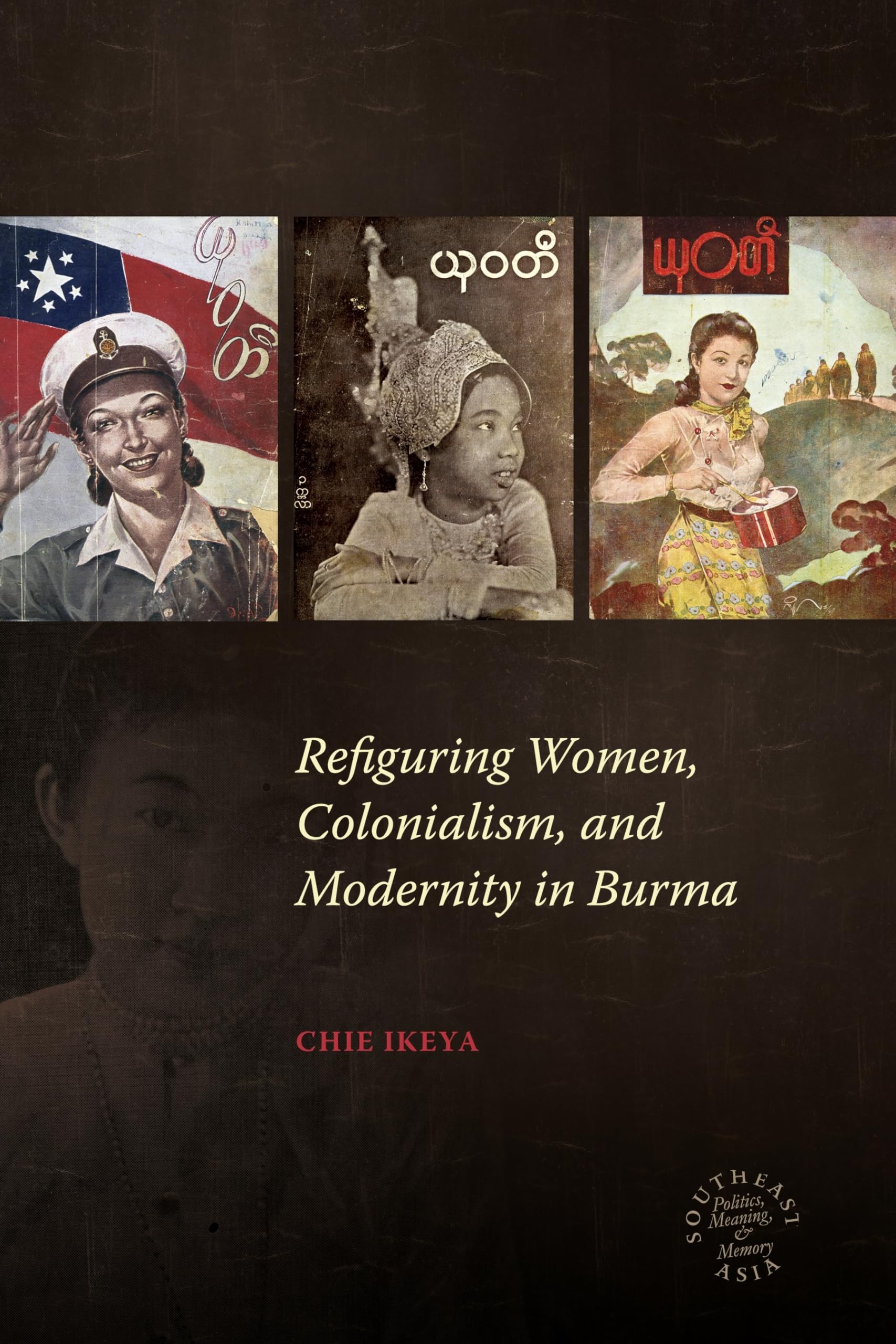
Title
Refiguring Women, Colonialism, And Modernity In Burma (Southeast Asia: Politics, Meaning, And Memory, 21),Used
Processing time: 1-3 days
US Orders Ships in: 3-5 days
International Orders Ships in: 8-12 days
Return Policy: 15-days return on defective items
Payment Option

Refiguring Women, Colonialism, And Modernity In Burma Presents The First Study Of One Of The Most Prevalent And Critical Topics Of Public Discourse In Colonial The Woman Of The Khit Kalathe Woman Of The Timeswho Burst Onto The Covers And Pages Of Novels, Newspapers, And Advertisements In The 1920S. Educated And Politicized, Earner And Consumer, Burmese And Westernized, She Embodied The Possibilities And Challenges Of The Modern Era, As Well As The Hopes And Fears It Evoked. In Refiguring Women, Chie Ikeya Interrogates What These Shifting And Competing Images Of The Feminine Reveal About The Experience Of Modernity In Colonial Burma. She Marshals A Wide Range Of Hitherto Unexamined Burmese Language Sources To Analyze Both The Discursive Figurations Of The Woman Of The Khit Kala And The Choices And Actions Of Actual Women Whowhether Pursuing Higher Education, Becoming Political, Or Adopting New Clothes And Hairstylesunsettled Existing Norms And Contributed To Making The Woman Of The Khit Kala The Privileged Idiom For Debating Colonialism, Modernization, And Nationalism.The First Booklength Social History Of Burma To Utilize Gender As A Category Of Sustained Analysis, Refiguring Women Challenges The Reigning Nationalist And Anticolonial Historical Narratives Of A Conceptually And Institutionally Monolithic Colonial Modernity That Made Inevitable The Rise Of Ethnonationalism And Xenophobia In Burma. The Study Demonstrates The Irreducible Heterogeneity Of The Colonial Encounter And Draws Attention To The Conjoined Development Of Cosmopolitanism And Nationalism. Ikeya Illuminates The Important Roles That Burmese Men And Women Played As Cultural Brokers And Agents Of Modernity. She Shows How Their Complex Engagements With Social Reform, Feminism, Anticolonialism, Media, And Consumerism Rearticulated The Boundaries Of Belonging And Foreignness In Religious, Racial, And Ethnic Terms.Refiguring Women Adds Significantly To Examinations Of Gender And Race Relations, Modernization, And Nationalism In Colonized Regions. It Will Be Of Interest To A Broad Audiencenot Least Those Working In The Fields Of Southeast Asian Studies, Colonial And Postcolonial Studies, Cultural Studies, And Women'S And Gender Studies.
⚠️ WARNING (California Proposition 65):
This product may contain chemicals known to the State of California to cause cancer, birth defects, or other reproductive harm.
For more information, please visit www.P65Warnings.ca.gov.
- Q: How many pages does the book have? A: The book contains two hundred fifty-six pages. This length allows for an in-depth exploration of women, colonialism, and modernity in Burma.
- Q: What is the binding type of this book? A: This book is available in paperback binding. Paperback editions are typically lighter and more flexible than hardcover versions.
- Q: What are the dimensions of the book? A: The book measures six inches in length, zero point seventy-one inches in width, and eight point nine inches in height. These dimensions make it portable and easy to read.
- Q: Who is the author of the book? A: The author is Professor Chie Ikeya. She is recognized for her expertise in gender studies and Southeast Asian history.
- Q: What is the main theme of the book? A: The main theme revolves around the representation of women during colonial times in Burma. It examines the intersection of gender, colonialism, and modernity.
- Q: Is this book suitable for academic study? A: Yes, this book is suitable for academic study. It provides valuable insights into gender and race relations in colonial contexts.
- Q: How can I incorporate this book into my studies? A: You can incorporate this book by using it as a resource for research papers or discussions on gender dynamics in colonial Southeast Asia. It offers a rich analysis of historical narratives.
- Q: Is this book appropriate for high school students? A: Yes, high school students studying history or gender studies can benefit from this book. It presents complex themes in an accessible manner.
- Q: What kind of sources does the author use? A: The author utilizes a wide range of unexamined Burmese language sources. This adds depth and authenticity to her analysis of women's roles in colonial Burma.
- Q: How should I store this book? A: Store the book in a cool, dry place. Avoid exposure to direct sunlight to preserve the quality of the pages and cover.
- Q: Can I donate this book after reading it? A: Yes, you can donate the book after reading. Consider donating to libraries or educational institutions interested in Southeast Asian studies.
- Q: What if the book arrives damaged? A: If the book arrives damaged, you should contact the seller for a return or exchange. Most retailers have policies to handle such situations.
- Q: Is there a warranty for this book? A: No, there is typically no warranty for books. However, check with the retailer for their return policy.
- Q: How can I contact support if I have issues with my order? A: You can contact the customer support of the retailer where you purchased the book. They will assist you with any order-related issues.
- Q: Will this book be helpful for understanding nationalism in Burma? A: Yes, the book provides insights into nationalism in Burma. It discusses how gender roles intersect with nationalist movements.
- Q: Is this book a good resource for cultural studies? A: Yes, it is an excellent resource for cultural studies. The author explores the roles of men and women in shaping modernity and culture in colonial Burma.