
Title
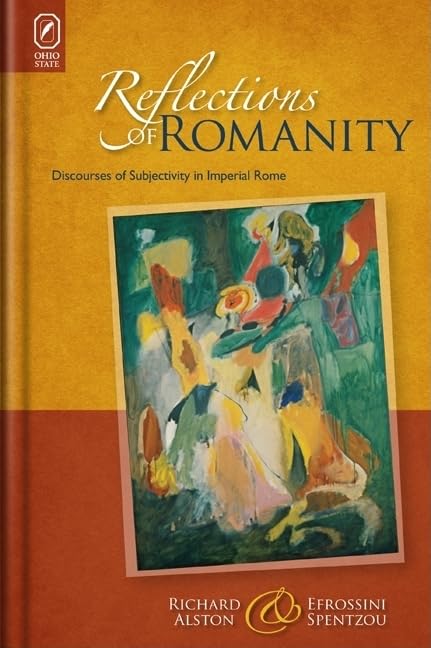
Reflections Of Romanity: Discourses Of Subjectivity In Imperial Rome (Classical Memories/Modern Identitie),Used
Sold by Ergodebooks, an authorized reseller.
Returns accepted within 30 days | support@ergodebooks.com
Shipping Information
- Free Standard Shipping — United States only
- Processing Time: 3–5 business days
- Estimated Delivery: 6–10 business days after dispatch
- Double-boxed, fully insured & discreetly packaged
- Tracking number sent via email once dispatched
Returns & Refund
Returns accepted within 30 days of delivery.
Damaged or Defective Item
Free return shipping + replacement or full refund
Wrong Item Received
Free return shipping + replacement or full refund
Change of Mind
Return shipping at customer's expense · 25% restocking fee applies
Payment Option

Product Description Reflections of Romanity: Discourses of Subjectivity in Imperial Rome, by Richard Alston and Efrossini Spentzou, challenges and provokes debate about how we understand the Roman world, and ourselves, by engagement with the early imperial literature of the midfirst to early secondcentury CE. Alston and Spentzou explore Roman subjectivity to illuminate a society whose fragmentation presented considerable challenges to contemporary thinkers. These members of the elite and intellectual classes faced complex ideological choices in relation to how they could define themselves in relation to imperial society.Reflections of Romanity draws on presentday reflections on selfhood while at the same time uncovering processes of selfanalysis, notably by tracing individuals reactions to moments of crisis or uncertainty. Thus it sets up a dialogue between the ancient texts it discusses, including the epics of Lucan and Statius, the letters of the Younger Pliny, Silius Italicus Punica, and Tacitus historical writings, and works of the modern period. Given the importance of classical thinking about the self in modern thought, this book addresses both a classical and a philosophical/literary critical audience. Review This is a thoughtprovoking and absorbing book. Its methodology and its studied orientation, as much toward the concerns of the present as the past, mark it out as a distinctive contribution.Duncan Kennedy, professor of Latin literature, Bristol University About the Author Richard Alston is professor of Roman history and Efrossini Spentzou is senior lecturer in Latin, both at Royal Holloway, University of London.
⚠️ WARNING (California Proposition 65):
This product may contain chemicals known to the State of California to cause cancer, birth defects, or other reproductive harm.
For more information, please visit www.P65Warnings.ca.gov.