If you have any questions, you are always welcome to contact us. We'll get back to you as soon as possible, withing 24 hours on weekdays.
Customer service
All questions about your order, return and delivery must be sent to our customer service team by e-mail at yourstore@yourdomain.com
Sale & Press
If you are interested in selling our products, need more information about our brand or wish to make a collaboration, please contact us at press@yourdomain.com
Help
If you have any questions, you are always welcome to contact us. We'll get back to you as soon as possible, withing 24 hours on weekdays.
Customer service
All questions about your order, return and delivery must be sent to our customer service team by e-mail at yourstore@yourdomain.com
Sale & Press
If you are interested in selling our products, need more information about our brand or wish to make a collaboration, please contact us at press@yourdomain.com
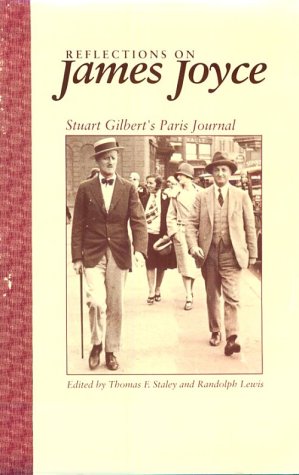
Stuart Gilbert's friendship with James Joyce began in Paris in 1927 after Gilbert read several pages from a forthcoming French translation of Ulysses in the window of Sylvia Beach's Shakespeare and Company book shop and went in to tell Beach that the translation was poorly done. She reported the encounter to Joyce, who subsequently sought out Gilbert. Their meeting began a literary collaboration and friendship that lasted until Joyce's death in 1941. This journal is a chronicle of that remarkable and productive friendship. Stuart Gilbert records many amusing anecdotes and provocative opinions regarding Joyce's social life, his relationship with his wife, Nora, and his compositional techniques for Finnegans Wake. Also included in the book are some of Joyce's previously unpublished letters to Gilbert (also reproduced in photographs), numerous unpublished photographs, and a typically dyspeptic 1941 essay on Joyce, Paul Lon, and Herbert Gorman by Gilbert. The volume is fully annotated and contains an introduction by noted Joyce scholar Thomas F. Staley. These materials from the Stuart Gilbert Archive of the Harry Ransom Humanities Research Center at the University of Texas at Austin offer new perspectives on literary Paris of the 1920s and 1930s. They will be important for everyone interested in the modernist period.
⚠️ WARNING (California Proposition 65):
This product may contain chemicals known to the State of California to cause cancer,
birth defects, or other reproductive harm.
For MAP (Minimum Advertised Price) violations and Intellectual Property (IP) or Trademark concerns, please contact:
support@ergodebooks.com
⚠️ California Proposition 65 Warning: Some products sold on this website may expose you to chemicals known to the State of California to cause cancer, birth defects, or other reproductive harm. For more information, visit www.P65Warnings.ca.gov.