
Title
Reforming Jim Crow: Southern Politics and State in the Age Before Brown,Used
Sold by Ergodebooks, an authorized reseller.
Returns accepted within 30 days | support@ergodebooks.com
Shipping Information
- Free Standard Shipping — United States only
- Processing Time: 3–5 business days
- Estimated Delivery: 6–10 business days after dispatch
- Double-boxed, fully insured & discreetly packaged
- Tracking number sent via email once dispatched
Returns & Refund
Returns accepted within 30 days of delivery.
Damaged or Defective Item
Free return shipping + replacement or full refund
Wrong Item Received
Free return shipping + replacement or full refund
Change of Mind
Return shipping at customer's expense · 25% restocking fee applies
Payment Option

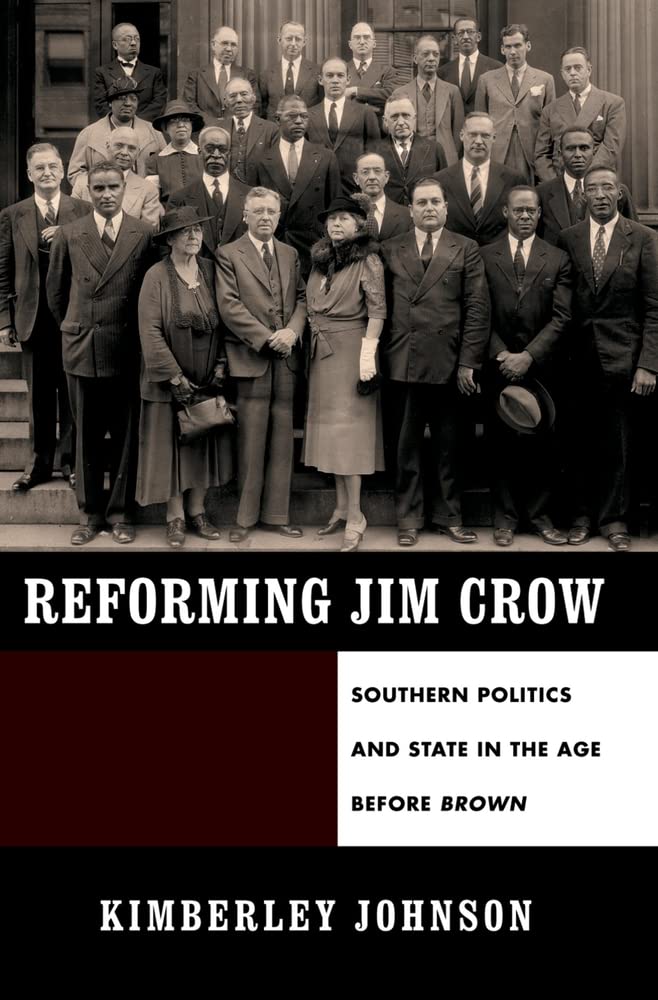
Historians of the Civil Rights era typically treat the key events of the 1950s Brown v. Board of Education, sitins, bus boycotts, and marchesas a revolutionary social upheaval that upended a rigid caste system. While the 1950s was a watershed era in Southern and civil rights history, the tendency has been to paint the preceding Jim Crow era as a brutal system that featured none of the progressive reform impulses so apparent at the federal level and in the North. As Kimberley Johnson shows in this pathbreaking reappraisal of the Jim Crow era, this argument is too simplistic, and is true to neither the 1950s nor the long era of Jim Crow that finally solidified in 1910. Focusing on the political development of the South between 1910 and 1954, Johnson considers the genuine efforts by white and black progressives to reform the system without destroying it. These reformers assumed that the system was there to stay, and therefore felt that they had to work within it in order to modernize the South. Consequently, white progressives tried to install a bettermeaning more equitableseparatebutequal system, and elite black reformers focused on ameliorative (rather than confrontational) solutions that would improve the lives of African Americans. Johnson concentrates on local and state reform efforts throughout the South in areas like schooling, housing, and labor. Many of the reforms made a difference, but they had the ironic impact of generating more demand for social change among blacks. She is able to show how demands slowly rose over time, and how the system laid the seeds of its own destruction. The reformers' commitment to a system that was less unequalalbeit not truly equaland more like the North led to significant policy changes over time. As Johnson powerfully demonstrates, our lack of knowledge about the cumulative policy transformations resulting from the Jim Crow reform impulse impoverishes our understanding of the Civil Rights revolution. Reforming Jim Crow rectifies that.
⚠️ WARNING (California Proposition 65):
This product may contain chemicals known to the State of California to cause cancer, birth defects, or other reproductive harm.
For more information, please visit www.P65Warnings.ca.gov.