
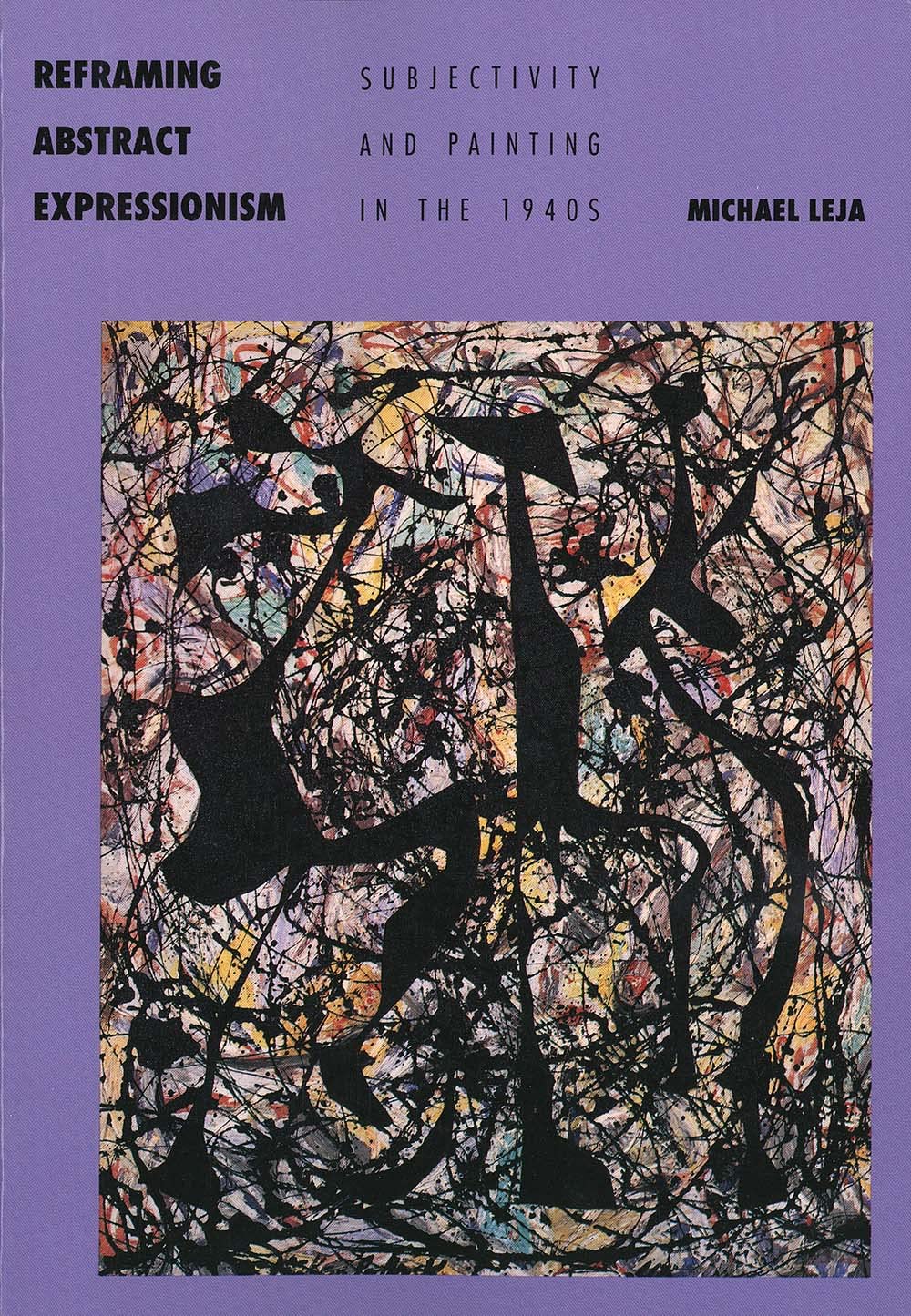
Title
Reframing Abstract Expressionism: Subjectivity And Painting In The 1940S
Sold by Ergodebooks, an authorized reseller.
Returns accepted within 30 days | support@ergodebooks.com
Shipping Information
- Free Standard Shipping — United States only
- Processing Time: 3–5 business days
- Estimated Delivery: 6–10 business days after dispatch
- Double-boxed, fully insured & discreetly packaged
- Tracking number sent via email once dispatched
Returns & Refund
Returns accepted within 30 days of delivery.
Damaged or Defective Item
Free return shipping + replacement or full refund
Wrong Item Received
Free return shipping + replacement or full refund
Change of Mind
Return shipping at customer's expense · 25% restocking fee applies
Payment Option

In The Wake Of World War Ii, The Paintings Of Jackson Pollock, Mark Rothko, Barnett Newman, Willem De Kooning, And Other New York School Artists Participated In A Culturewide Initiative To Reimagine The Self. At A Time When Widely Held Beliefs About Human Nature And The Human Condition Were Coming To Seem To Many Commentators Increasingly Outdated And Inadequate, Abstract Expressionism Gave Compelling Visual Form To A New Subjectivitya New Experience And Idea Of Self.In This Original And Wideranging Study, Michael Leja Argues That The Interest Of These Artists In Tapping Primitive And Unconscious Components Of Self Aligns Them With Many Contemporary Essayists, Hollywood Filmmakers, Journalists, And Popular Philosophers Who Were Turning, Like The Artists, To Psychology, Anthropology, And Philosophy In The Effort To Reformulate Individual Identity. Taking Pollock'S Paintings And Their Reception As A Case Study, Leja Shows That Critics Located In Pollock'S Abstract Forms A Web Of Metaphorsincluding Spatial Entrapment, Conflicted Production, Energy Flow, Gendered Opposition, And Unconsciousnessthat Situated The Paintings In Mainstream Cultural Discourses On The Individual'S Sense Of Self And Identity. In This Interpretative Frame, The Cultural And Ideological Character Of The Art Is Illuminated. According To Leja, Abstract Expressionism Effectively Enacted And Represented The New, Conflicted, Layered Subjectivity, A Feature That Helps To Account For The Support And Interest It Garnered From Cultural And Political Institutions Alike.
⚠️ WARNING (California Proposition 65):
This product may contain chemicals known to the State of California to cause cancer, birth defects, or other reproductive harm.
For more information, please visit www.P65Warnings.ca.gov.
- Q: How many pages does this book have? A: This book has four hundred pages. It provides an in-depth exploration of Abstract Expressionism and its cultural significance.
- Q: What is the binding type of this book? A: This book is paperback bound. This makes it lightweight and portable, ideal for reading on the go.
- Q: What are the dimensions of this book? A: The book measures ten inches in length, seven point zero one inches in width, and one inch in height. These dimensions make it easy to handle and shelf.
- Q: Who is the author of this book? A: The author of this book is Michael Leja. He examines the intersection of art and identity in post-World War II America.
- Q: What is the subject matter of this book? A: This book focuses on Abstract Expressionism in the 1940s. It discusses the cultural and psychological influences on artists during this period.
- Q: Is this book suitable for beginners in art history? A: Yes, this book is suitable for beginners. It provides accessible insights into complex themes in art and culture.
- Q: What themes are explored in this book? A: The book explores themes of subjectivity, identity, and the artistic response to cultural changes. It connects art with psychology and philosophy.
- Q: Can this book be used as a reference for academic studies? A: Yes, this book can be used as an academic reference. It offers well-researched insights and a thorough bibliography for further reading.
- Q: How should I store this book to keep it in good condition? A: Store this book in a cool, dry place. Avoid direct sunlight and moisture to preserve its quality over time.
- Q: Is there any special care needed for this paperback book? A: No special care is needed beyond regular handling. Keep it away from extreme conditions to maintain its condition.
- Q: What if the book arrives damaged? A: If the book arrives damaged, you should contact customer support for a return or exchange. Have your order details ready for assistance.
- Q: Does the book contain illustrations or images? A: No, this book does not list any illustrations or images. It primarily focuses on text and critical analysis.
- Q: Is this book appropriate for young adults? A: Yes, this book is appropriate for young adults. It discusses themes relevant to identity and cultural understanding.
- Q: Are there any notable artists mentioned in this book? A: Yes, notable artists like Jackson Pollock, Mark Rothko, and Willem de Kooning are discussed. Their works exemplify the themes of Abstract Expressionism.
- Q: What makes this book unique in its genre? A: This book uniquely combines art criticism with psychological and cultural analysis. It provides a comprehensive view of Abstract Expressionism's impact.