
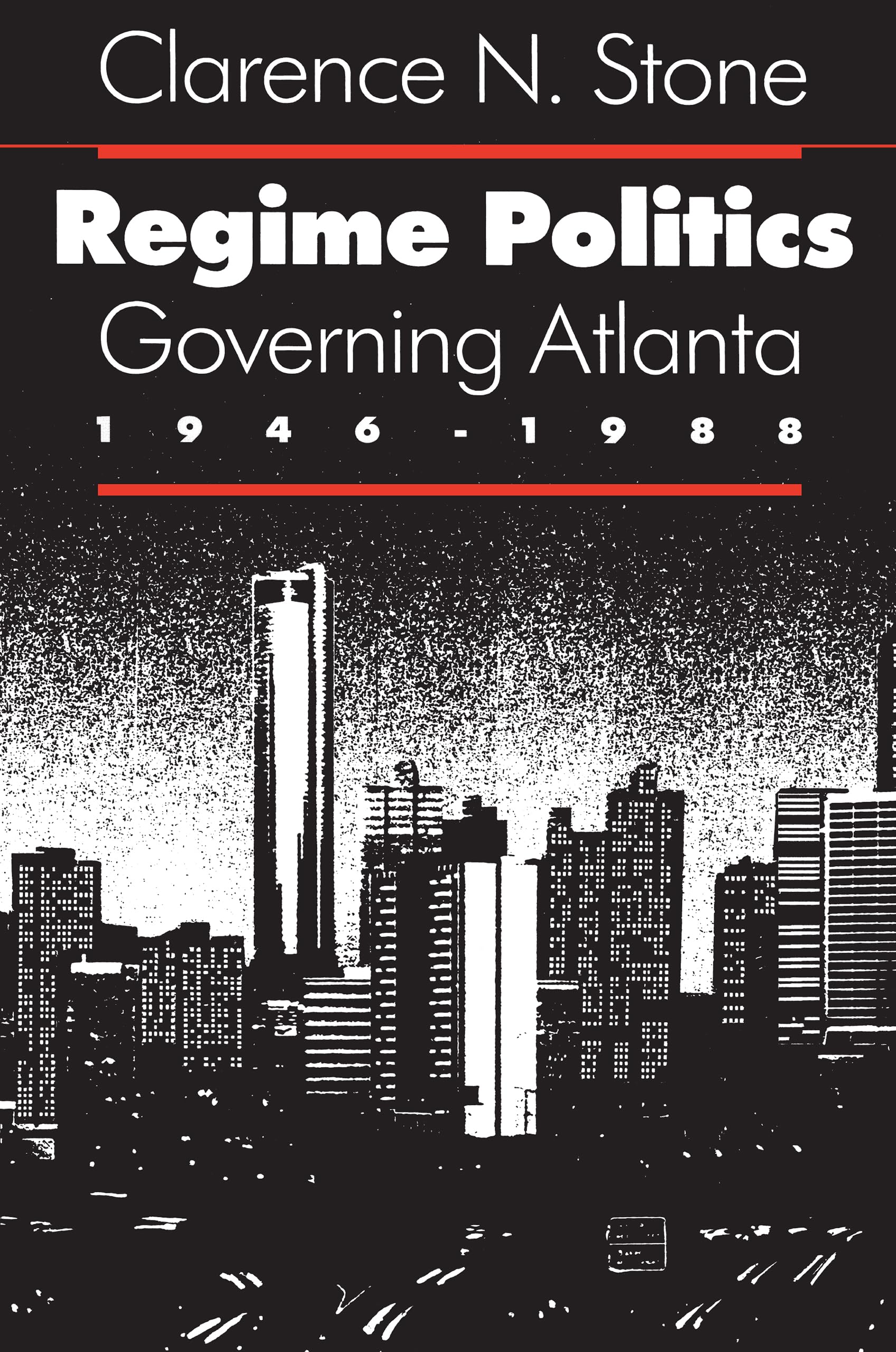
Title
Regime Politics: Governing Atlanta, 19461988,Used
Sold by Ergodebooks, an authorized reseller.
Returns accepted within 30 days | support@ergodebooks.com
Shipping Information
- Free Standard Shipping — United States only
- Processing Time: 3–5 business days
- Estimated Delivery: 6–10 business days after dispatch
- Double-boxed, fully insured & discreetly packaged
- Tracking number sent via email once dispatched
Returns & Refund
Returns accepted within 30 days of delivery.
Damaged or Defective Item
Free return shipping + replacement or full refund
Wrong Item Received
Free return shipping + replacement or full refund
Change of Mind
Return shipping at customer's expense · 25% restocking fee applies
Payment Option

From the end of Georgia's white primary in 1946 to the present, Atlanta has been a community of growing black electoral strength and stable white economic power. Yet the ballot box and investment money never became opposing weapons in a battle for domination. Instead, Atlanta experienced the emergence and evolution of a biracial coalition. Although beset by changing conditions and significant cost pressures, this coalition has remained intact. At critical junctures forces of cooperation overcame antagonisms of race and ideology.While retaining a critical distance from rational choice theory, author Clarence Stone finds the problem of collective action to be centrally important. The urban condition in America is one of weak and diffuse authority, and this situation favors any group that can act cohesively and control a substantial body of resources. Those endowed with a capacity to promote cooperation can attract allies and overcome oppositional forces.On the negative side of the political ledger, Atlanta's style of civic cooperation is achieved at a cost. Despite an ambitious program of physical redevelopment, the city is second only to Newark, New Jersey, in the poverty rate. Social problems, conflict of interest issues, and inattention to the production potential of a large lower class bespeak a regime unable to address a wide range of human needs. No simple matter of elite domination, it is a matter of governing arrangements built out of selective incentives and inside dealmaking; such arrangements can serve only limited purposes. The capacity of urban regimes to bring about elaborate forms of physical redevelopment should not blind us to their incapacity to address deeply rooted social problems.Stone takes the historical approach seriously. The flow of events enables us to see how some groups deploy their resource advantages to fashion governing arrangements to their liking. But no one enjoys a completely free hand; some arrangements are more workable than others. Stone's theoryminded analysis of key events enables us to ask why and what else might be done. Regime Politics offers readers a political history of postwar Atlanta and an elegant, innovative, and incisive conceptual framework destined to influence the way urban politics is studied.
⚠️ WARNING (California Proposition 65):
This product may contain chemicals known to the State of California to cause cancer, birth defects, or other reproductive harm.
For more information, please visit www.P65Warnings.ca.gov.
- Q: How many pages are in the book? A: There are three hundred twenty-eight pages in the book. This length provides an in-depth exploration of regime politics in Atlanta.
- Q: What is the binding type of this book? A: The book is available in paperback binding. This makes it lightweight and easy to handle for reading.
- Q: What are the dimensions of the book? A: The book measures six point two six inches in length, zero point seven five inches in width, and nine point two five inches in height. These dimensions make it a convenient size for both reading and storage.
- Q: Who is the author of this book? A: The author of this book is Clarence N. Stone. He is well-known for his insightful analysis of urban politics.
- Q: What is the main subject of the book? A: The book focuses on regime politics in Atlanta from nineteen forty-six to nineteen eighty-eight. It discusses the dynamics between black electoral strength and white economic power.
- Q: Is this book suitable for academic study? A: Yes, this book is suitable for academic study. It provides a critical framework and historical context for understanding urban politics.
- Q: How do I best read this book? A: You can read this book at your own pace, but it's ideal for readers interested in political history or urban studies. It’s recommended for readers with a keen interest in social dynamics.
- Q: What age group is this book appropriate for? A: This book is appropriate for adults and advanced students. It discusses complex political themes that may not be suitable for younger readers.
- Q: Can this book be used for a course on urban politics? A: Yes, it can be used for a course on urban politics. Its detailed analysis and historical context make it a valuable resource.
- Q: How should I care for this book? A: To care for the book, keep it in a dry, cool place and avoid direct sunlight. This will help preserve its condition over time.
- Q: Is this book a good gift for someone interested in politics? A: Yes, this book makes an excellent gift for anyone interested in politics. Its unique perspective on Atlanta's political history is both informative and engaging.
- Q: What if the book arrives damaged? A: If the book arrives damaged, you should contact the seller for a return or replacement. Most sellers have policies in place to handle such issues.
- Q: Is this book still relevant today? A: Yes, the themes explored in the book remain relevant today. The dynamics of race, power, and coalition-building continue to influence urban politics.
- Q: What makes this book unique? A: This book offers a unique historical perspective on Atlanta's political landscape. Its analysis of biracial coalitions is particularly noteworthy.
- Q: Are there any notable reviews of this book? A: Yes, the book has received positive reviews for its thorough research and insightful analysis. Many readers appreciate its contribution to the field of urban studies.