
Title
Regulation For Revenue: The Political Economy Of Land Use Exactions,Used
Sold by Ergodebooks, an authorized reseller.
Returns accepted within 30 days | support@ergodebooks.com
Shipping Information
- Free Standard Shipping — United States only
- Processing Time: 3–5 business days
- Estimated Delivery: 6–10 business days after dispatch
- Double-boxed, fully insured & discreetly packaged
- Tracking number sent via email once dispatched
Returns & Refund
Returns accepted within 30 days of delivery.
Damaged or Defective Item
Free return shipping + replacement or full refund
Wrong Item Received
Free return shipping + replacement or full refund
Change of Mind
Return shipping at customer's expense · 25% restocking fee applies
Payment Option

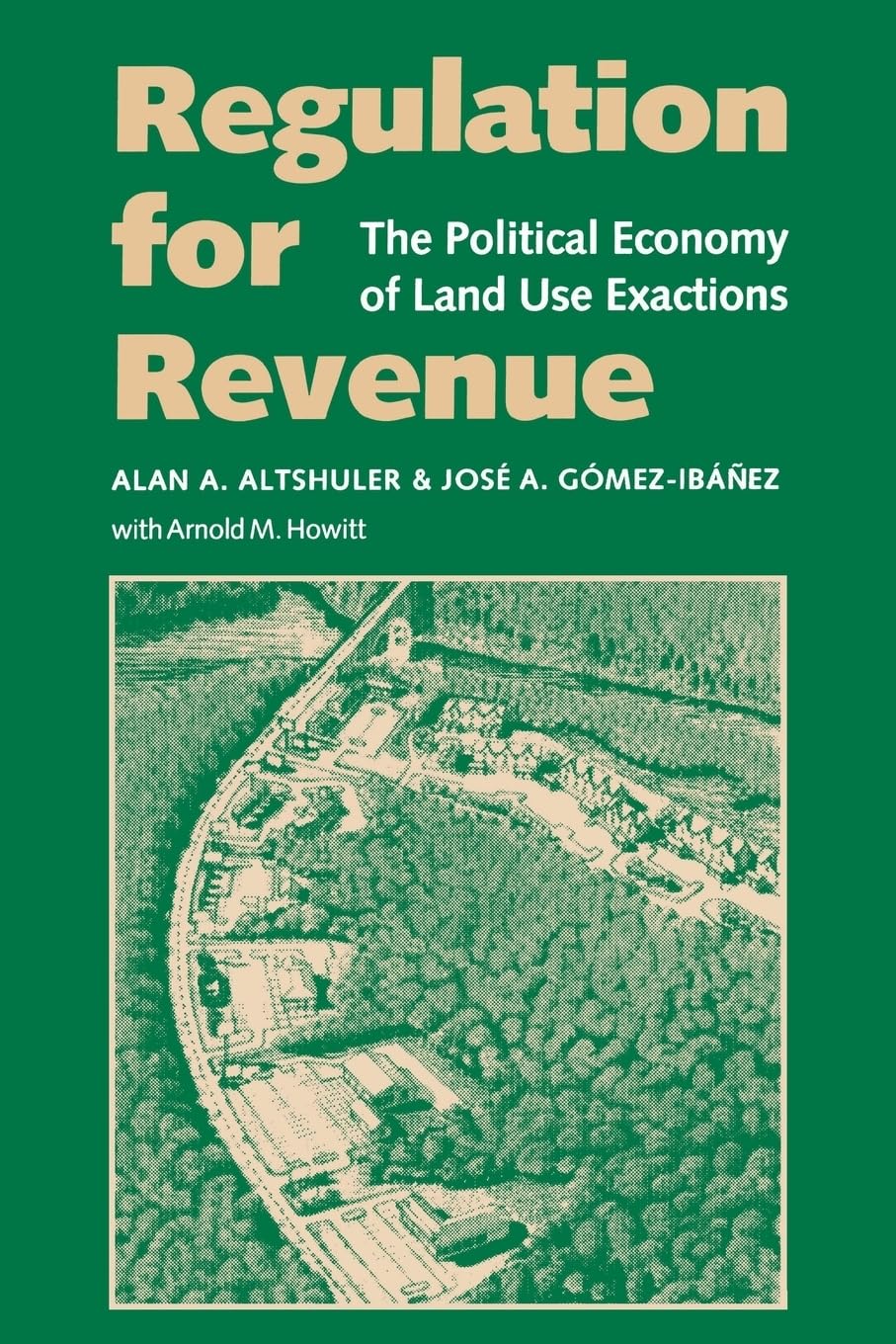
Over the past two decades Americans have become increasingly skeptical about the benefits of community growth and hostile to new taxeswhile continuing to demand improvements in local services. One response to this tension has been a burgeoning movement to raise public revenue by regulating growth. In this timely book, the authors explain that most growing localities now require private developers to finance public improvements as a condition for receiving permits to build. These permit conditions, known as ''exactions,'' are most commonly used to ensure that infrastructure capacity will be adequate to serve the occupants of new real estate developments and to lessen the harmful effects of these developments on other local citizens. Exactions are often used to finance new roads, water and waste disposal facilities, and public open space, but some communities have begun to require developer financing for such services as day care, job training, lowcost housing, and ride sharing. The authors see the dramatic growth of exaction financing as an epochal shift in the character of American land use regulation. A function once isolated from the local government mainstream is now close to heart of fiscal and public works decisionmaking. Politicians find exactions an extremely valuable tactic for resolving land use conflict. Lawyers and developers worry about how to establish appropriate limits on the use of exaction, economists debate their equity and efficiency, and planners consider their effect on urban reform. Regulation for Revenue offers an integrated appraisal of exaction financing, showing that exactions come in many forms and that they can be meaningfully evaluated only by comparison with realistic alternatives. These include growth restrictions, tolerance of infrastructure overload, and increased tax and user charges.'
⚠️ WARNING (California Proposition 65):
This product may contain chemicals known to the State of California to cause cancer, birth defects, or other reproductive harm.
For more information, please visit www.P65Warnings.ca.gov.