If you have any questions, you are always welcome to contact us. We'll get back to you as soon as possible, withing 24 hours on weekdays.
Customer service
All questions about your order, return and delivery must be sent to our customer service team by e-mail at yourstore@yourdomain.com
Sale & Press
If you are interested in selling our products, need more information about our brand or wish to make a collaboration, please contact us at press@yourdomain.com
Help
If you have any questions, you are always welcome to contact us. We'll get back to you as soon as possible, withing 24 hours on weekdays.
Customer service
All questions about your order, return and delivery must be sent to our customer service team by e-mail at yourstore@yourdomain.com
Sale & Press
If you are interested in selling our products, need more information about our brand or wish to make a collaboration, please contact us at press@yourdomain.com
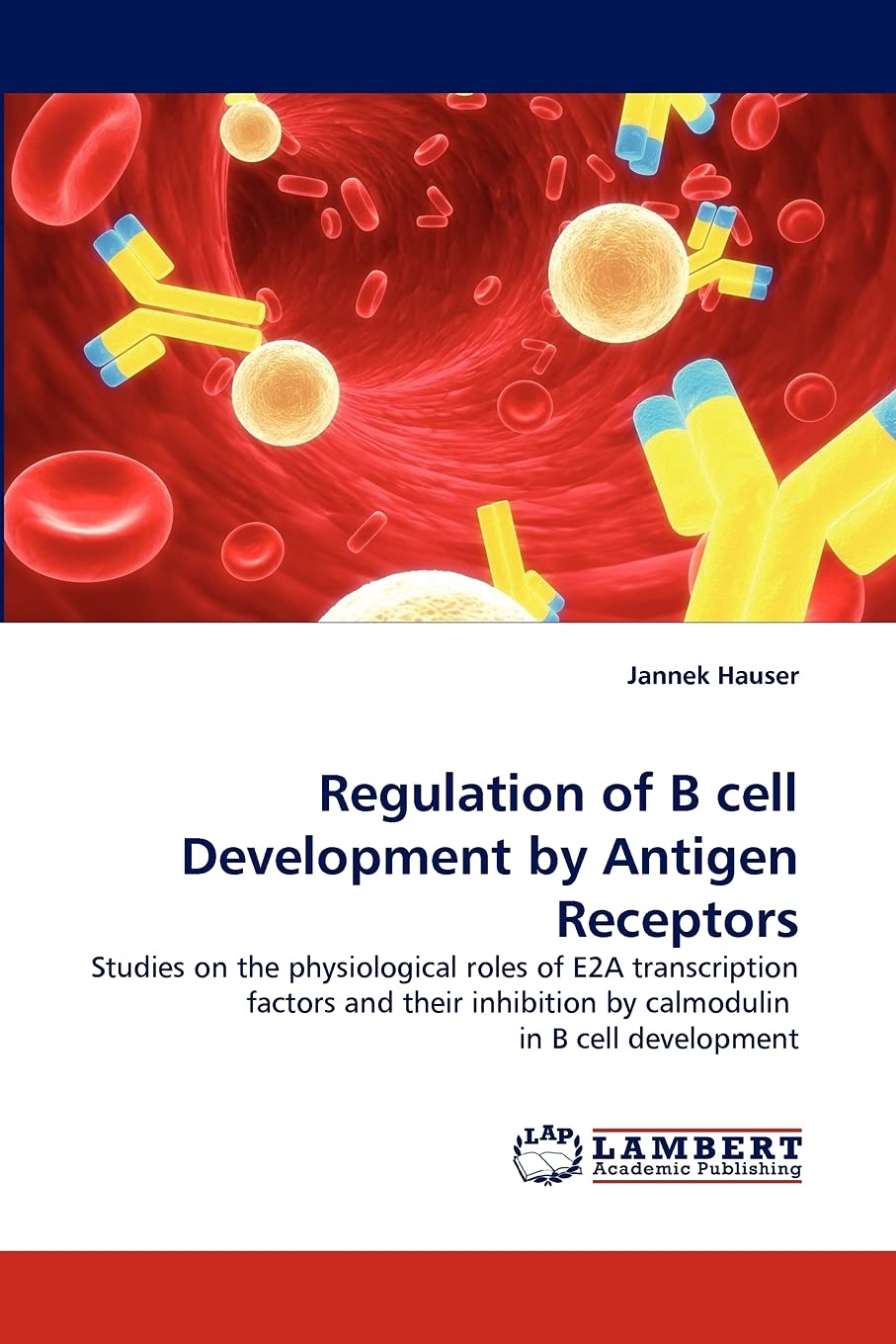
The Eprotein E2A is well known for its many roles during B cell development. Antigen receptor signaling that leads to inhibition of E2A by the calciumsensor protein calmodulin (CaM) has therefore very broad implications. The down regulation of the surrogate light chains of the preB cell receptor and also the coreceptor CD19 was shown to be through CaM inhibition of E2A. Furthermore, several components of the Ig recombination machinery including RAG1 and RAG2 are downregulated by this mechanism, and the recombination complex was shown to include the RAGs, Pax5 and E2A, which can be directly released from the Ig heavy chain locus by preB cell receptor signaling through CaM to achieve allelic exclusion. The tight regulation of the antibody diversification enzyme AID is also dependent on CaM inhibition of E2A, and a negative feedback regulation of the preB and B cell receptor proteins and coreceptors and proteins in signal pathways from the receptor was also shown to occur through E2A inhibition by CaM. Plasma cell differentiation is induced by very fast regulatory events, which are shown to be dependent on CaM inhibition of E2A.
⚠️ WARNING (California Proposition 65):
This product may contain chemicals known to the State of California to cause cancer,
birth defects, or other reproductive harm.
For MAP (Minimum Advertised Price) violations and Intellectual Property (IP) or Trademark concerns, please contact:
support@ergodebooks.com
⚠️ California Proposition 65 Warning: Some products sold on this website may expose you to chemicals known to the State of California to cause cancer, birth defects, or other reproductive harm. For more information, visit www.P65Warnings.ca.gov.