If you have any questions, you are always welcome to contact us. We'll get back to you as soon as possible, withing 24 hours on weekdays.
Customer service
All questions about your order, return and delivery must be sent to our customer service team by e-mail at yourstore@yourdomain.com
Sale & Press
If you are interested in selling our products, need more information about our brand or wish to make a collaboration, please contact us at press@yourdomain.com
Help
If you have any questions, you are always welcome to contact us. We'll get back to you as soon as possible, withing 24 hours on weekdays.
Customer service
All questions about your order, return and delivery must be sent to our customer service team by e-mail at yourstore@yourdomain.com
Sale & Press
If you are interested in selling our products, need more information about our brand or wish to make a collaboration, please contact us at press@yourdomain.com
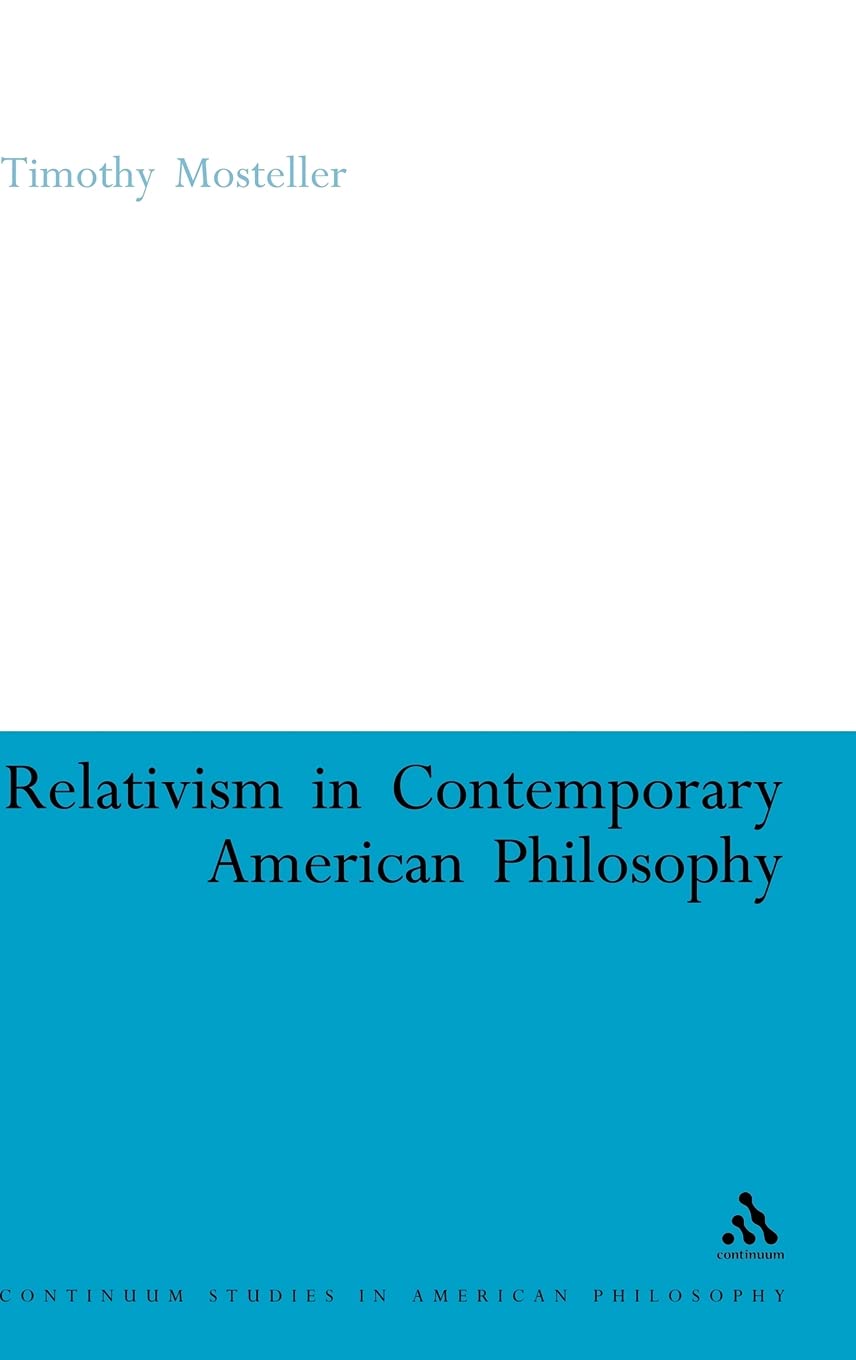
Relativism about knowledge or truth has always provoked the ire of philosophers. Ever since Protagoras declared in antiquity that "man is the measure of all things", relativism has been repeatedly attacked. Recently, however, Alasdair MacIntyre has observed that "relativism ... is one of those doctrines that have by now been refuted a number of times too often." Along with MacIntyre, Hilary Putnam and Richard Rorty have also argued that while relativism may be problematic, there are valuable insights in it that philosophers need to take notice of.This book sorts out exactly what those relativistic insights are, and where they are to be found within the works of these three leading latetwentiethcentury American philosophers. Timothy Mosteller begins with a review of the major traditional definitions of relativism and the classical arguments against it. He then examines twentiethcentury accounts and defenses of relativism and points out that each account faces problems similar to those of the traditional versions. The book continues with substantial treatments of the views of MacIntyre, Putnam and Rorty on relativism, with each thinker robustly engaging the opinions of the others. Mosteller concludes the book by developing an alternative approach to relativism about knowledge, which recognizes that while there may be no single 'global' criterion for all knowledge claims, there can be 'local' standards for settling particular disputes in such a way as to avoid the traditional hazards of relativism.
⚠️ WARNING (California Proposition 65):
This product may contain chemicals known to the State of California to cause cancer,
birth defects, or other reproductive harm.
For MAP (Minimum Advertised Price) violations and Intellectual Property (IP) or Trademark concerns, please contact:
support@ergodebooks.com
⚠️ California Proposition 65 Warning: Some products sold on this website may expose you to chemicals known to the State of California to cause cancer, birth defects, or other reproductive harm. For more information, visit www.P65Warnings.ca.gov.