
Title
Religion And The Making Of Nat Turner'S Virginia: Baptist Community And Conflict, 17401840 (The American South Series),Used
Sold by Ergodebooks, an authorized reseller.
Returns accepted within 30 days | support@ergodebooks.com
Shipping Information
- Free Standard Shipping — United States only
- Processing Time: 3–5 business days
- Estimated Delivery: 6–10 business days after dispatch
- Double-boxed, fully insured & discreetly packaged
- Tracking number sent via email once dispatched
Returns & Refund
Returns accepted within 30 days of delivery.
Damaged or Defective Item
Free return shipping + replacement or full refund
Wrong Item Received
Free return shipping + replacement or full refund
Change of Mind
Return shipping at customer's expense · 25% restocking fee applies
Payment Option

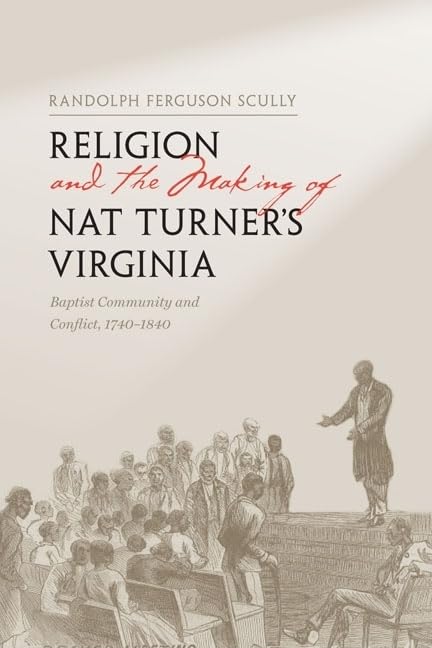
Religion and the Making of Nat Turner's Virginia provides a new interpretation of the rise of evangelical Christianity in the early American South by reconstructing the complex, biracial history of the Baptist movement in southeastern Virginia. This region and its religious history became a subject of intense national scrutiny in the wake of the 1831 revolt led by the enslaved preacher and prophet Nat Turner. But by the time Turner led his fellow slaves on their deadly march across the fields and swamps of Southampton County, Virginia's religious landscape had already been shaped by more than eighty years of conflict about the implications of evangelical faith for the evolving cluster of interrelated ideas about race, slavery, household, family, and patriarchy that constituted the state's social order.For both black and white Virginians, evangelical discourses of authority, community, and meaning provided the material for a wide variety of interpretations of Christianity's social and spiritual message during the Revolutionary and early national eras. Even as some white church leaders sought to institutionalize a white, paternalist vision of evangelicalism's meanings, rapidly increasing black participation in Baptist congregations in the early nineteenth century provided fertile ground for new, alternative interpretations of Baptist concepts and practices. The Turner rebellion brought these diverse subterranean currents of dissent to the surface in ways that upset the delicate balance between white institutional authority and black spiritual independence that had evolved in the previous decades. Reaction to the uprising intensified the trend toward separation and segregation of black and white religion in the antebellum period and had powerful, lasting effects on race relations and religious culture in America.
⚠️ WARNING (California Proposition 65):
This product may contain chemicals known to the State of California to cause cancer, birth defects, or other reproductive harm.
For more information, please visit www.P65Warnings.ca.gov.