
Title
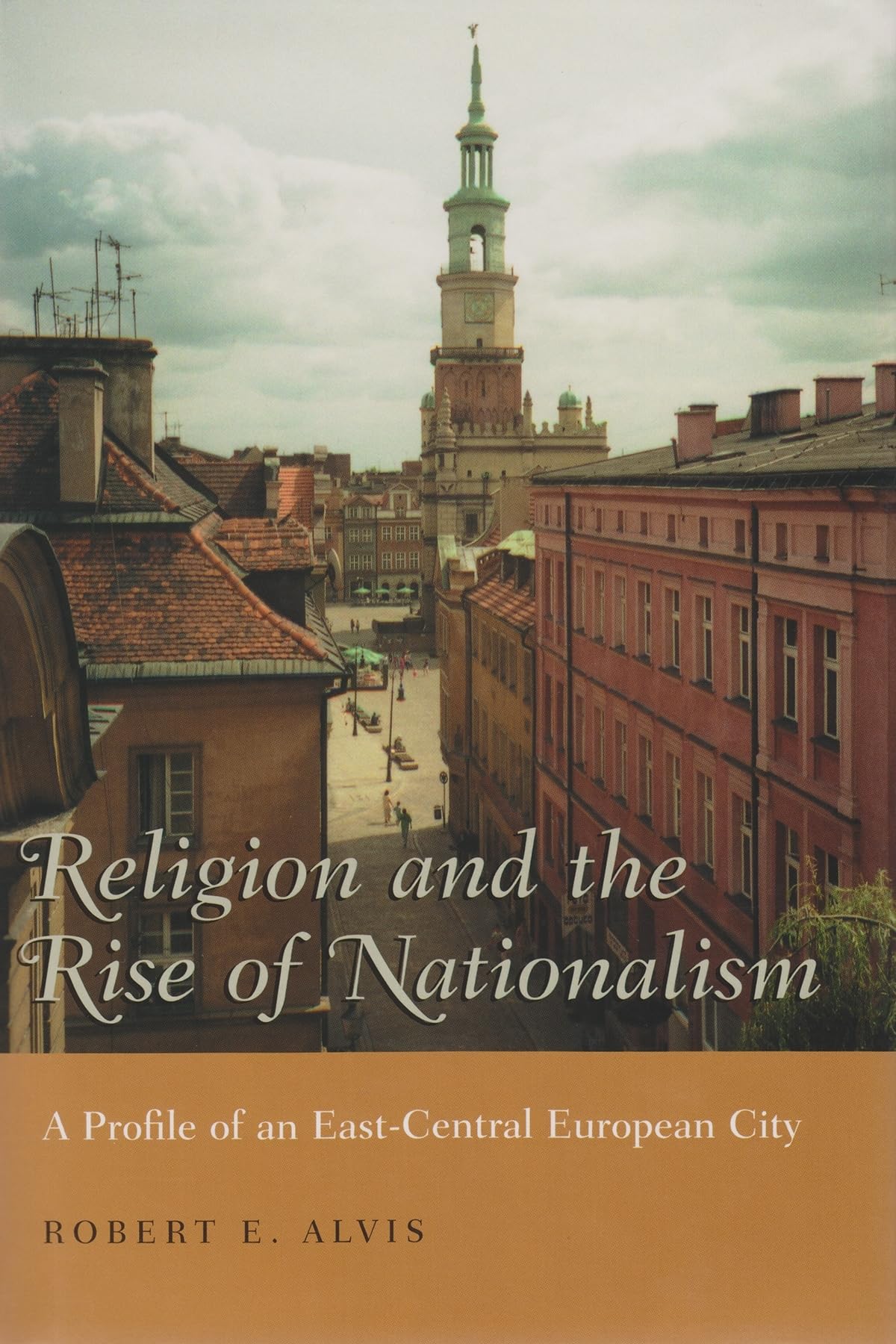
Religion and the Rise of Nationalism: A Profile of an EastCentral European City (Religion and Politics),Used
Sold by Ergodebooks, an authorized reseller.
Returns accepted within 30 days | support@ergodebooks.com
Shipping Information
- Free Standard Shipping — United States only
- Processing Time: 3–5 business days
- Estimated Delivery: 6–10 business days after dispatch
- Double-boxed, fully insured & discreetly packaged
- Tracking number sent via email once dispatched
Returns & Refund
Returns accepted within 30 days of delivery.
Damaged or Defective Item
Free return shipping + replacement or full refund
Wrong Item Received
Free return shipping + replacement or full refund
Change of Mind
Return shipping at customer's expense · 25% restocking fee applies
Payment Option

Currently part of Poland, the city of Poznan straddled an ethnic border zone of sorts prior to World War II, on the edge of a predominantly German sphere of settlement to the west and a predominantly Polish sphere to the east. This juxtaposition of cultures helped stimulate the development of vigorous nationalist movements in the first half of the nineteenth century, and Poznan emerged as an important center of such activity among Germans and Poles alike. Robert E. Alvis tracks the rise of nationalism in Poznan and examines how religious affiliation factored into the process. Drawing upon a wealth of archival data, including memoirs, police and government correspondence, and parish and archdiocesan records, the author reconstructs evolving patterns of collective identity during a time of rapid socioeconomic change and political, religious, and cultural ferment. He concludes that in Poznan, religion provided critical foundations for the development of Polish and German nationalist movements and enhanced their appeal across a broad demographic spectrum. This book encourages a rethinking of the widely held view that early European nationalism was largely a secular phenomenon at odds with religion.
⚠️ WARNING (California Proposition 65):
This product may contain chemicals known to the State of California to cause cancer, birth defects, or other reproductive harm.
For more information, please visit www.P65Warnings.ca.gov.
- Q: What is the main theme of 'Religion and the Rise of Nationalism'? A: The main theme of the book is the exploration of how religious affiliation influenced the rise of nationalism in the city of Poznan, highlighting the interactions between Polish and German nationalist movements.
- Q: Who is the author of the book? A: The author of 'Religion and the Rise of Nationalism' is Robert E. Alvis.
- Q: What type of book is this? A: This is a hardcover, used book in good condition, focusing on historical and political themes in East-Central Europe.
- Q: How many pages does the book contain? A: The book contains 256 pages.
- Q: When was this book published? A: The book was published on July 11, 2005.
- Q: What can I expect to learn from this book? A: Readers can expect to learn about the historical context of nationalism in Poznan, the role of religion in shaping collective identity, and the archival research findings presented by the author.
- Q: Is this book suitable for academic study? A: Yes, the book is suitable for academic study, especially for those interested in religious studies, political science, and European history.
- Q: Does the book include primary sources? A: Yes, the book draws upon various primary sources, including memoirs, government correspondence, and parish records.
- Q: What historical period does the book cover? A: The book primarily covers the first half of the nineteenth century, focusing on the developments leading up to World War II.
- Q: Is the book biased towards a specific perspective? A: The book aims to provide an analytical perspective on the rise of nationalism, presenting a balanced view of both Polish and German movements without promoting a specific bias.