
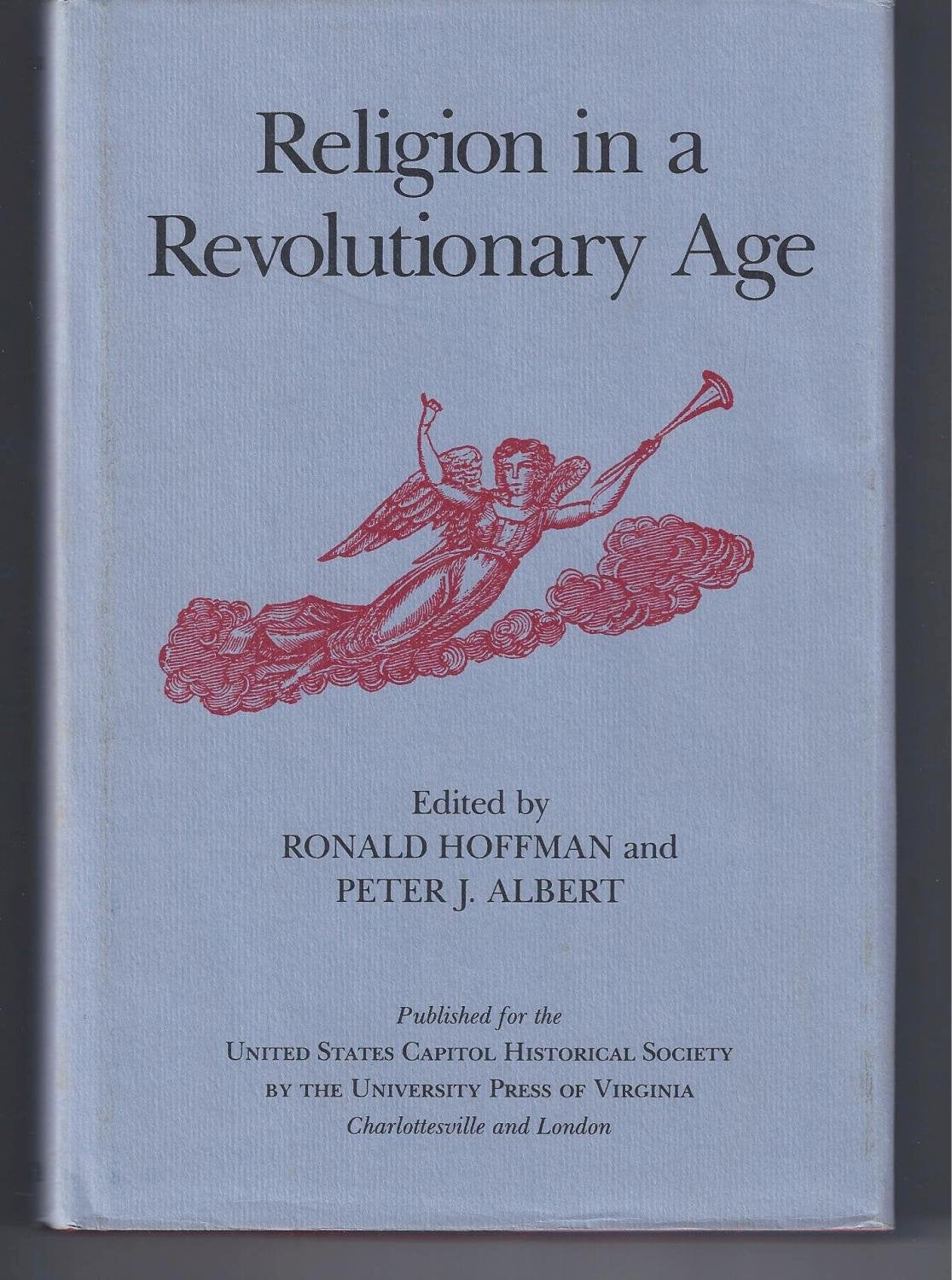
Title
Religion In A Revolutionary Age (Perspectives On The American Revolution),Used
Sold by Ergodebooks, an authorized reseller.
Returns accepted within 30 days | support@ergodebooks.com
Shipping Information
- Free Standard Shipping — United States only
- Processing Time: 3–5 business days
- Estimated Delivery: 6–10 business days after dispatch
- Double-boxed, fully insured & discreetly packaged
- Tracking number sent via email once dispatched
Returns & Refund
Returns accepted within 30 days of delivery.
Damaged or Defective Item
Free return shipping + replacement or full refund
Wrong Item Received
Free return shipping + replacement or full refund
Change of Mind
Return shipping at customer's expense · 25% restocking fee applies
Payment Option

Religion in a Revolutionary Age explores the rich variety and enormous complexity of religious experience in early America. Eleven essays address two broad themes: the role of religion in the Revolutionary upheaval itself and the influence of religion on the shaping of America's governing institutions. This broad focus both expands our understanding of the eighteenth century and carries implications for contemporary society.The two opening essays present contrasting assessments of religious experience in the British North American colonies. Jon Butler maintains that coercive authority was the foundation of all religious expression in the colonies, pointing to the importance of churchstate relations and the institutional strength, sophistication, and authority of religious denominations. Patricia U. Bonomi contends that most of the colonists were Dissenters and thus at odds with traditional English values, both religiously and politically.The following four essays study the religious experiences of women, blacks, workers, and evangelicals in Revolutionary America. Elaine Forman Crane explores the religious motivations and actions of women and their consequent impact on the political process. Sylvia R. Frey discusses the formative periods of AfricanAmerican Christianity in the South. Ronald Schultz evaluates the role of religion among Philadelphia's working class in the years after the Revolution. And Robert M. Calhoon studies evangelicalism in the South, particularly its impact on Revolutionary politics, its attempt to reconcile republicanism and Christianity, its congregational discipline, and its sermons.Several contributors then examine the relationship between religion and the political culture of the new nation. Stephen A. Marini analyzes the influence of religion on politics by focusing on the delegates to the state conventions called to ratify the new federal Constitution. Approaching the issue of religion and politics in the Revolutionary era from a different perspective, Edwin S. Gaustad outlines the provisions regulating religion in the state constitutions, the federal Constitution, and the Northwest Ordinance. M. L. Bradbury discusses the creation of structures of governance by three denominations Episcopalians, Presbyterians, and Baptists in the decades of the Revolutionary era and after. Paul K. Conkin's essay explores implications of the fact that the American Revolution was not paralleled by a religious revolution.In the final essay, Ruth H. Bloch reexamines the debate over Revolutionary ideology that currently rages in American Revolutionary historiography. She looks at the relative influence of communitycentered civic humanism and individualistic classical liberalism and their impact on the cultural life of Revolutionary America particularly the areas of religious and family issues.
⚠️ WARNING (California Proposition 65):
This product may contain chemicals known to the State of California to cause cancer, birth defects, or other reproductive harm.
For more information, please visit www.P65Warnings.ca.gov.