
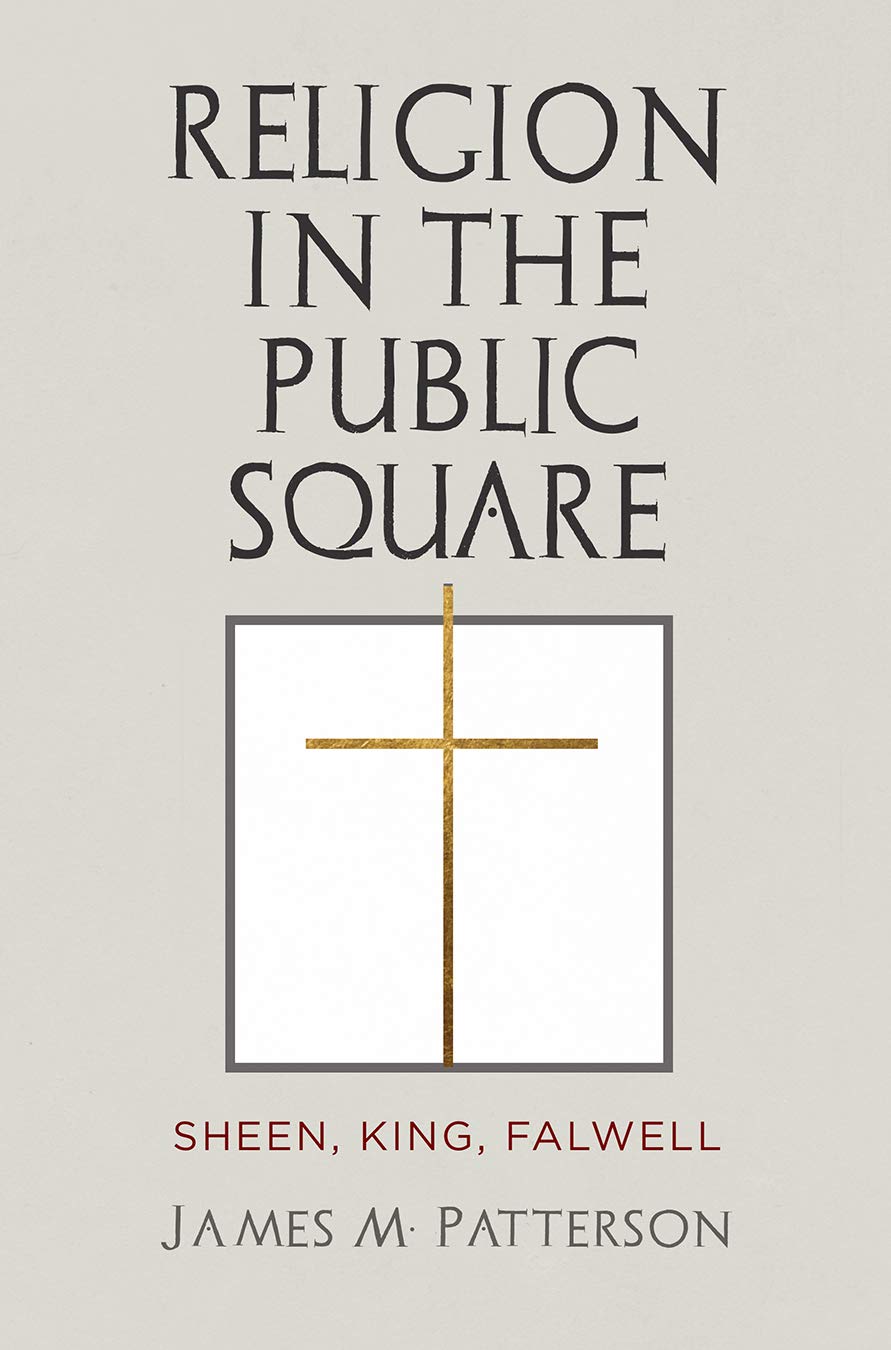
Title
Religion In The Public Square: Sheen, King, Falwell,Used
Sold by Ergodebooks, an authorized reseller.
Returns accepted within 30 days | support@ergodebooks.com
Shipping Information
- Free Standard Shipping — United States only
- Processing Time: 3–5 business days
- Estimated Delivery: 6–10 business days after dispatch
- Double-boxed, fully insured & discreetly packaged
- Tracking number sent via email once dispatched
Returns & Refund
Returns accepted within 30 days of delivery.
Damaged or Defective Item
Free return shipping + replacement or full refund
Wrong Item Received
Free return shipping + replacement or full refund
Change of Mind
Return shipping at customer's expense · 25% restocking fee applies
Payment Option

In Religion in the Public Square, James M. Patterson considers religious leaders who popularized theology through media campaigns designed to persuade the public. Ven. Fulton J. Sheen, Dr. Martin Luther King Jr., and Rev. Jerry Falwell differed profoundly on issues of theology and politics, but they shared an approach to public ministry that aimed directly at changing how Americans understood the nature and purpose of their country. From the 1930s through the 1950s, Sheen was an early adopter of paperbacks, radio, and television to condemn totalitarian ideologies and to defend American Catholicism against Protestant accusations of divided loyalty. During the 1950s and 1960s, King staged demonstrations and boycotts that drew the mass media to him. The attention provided him the platform to preach Christian love as a political foundation in direct opposition to white supremacy. Falwell started his own church, which he developed into a mass media empire. He then leveraged it during the late 1970s through the 1980s to influence the Republican Party by exhorting his audience to not only ally with religious conservatives around issues of abortion and the traditional family but also to vote accordingly.Sheen, King, and Falwell were so successful in popularizing their theological ideas that they won prestigious awards, had access to presidents, and witnessed the results of their labors. However, Patterson argues that Falwell's efforts broke with the longstanding refusal of religious public figures to participate directly in partisan affairs and thereby catalyzed the process of politicizing religion that undermined the JudeoChristian consensus that formed the foundation of American politics.
⚠️ WARNING (California Proposition 65):
This product may contain chemicals known to the State of California to cause cancer, birth defects, or other reproductive harm.
For more information, please visit www.P65Warnings.ca.gov.