
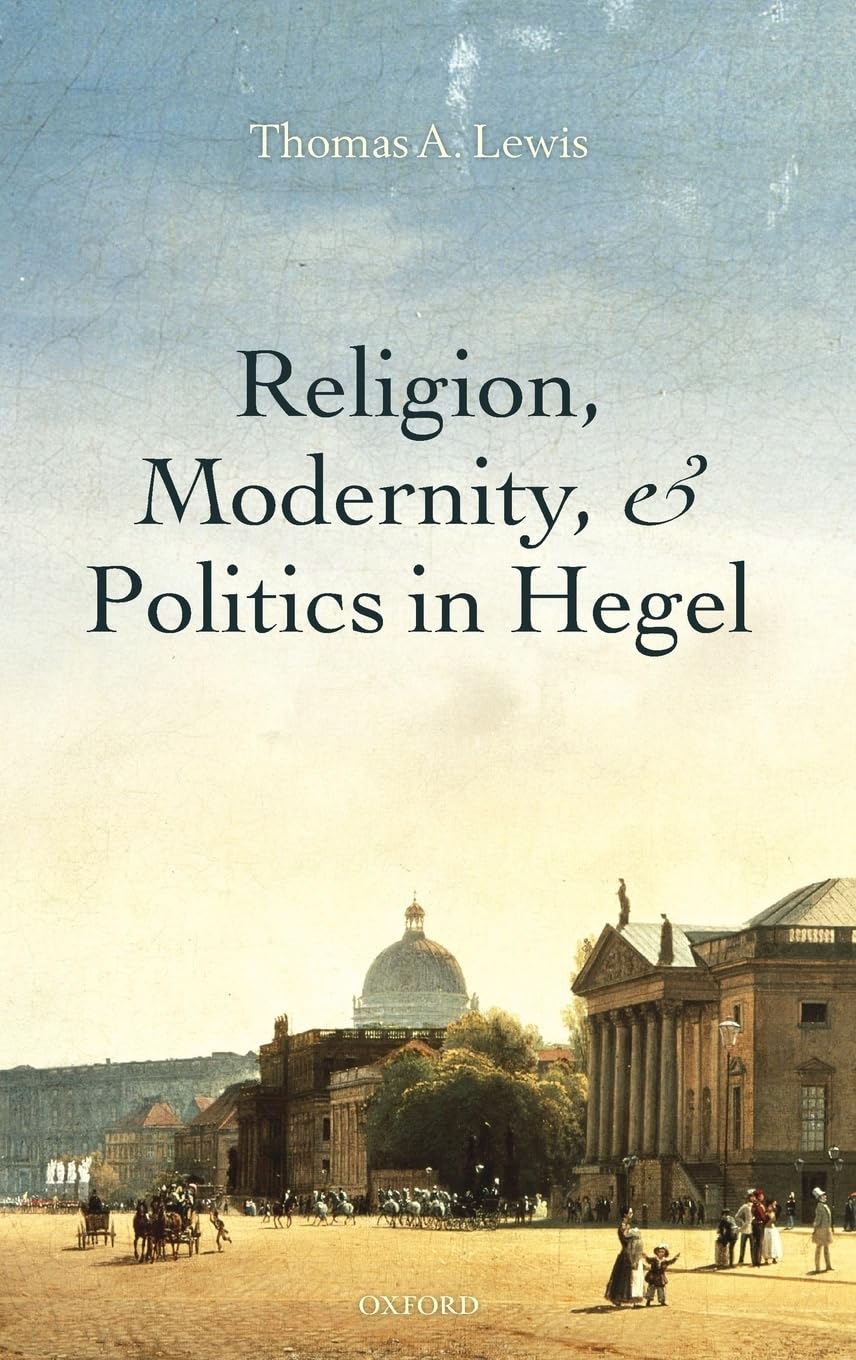
Title
Religion, Modernity, And Politics In Hegel
Sold by Ergodebooks, an authorized reseller.
Returns accepted within 30 days | support@ergodebooks.com
Shipping Information
- Free Standard Shipping — United States only
- Processing Time: 3–5 business days
- Estimated Delivery: 6–10 business days after dispatch
- Double-boxed, fully insured & discreetly packaged
- Tracking number sent via email once dispatched
Returns & Refund
Returns accepted within 30 days of delivery.
Damaged or Defective Item
Free return shipping + replacement or full refund
Wrong Item Received
Free return shipping + replacement or full refund
Change of Mind
Return shipping at customer's expense · 25% restocking fee applies
Payment Option

Religion, Modernity, and Politics in Hegel analyzes Hegel's philosophy of religion and develops its significance for ongoing debates about the relation between religion and politics as well as the history of the conceptualization of religion. One of the most vital currents in contemporary Hegel scholarship argues that Hegel radicalizes, rather than reneges upon, Kant's critique of metaphysics. Critics have claimed that this new scholarship cannot account for Hegel's treatment of religion. Addressing an important lacuna in the scholarship, Lewis argues that reading Hegel's philosophy of religion in relation to these nontraditional interpretations of his intellectual project as a whole generates a new understanding of Hegel as well as a new perspective on religion, politics, and modernity. In relation to the conceptualization of religion, Hegel's complex and multifaceted account of religion reconciles common contrasts, presenting religion as both personal and social, both emotional and cognitive, both theoretical and practical. In relation to politics, it is public without being theocratic and gives a decisive importance to individual conscience.Attending closely to Hegel's social, political, and intellectual context, the book begins with Hegel's early concerns with a modern civil religion in the tumultuous 1790s. After analyzing Hegel's crucial engagement with postKantian idealism, Lewis elaborates Hegel's mature philosophy of religion as presented in his Berlin Lectures on the Philosophy of Religion. This unique engagement between Hegel and the contemporary study of religion thus advances the nontraditionalist interpretation of Hegel's project as a whole and inspires a promising conception of religion that challenges those that have dominated both public discourse and religious studies scholarship.
⚠️ WARNING (California Proposition 65):
This product may contain chemicals known to the State of California to cause cancer, birth defects, or other reproductive harm.
For more information, please visit www.P65Warnings.ca.gov.