
Title
Religion of the Semites: The Fundamental Institutions,Used
Sold by Ergodebooks, an authorized reseller.
Returns accepted within 30 days | support@ergodebooks.com
Shipping Information
- Free Standard Shipping — United States only
- Processing Time: 3–5 business days
- Estimated Delivery: 6–10 business days after dispatch
- Double-boxed, fully insured & discreetly packaged
- Tracking number sent via email once dispatched
Returns & Refund
Returns accepted within 30 days of delivery.
Damaged or Defective Item
Free return shipping + replacement or full refund
Wrong Item Received
Free return shipping + replacement or full refund
Change of Mind
Return shipping at customer's expense · 25% restocking fee applies
Payment Option

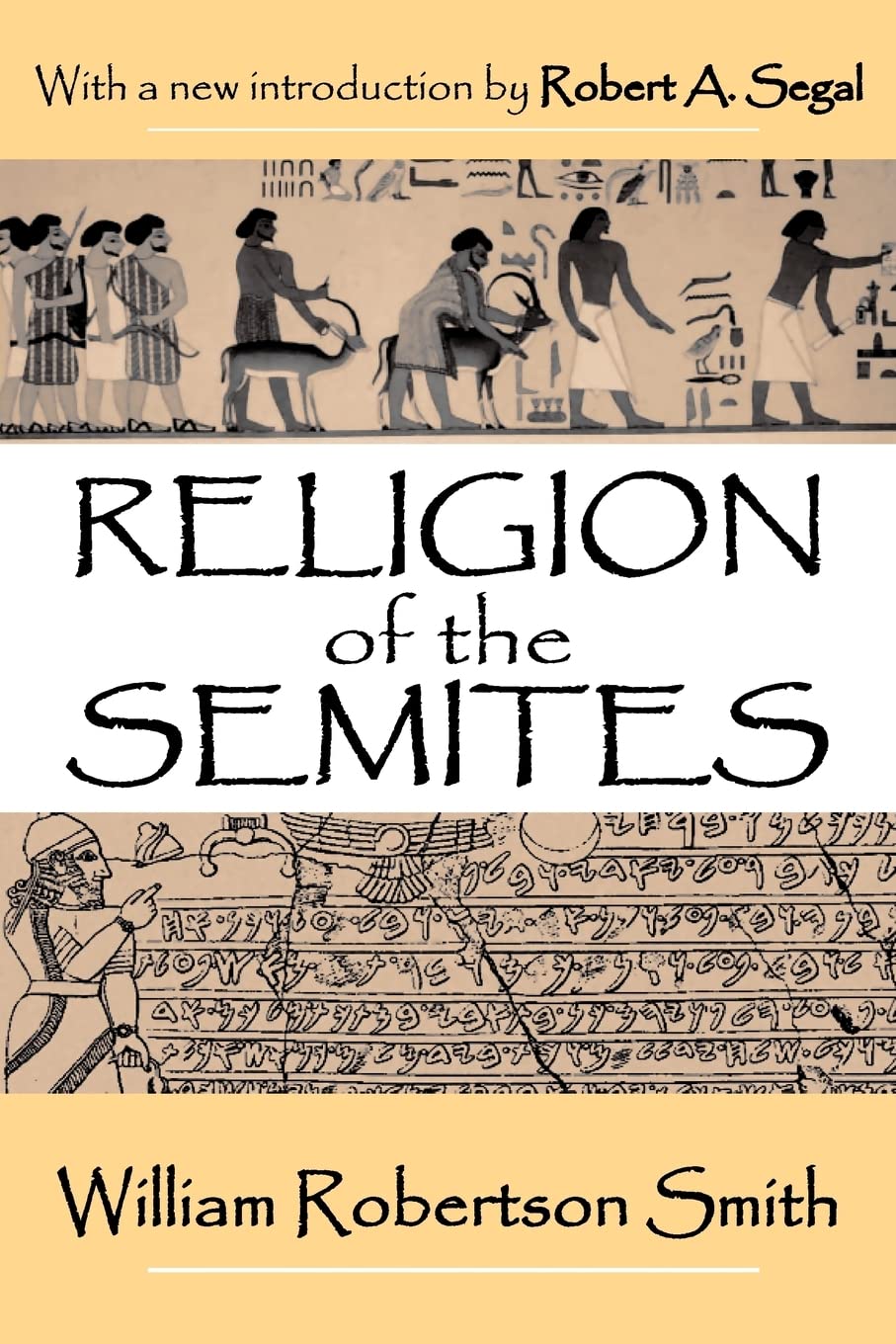
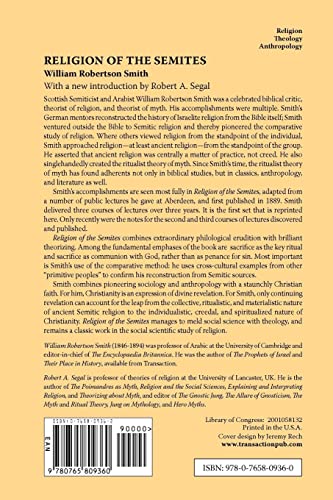
Scottish Semiticist and Arabist William Robertson Smith was a celebrated biblical critic, theorist of religion, and theorist of myth. His accomplishments were multiple. Smith's German mentors reconstructed the history of Israelite religion from the Bible itself; Smith ventured outside the Bible to Semitic religion and thereby pioneered the comparative study of religion. Where others viewed religion from the standpoint of the individual, Smith approached religionat least ancient religionfrom the standpoint of the group. He asserted that ancient religion was centrally a matter of practice, not creed, and singlehandedly created the ritualist theory of myth. Since Smith's time, the ritualist theory of myth has found adherents not only in biblical studies but in classics, anthropology, and literature as well.Smith's accomplishments are seen most fully in Religion of the Semites, adapted from a number of public lectures he gave at Aberdeen, and first published in 1889. Smith delivered three courses of lectures over three years. It is this set that is reprinted here. Only recently were the notes for the second and third courses of lectures discovered and published.Religion of the Semites combines extraordinary philological erudition with brilliant theorizing. Among the fundamental emphases of the book are the foci on sacrifice as the key ritual and nonancient sacrifice as communion with God rather than as penance for sin. Most important is Smith's use of the comparative method: he uses crosscultural examples from other "primitive peoples" to confirm his reconstruction from Semitic sources.Smith combines pioneering sociology and anthropology with a staunchly Christian faith. For him, Christianity is an expression of divine revelation. For Smith, only continuing revelation can account for the leap from the collective, ritualistic, and materialistic nature of ancient Semitic religion to the individualistic, creedal, and spiritualized nature of Christianity. Lectures on the Religion of the Semites manages to meld social science with theology, and remains a classic work in the social scientific study of religion.
⚠️ WARNING (California Proposition 65):
This product may contain chemicals known to the State of California to cause cancer, birth defects, or other reproductive harm.
For more information, please visit www.P65Warnings.ca.gov.