
Title
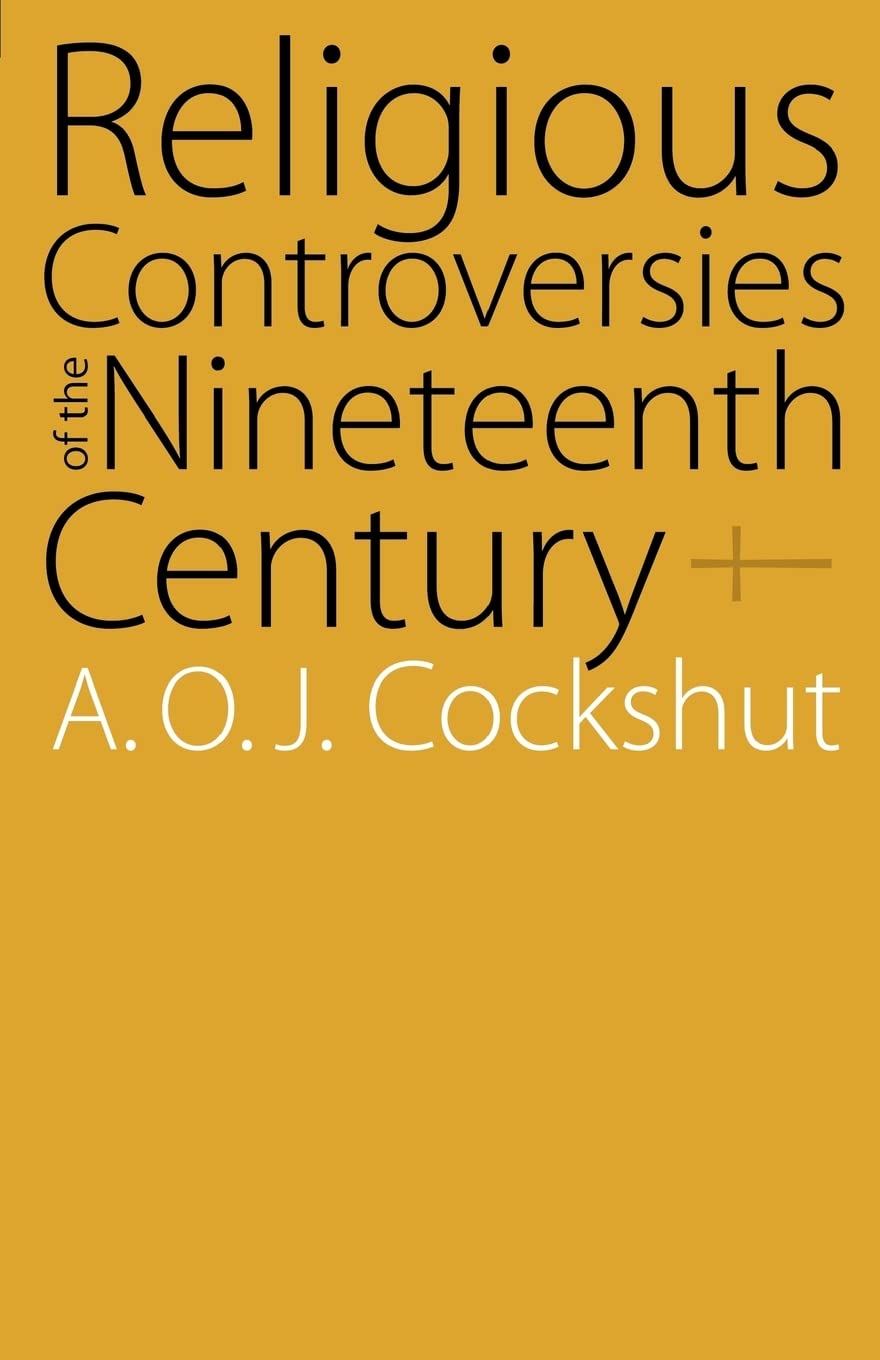
Religious Controversies Of The Nineteenth Century: Selected Documents,Used
Sold by Ergodebooks, an authorized reseller.
Returns accepted within 30 days | support@ergodebooks.com
Shipping Information
- Free Standard Shipping — United States only
- Processing Time: 3–5 business days
- Estimated Delivery: 6–10 business days after dispatch
- Double-boxed, fully insured & discreetly packaged
- Tracking number sent via email once dispatched
Returns & Refund
Returns accepted within 30 days of delivery.
Damaged or Defective Item
Free return shipping + replacement or full refund
Wrong Item Received
Free return shipping + replacement or full refund
Change of Mind
Return shipping at customer's expense · 25% restocking fee applies
Payment Option

The relation of the Church to the State and that of science to religion were at the core of the bitter religious controversies raging in Victorian England. The purpose of this book is to present as many as possible of the basic texts (and in particular those that are comparatively inaccessible) necessary to their understanding.The volume opens with William Wilberforce's eloquent appeal for Evangelical religion (1797), followed by two selections from the writings of the great precursor of the Oxford Movement, Samuel Taylor Coleridge. From Newman's Tracts for the Times, Mr. Cockshut has chosen two 1833 tractsNo. 1, which distinguishes between the constitutional position of the Church on the one hand and its essential spiritual authority on the other; and No. XI, in which Newman argues that the plain sense of the Bible points to the authority of the Churchand sections from the famous Tract XC (1841), Newman's attempt to reconcile the ThirtyNine Articles with Roman doctrines. The position of the Broad Church school, which was more concerned with the moral and educational influence of Christianity on the nation as a whole than with the drama of individual salvation, is suggested in two sermons by Thomas Arnold.Subsequent groups of selections deal with three 'fulldress Victorian controversies.' In 1847, Lord John Russell's nomination of Dr. Hampden as bishop of Hereford was challenged on the ground that the Church was entitled to be consulted before it had bishops imposed on it by the Crown, and raised the question: Was the Church of England a part of Christ's church or was it a department of State? Fifteen years later the Colenso casethe trial for heresy of the bishop of Natalraised an even more intractable problem: What was the relation of Church and State overseas? In the meanwhile the publication of Essays and Reviews (1860) and the prosecution for heresy of two of the contributors saw a lay court deciding doctrinal questions.In the concluding selections, the impact of Darwin's Origins of Species on contemporaneous religious thought is reflected in A. P. Stanley's sermon at the funeral of the geologist Sir Charles Lyell (whose work anticipated in part Darwin's Descent of Man) and in Frederick Temple's 1884 lecture 'The Relations between Religion and Science.' A general introduction by the editor puts the documents in context and each selection is preceded by a brief discussion.
⚠️ WARNING (California Proposition 65):
This product may contain chemicals known to the State of California to cause cancer, birth defects, or other reproductive harm.
For more information, please visit www.P65Warnings.ca.gov.