
Title
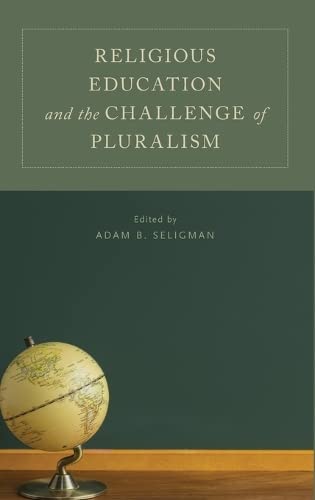
Religious Education and the Challenge of Pluralism,Used
Sold by Ergodebooks, an authorized reseller.
Returns accepted within 30 days | support@ergodebooks.com
Shipping Information
- Free Standard Shipping — United States only
- Processing Time: 3–5 business days
- Estimated Delivery: 6–10 business days after dispatch
- Double-boxed, fully insured & discreetly packaged
- Tracking number sent via email once dispatched
Returns & Refund
Returns accepted within 30 days of delivery.
Damaged or Defective Item
Free return shipping + replacement or full refund
Wrong Item Received
Free return shipping + replacement or full refund
Change of Mind
Return shipping at customer's expense · 25% restocking fee applies
Payment Option

The essays in this volume offer a groundbreaking comparative analysis of religious education, and state policies towards religious education in seven different countries and in the European Union as a whole. They pose a crucial question: can religious education contribute to a shared public sphere and foster solidarity across different ethnic and religious communities?In many traditional societies and even in what are largely secular European societies, our place in creation, the meaning of good and evil, and the definition of the good life, virtue, and moral action, are all primarily addressed in religious terms. It is in fact hard to come to grips with these issues without recourse to religious language, traditions, and frames of reference. Yet, religious languages and identities divide as much as unite, and provide a site of contestation and strife as much as a sense of peace and belonging Not surprisingly, different countries approach religious education in dramatically different ways. Religious Education and the Challenge of Pluralism addresses a pervasive problem: how can religious education provide a framework of meaning, replete with its language of inclusion and community, without at the same time drawing borders and so excluding certain individuals and communities from its terms of collective membership and belonging?The authors offer indepth analysis of such pluralistic countries as Bulgaria, Israel, Malaysia, and Turkey, as well as Cyprus a country split along lines of ethnoreligious difference. They also examine the connection between religious education and the terms of citizenship in the EU, France, and the USA, illuminating the challenges of educating our citizenry in an age of religious resurgence and global politics.
⚠️ WARNING (California Proposition 65):
This product may contain chemicals known to the State of California to cause cancer, birth defects, or other reproductive harm.
For more information, please visit www.P65Warnings.ca.gov.