
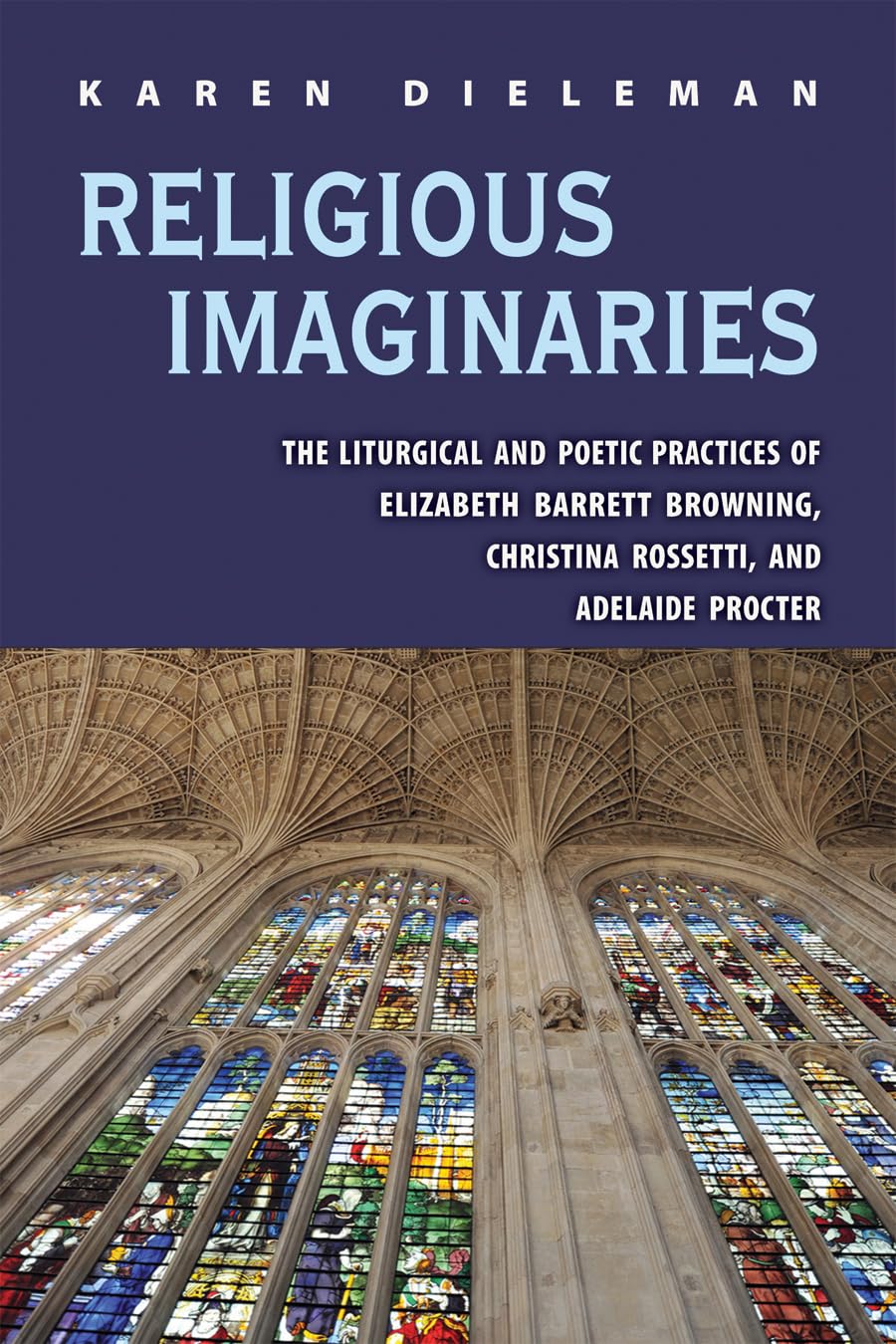
Title
Religious Imaginaries: The Liturgical and Poetic Practices of Elizabeth Barrett Browning, Christina Rossetti, and Adelaide Proct,Used
Sold by Ergodebooks, an authorized reseller.
Returns accepted within 30 days | support@ergodebooks.com
Shipping Information
- Free Standard Shipping — United States only
- Processing Time: 3–5 business days
- Estimated Delivery: 6–10 business days after dispatch
- Double-boxed, fully insured & discreetly packaged
- Tracking number sent via email once dispatched
Returns & Refund
Returns accepted within 30 days of delivery.
Damaged or Defective Item
Free return shipping + replacement or full refund
Wrong Item Received
Free return shipping + replacement or full refund
Change of Mind
Return shipping at customer's expense · 25% restocking fee applies
Payment Option

Explores liturgical practice as formative for how three Victorian women poets imagined the world and their place in it and, consequently, for how they developed their creative and critical religious poetics.This new study rethinks several assumptions in the field: that Victorian womens faith commitments tended to limit creativity; that the contours of church experiences matter little for understanding religious poetry; and that gender is more significant than liturgy in shaping womens religious poetry.Exploring the import of bodily experience for spiritual, emotional, and cognitive forms of knowing, Karen Dieleman explains and clarifies the deep orientations of different strands of nineteenthcentury Christianity, such as Congregationalisms high regard for verbal proclamation, Anglicanisms and AngloCatholicisms valuation of manifestation, and revivalist Roman Catholicisms recuperation of an affective aesthetic. Looking specifically at Elizabeth Barrett Browning, Christina Rossetti, and Adelaide Procter as astute participants in their chosen strands of Christianity, Dieleman reveals the subtle textures of these womens religious poetry: the different voices, genres, and aesthetics they create in response to their worship experiences. Part recuperation, part reinterpretation, Dielemans readings highlight each poets innovative religious poetics.Dieleman devotes two chapters to each of the three poets: the first chapter in each pair delineates the poets denominational practices and commitments; the second reads the corresponding poetry. Religious Imaginaries has appeal for scholars of Victorian literary criticism and scholars of Victorian religion, supporting its theoretical paradigm by digging deeply into primary sources associated with the actual churches in which the poets worshipped, detailing not only the liturgical practices but also the architectural environments that influenced the worshippers formation. By going far beyond descriptions of various doctrinal positions, this research significantly deepens our critical understanding of Victorian Christianity and the culture it influenced.
⚠️ WARNING (California Proposition 65):
This product may contain chemicals known to the State of California to cause cancer, birth defects, or other reproductive harm.
For more information, please visit www.P65Warnings.ca.gov.