
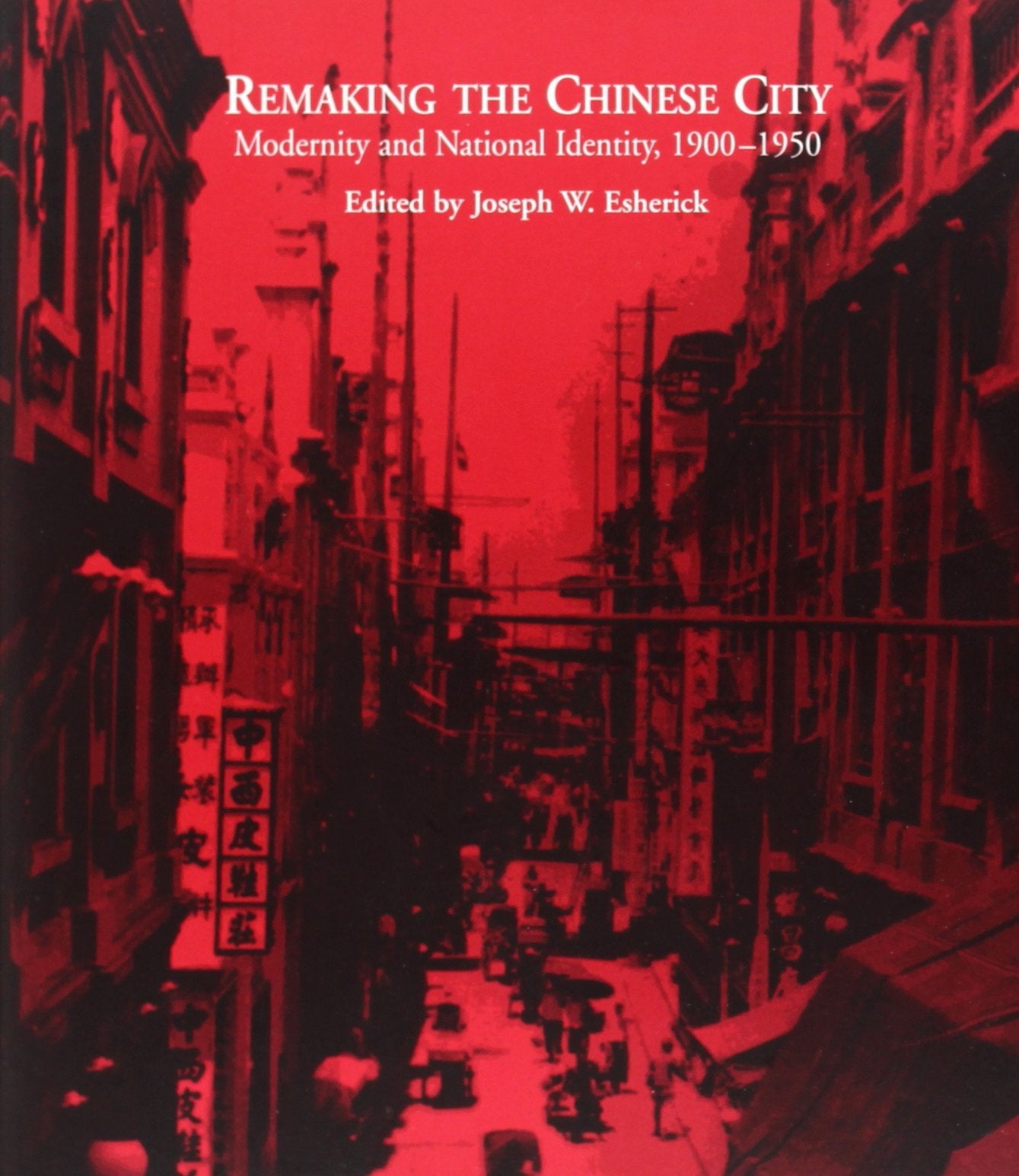
Title
Remaking The Chinese City: Modernity And National Identity, 19001950,Used
Sold by Ergodebooks, an authorized reseller.
Returns accepted within 30 days | support@ergodebooks.com
Shipping Information
- Free Standard Shipping — United States only
- Processing Time: 1–3 business days
- Estimated Delivery: 3–5 business days after dispatch
- Double-boxed, fully insured & discreetly packaged
- Tracking number sent via email once dispatched
- Orders over $250 require signature upon delivery. Taxes calculated at checkout.
Returns & Refund
Returns accepted within 30 days of delivery.
Damaged or Defective Item
Free return shipping + replacement or full refund
Wrong Item Received
Free return shipping + replacement or full refund
Change of Mind
Return shipping at customer's expense · 25% restocking fee applies
Payment Option

In China Today Skyscrapers Tower Over Ancient Temples, Freeways Deliver Lines Of Cars And Tour Buses To Imperial Palaces, Cinema Houses Compete With Old Theaters Featuring Peking Opera. The Disparity Evidenced In The Contemporary Chinese Cityscape Can Be Traced To The Early Decades Of The Twentieth Century, When Government Elites Sought To Transform Cities Into A New World That Would Be At Once Modern And Distinctly Chinese. Remaking The Chinese City Aims To Capture The Full Diversity Of Recent Chinese Urbanism By Examining The Modernist Transformations Of China'S Cities In The First Half Of The Twentieth Century.Collecting In One Place Some Of The Most Interesting And Exciting New Work On Chinese Urban History, This Volume Presents Thirteen Essays Discussing Ten Chinese Cities: The Commercial And Industrial Center Of Shanghai; The Old Capital, Beijing; The Southern Coastal City Of Canton; The Interior'S Chengdu; The Tourist City Of Hangzhou; The Utopian 'New Capital' Built In Manchuria During The Japanese Occupation; The Treaty Port Of Tianjin; The Nationalists' Capital In Nanjing; And Temporary Wartime Capitals Of Wuhan And Chongqing.Unlike Past Treatments Of Early Twentiethcentury China, Which Characterize The Period As One Of Failure And Decay, The Contributors To This Volume Describe An Exciting World In Constant And Fundamental Change. During This Time, The Chinese City Was Remade To Accommodate Parks And Police, Paved Roads And Public Spaces. Rickshaws, Trolleys, And Buses Allowed The Growth Of New Downtowns. Department Stores, Theaters, Newspapers, And Modern Advertising Nourished A New Urban Identity. Sanitary Regulations And Traffic Laws Were Enforced, And Modern Media And Transport Permitted Unprecedented Freedoms. Yet Despite Their Fondness For Things Western And Modern, Early Urban Planners Envisioned Cities That Would Lead The Chinese Nation And Preserve Chinese Tradition. The Very Desire For Modernity Led To The Construction Of A Visible And Accessible National Past And The Imagining Of A Distinctive National Future. In Their Investigation Of The National Capitals Of The Period, The Essays Show How Cities Were Reshaped To Represent And Serve The Nation. To Promote Tourism, Traditions Were Invented And Recycled For The Pleasure And Edification Of New Middleclass And Foreign Consumers Of Culture.Abundantly Illustrated With Maps And Photographs, Remaking The Chinese City Presents The Best And Most Current Scholarship On Modern Chinese Cities. Its Thoroughness And Detailed Scholarship Will Appeal To The Specialist, While Its Clarity And Scope Will Engage The General Reader.Contributors: Michael Tsin On Canton, Ruth Rogaski And Brett Sheehan On Tianjin, David Buck On Changchun, Kristin Stapleton On Chengdu, Liping Wang On Hangzhou, Madeleine Dong On Beijing, Charles Musgrove On Nanjing, Stephen Mackinnon On Wuhan, Lee Macisaac On Chongqing, And Jeffrey Wasserstrom And David Strand With Concluding Essays.
⚠️ WARNING (California Proposition 65):
This product may contain chemicals known to the State of California to cause cancer, birth defects, or other reproductive harm.
For more information, please visit www.P65Warnings.ca.gov.
- Q: How many pages does this book have? A: This book has two hundred eighty-eight pages. It's a comprehensive exploration of modern Chinese cities from 1900 to 1950.
- Q: What is the binding type of this book? A: The book is paperback bound. This makes it lightweight and easy to handle.
- Q: What are the dimensions of this book? A: The book measures seven point seventy-six inches in length, zero point seventy-five inches in width, and nine point zero two inches in height.
- Q: Who is the author of this book? A: The author of this book is Joseph W. Esherick. He is known for his expertise in Chinese history and urban studies.
- Q: What topics do the essays in this book cover? A: The essays cover ten Chinese cities and their modern transformations. They discuss urban identity, planning, and cultural shifts.
- Q: How is this book suitable for general readers? A: The book is written clearly and engagingly. It presents complex historical topics in an accessible manner.
- Q: Is this book appropriate for academic use? A: Yes, this book is suitable for academic use. It contains thorough scholarship and diverse perspectives on Chinese urban history.
- Q: What can I learn about Chinese urbanism from this book? A: You can learn about the modernist transformations and urban planning in early twentieth-century China. The book highlights cultural and social changes.
- Q: How should I store this book to keep it in good condition? A: Store the book in a cool, dry place away from direct sunlight. Avoid stacking heavy items on top of it to prevent damage.
- Q: Can I return this book if I'm not satisfied? A: Yes, you can return the book if you're not satisfied. Please refer to the retailer's return policy for specific instructions.
- Q: What if the book arrives damaged? A: If the book arrives damaged, contact the seller immediately for a replacement or refund. Keep all packaging materials for the return process.
- Q: Is this book suitable for beginners studying Chinese history? A: Yes, this book is suitable for beginners. It provides a comprehensive overview of key themes in modern Chinese history.
- Q: Does this book include illustrations? A: Yes, the book is abundantly illustrated with maps and photographs. These visual aids enhance understanding of the text.
- Q: Are there any specific contributors to this book? A: Yes, notable contributors include Michael Tsin, Ruth Rogaski, and Jeffrey Wasserstrom. They provide diverse insights on Chinese cities.
- Q: What is the main focus of this book? A: The main focus is on modernity and national identity in Chinese cities from nineteen hundred to nineteen fifty.
- Q: Is there any unique perspective presented in this book? A: Yes, it challenges past narratives of decay and highlights dynamic changes in urban landscapes during the early twentieth century.