If you have any questions, you are always welcome to contact us. We'll get back to you as soon as possible, withing 24 hours on weekdays.
Customer service
All questions about your order, return and delivery must be sent to our customer service team by e-mail at yourstore@yourdomain.com
Sale & Press
If you are interested in selling our products, need more information about our brand or wish to make a collaboration, please contact us at press@yourdomain.com
Help
If you have any questions, you are always welcome to contact us. We'll get back to you as soon as possible, withing 24 hours on weekdays.
Customer service
All questions about your order, return and delivery must be sent to our customer service team by e-mail at yourstore@yourdomain.com
Sale & Press
If you are interested in selling our products, need more information about our brand or wish to make a collaboration, please contact us at press@yourdomain.com
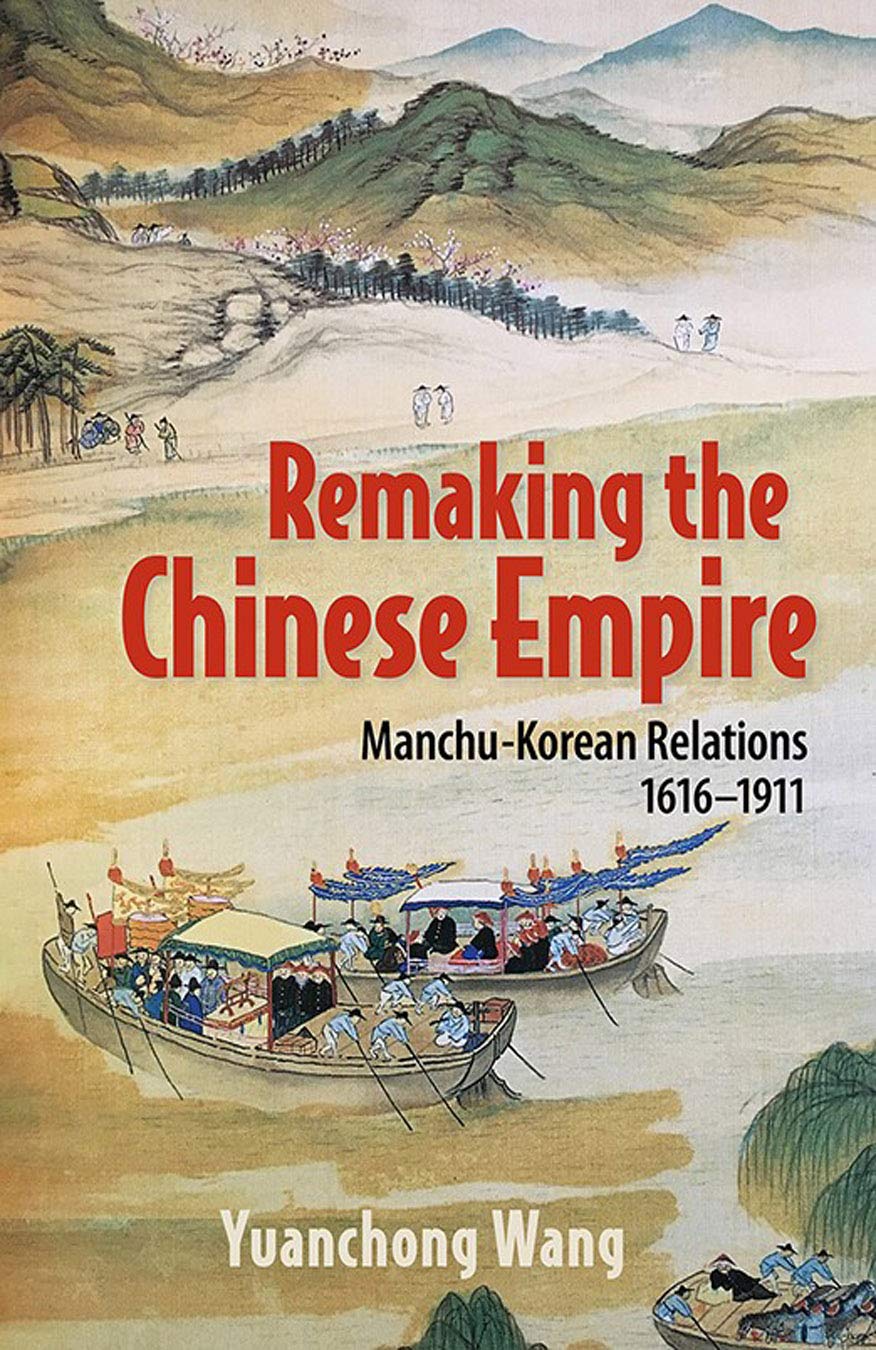
Remaking the Chinese Empire examines China's development from an empire into a modern state through the lens of SinoKorean political relations during the Qing period. Incorporating Korea into the historical narrative of the Chinese empire, it demonstrates that the Manchu regime used its relations with Choson Korea to establish, legitimize, and consolidate its identity as the civilized center of the world, as a cosmopolitan empire, and as a modern sovereign state.For the Manchu regime and for the Choson Dynasty, the relationship was one of mutual dependence, central to building and maintaining political legitimacy. Yuanchong Wang illuminates how this relationship served as the very model for China's foreign relations. Ultimately, this precipitated contests, conflicts, and compromises among empires and states in East Asia, Inner Asia, and Southeast Asia in particular, in the nineteenth century when international law reached the Chinese world. By adopting a longterm and crossborder perspective on high politics at the empire's core and periphery, Wang revises our understanding of the rise and transformation of the last imperial dynasty of China. His work reveals new insights on the clashes between China's foreign relations system and its Western counterpart, imperialism and colonialism in the Chinese world, and the formation of modern sovereign states in East Asia. Most significantly, Remaking the Chinese Empire breaks free of the established, national historyoriented paradigm, establishing a new paradigm through which to observe and analyze the Korean impact on the Qing Dynasty.
⚠️ WARNING (California Proposition 65):
This product may contain chemicals known to the State of California to cause cancer,
birth defects, or other reproductive harm.
For MAP (Minimum Advertised Price) violations and Intellectual Property (IP) or Trademark concerns, please contact:
support@ergodebooks.com
⚠️ California Proposition 65 Warning: Some products sold on this website may expose you to chemicals known to the State of California to cause cancer, birth defects, or other reproductive harm. For more information, visit www.P65Warnings.ca.gov.