If you have any questions, you are always welcome to contact us. We'll get back to you as soon as possible, withing 24 hours on weekdays.
Customer service
All questions about your order, return and delivery must be sent to our customer service team by e-mail at yourstore@yourdomain.com
Sale & Press
If you are interested in selling our products, need more information about our brand or wish to make a collaboration, please contact us at press@yourdomain.com
Help
If you have any questions, you are always welcome to contact us. We'll get back to you as soon as possible, withing 24 hours on weekdays.
Customer service
All questions about your order, return and delivery must be sent to our customer service team by e-mail at yourstore@yourdomain.com
Sale & Press
If you are interested in selling our products, need more information about our brand or wish to make a collaboration, please contact us at press@yourdomain.com
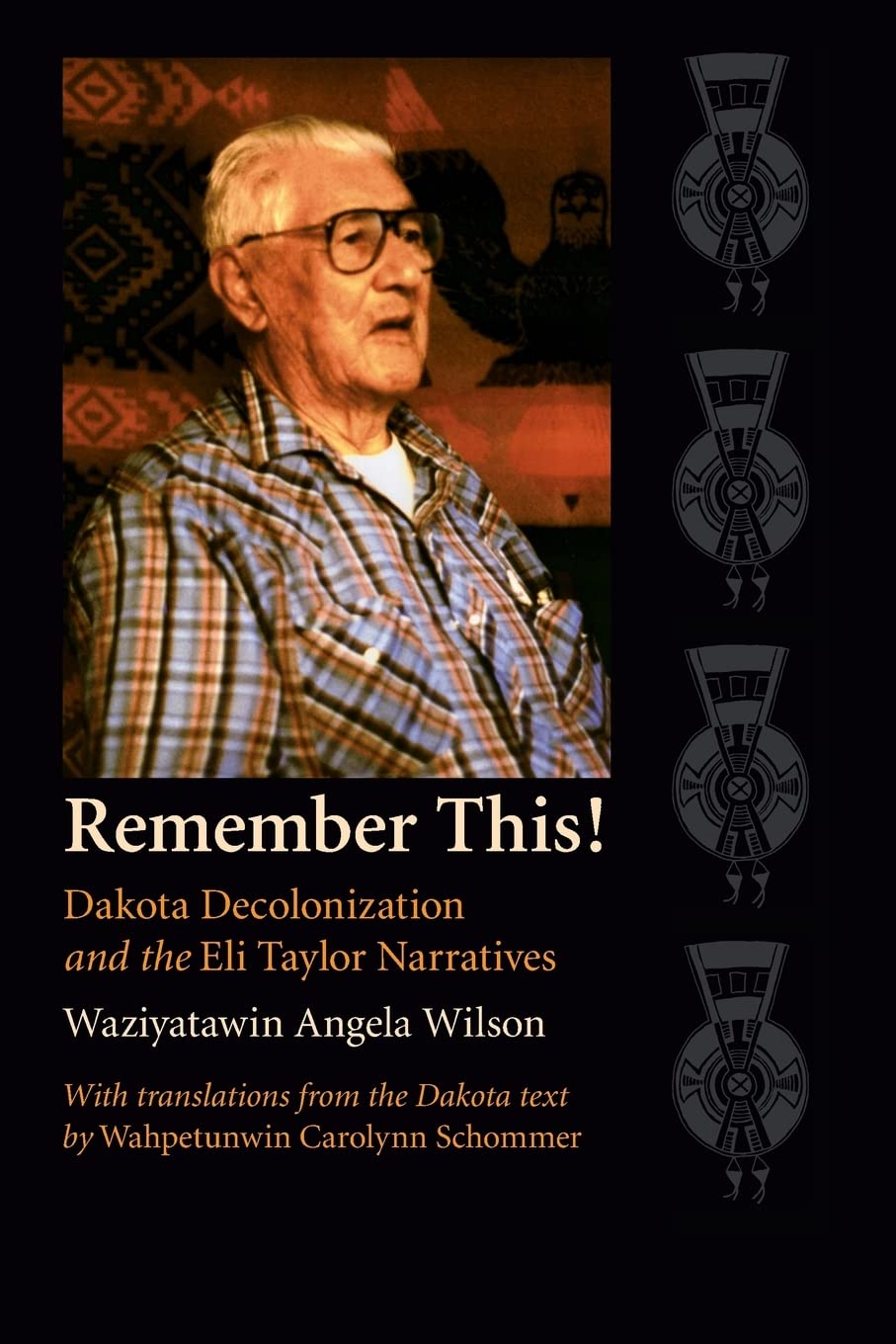
Situating Dakota language and oral tradition within the framework of decolonization, Remember This! Dakota Decolonization and the Eli Taylor Narratives makes a radical departure from other works in Indigenous history because it relies solely on Indigenous oral tradition for its primary sources and privileges Dakota language in the text.Waziyatawin Angela Wilson, both a historian and a member of the Dakota Nation, demonstrates the value of oral history in this bilingual presentation and skillful analysis of the stories told by the Dakota elder Eli Taylor (190899). Taylor lived on the Sioux Valley Reserve in Manitoba, Canada, and was adopted into Wilsons family in 1988. He agreed to tell her his story and to share his accounts of the origins, history, and life ways of the Dakotas. In these pages he tells of Dakota history, the United StatesDakota Conflict of 1862, Dakota values, and the mysterious powers of the world. Wilson gracefully contextualizes and complements Taylor's stories with a careful analysis and distillation of the narratives. Additionally, she provides an overview of Dakota history and a substantial critique of the use of oral accounts by mainstream historians.By placing Dakota oral tradition within the academic discipline of history, this powerful book illuminates the essential connections among Dakota language, history, and contemporary identity.
⚠️ WARNING (California Proposition 65):
This product may contain chemicals known to the State of California to cause cancer,
birth defects, or other reproductive harm.
For MAP (Minimum Advertised Price) violations and Intellectual Property (IP) or Trademark concerns, please contact:
support@ergodebooks.com
⚠️ California Proposition 65 Warning: Some products sold on this website may expose you to chemicals known to the State of California to cause cancer, birth defects, or other reproductive harm. For more information, visit www.P65Warnings.ca.gov.