
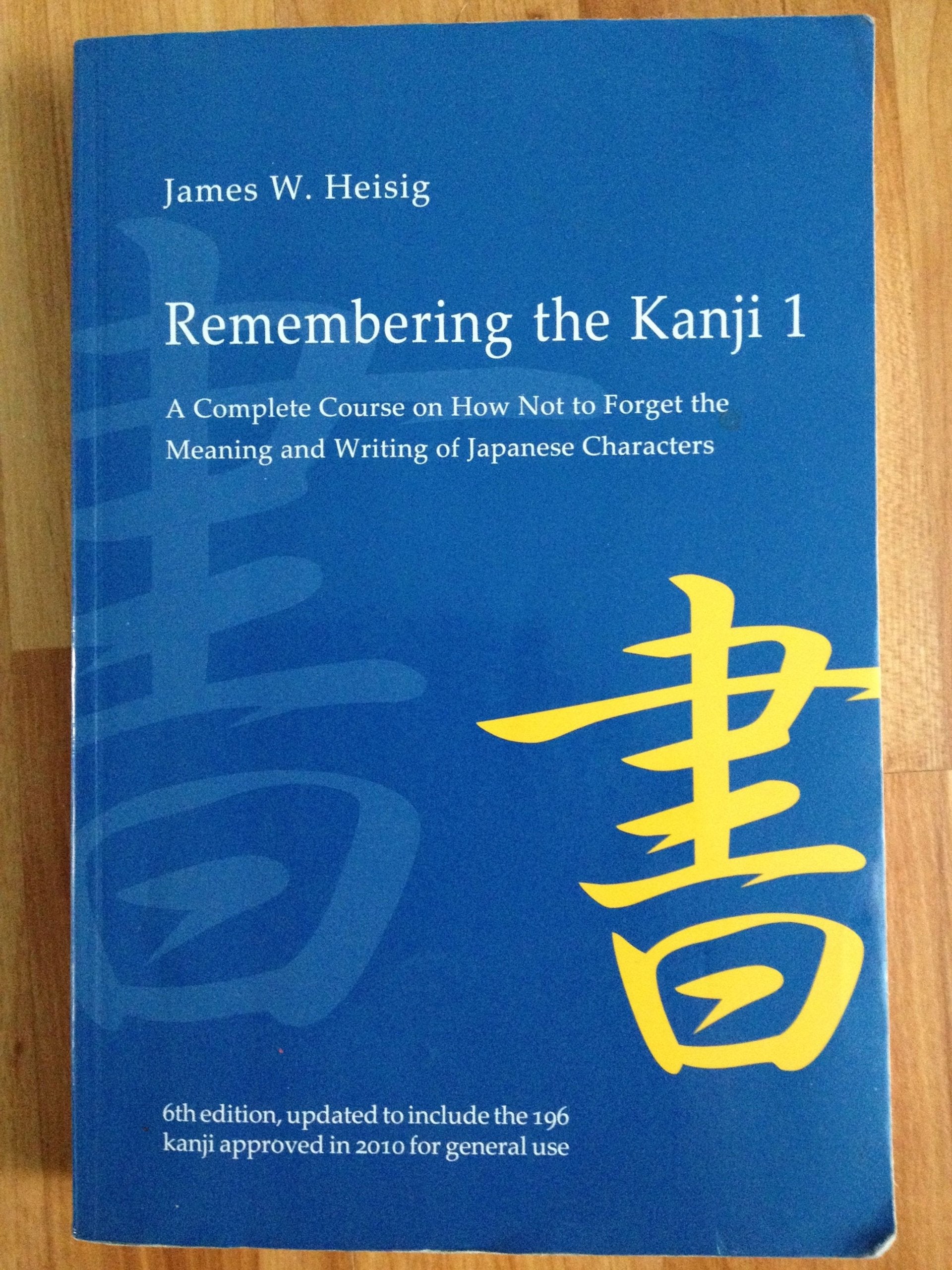
Title
Remembering the Kanji, Vol. 1: A Complete Course on How Not to Forget the Meaning and Writing of Japanese Characters (English an,Used
Sold by Ergodebooks, an authorized reseller.
Returns accepted within 30 days | support@ergodebooks.com
Shipping Information
- Free Standard Shipping — United States only
- Processing Time: 3–5 business days
- Estimated Delivery: 6–10 business days after dispatch
- Double-boxed, fully insured & discreetly packaged
- Tracking number sent via email once dispatched
Returns & Refund
Returns accepted within 30 days of delivery.
Damaged or Defective Item
Free return shipping + replacement or full refund
Wrong Item Received
Free return shipping + replacement or full refund
Change of Mind
Return shipping at customer's expense · 25% restocking fee applies
Payment Option

The aim of this book is to provide the student of Japanese with a simple method for correlating the writing and the meaning of Japanese characters in such a way as to make them both easy to remember. It is intended not only for the beginner, but also for the more advanced student looking for some relief from the constant frustration of how to write the kanji and some way to systematize what he or she already knows. The author begins with writing becausecontrary to first impressionsit is in fact the simpler of the two. He abandons the traditional method of ordering the kanji according to their frequency of use and organizes them according to their component parts or 'primitive elements.' Assigning each of these parts a distinct meaning with its own distinct image, the student is led to harness the powers of 'imaginative memory' to learn the various combinations that result. In addition, each kanji is given its own key word to represent the meaning, or one of the principal meanings, of that character. These key words provide the setting for a particular kanji's 'story,' whose protagonists are the primitive elements.In this way, students are able to complete in a few short months a task that would otherwise take years. Armed with the same skills as Chinese or Korean students, who know the meaning and writing of the kanji but not their pronunciation in Japanese, they are now in a much better position to learn to read (which is treated in a separate volume).
⚠️ WARNING (California Proposition 65):
This product may contain chemicals known to the State of California to cause cancer, birth defects, or other reproductive harm.
For more information, please visit www.P65Warnings.ca.gov.
- Q: What is the main focus of 'Remembering the Kanji, Vol. 1'? A: The book focuses on providing a simple method for correlating the writing and meaning of Japanese characters, making them easier to remember for both beginners and advanced students.
- Q: Who is the author of this book? A: The author of 'Remembering the Kanji, Vol. 1' is James W. Heisig.
- Q: What is the condition of the used book? A: The book is listed as being in good condition, indicating that it has been previously used but remains functional and readable.
- Q: How many pages does the book contain? A: The book contains a total of 460 pages.
- Q: What type of binding does this edition have? A: This edition of the book is a paperback binding.
- Q: What is the publication date of this book? A: The book was published on January 1, 2007.
- Q: Is this book suitable for beginners? A: Yes, the book is intended for beginners as well as more advanced students looking for a systematic approach to learning kanji.
- Q: Does the book include illustrations or images to aid learning? A: While the main focus is on text and key words, the method involves assigning distinct meanings and images to kanji components, which helps in memorization.
- Q: Can this book help with learning to read Japanese? A: Yes, the book equips students with skills that prepare them for reading Japanese characters, although reading is treated in a separate volume.
- Q: What makes this method different from traditional kanji learning? A: This method abandons traditional frequency-based ordering and instead organizes kanji according to their component parts, aiding in imaginative memory and quicker learning.