
Title
Renaissance Drama and the English Church Year,Used
Sold by Ergodebooks, an authorized reseller.
Returns accepted within 30 days | support@ergodebooks.com
Shipping Information
- Free Standard Shipping — United States only
- Processing Time: 3–5 business days
- Estimated Delivery: 6–10 business days after dispatch
- Double-boxed, fully insured & discreetly packaged
- Tracking number sent via email once dispatched
Returns & Refund
Returns accepted within 30 days of delivery.
Damaged or Defective Item
Free return shipping + replacement or full refund
Wrong Item Received
Free return shipping + replacement or full refund
Change of Mind
Return shipping at customer's expense · 25% restocking fee applies
Payment Option

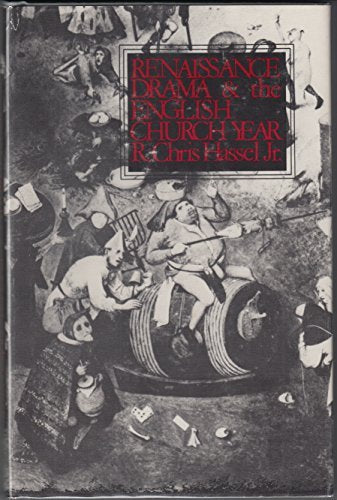
From dust jacket "This important and original study demonstrates the existence of a tradition of performance at court of plays and masques which are relevant to the feast day of their performance. Evidence has long been available in the records compiled by E. K. Chambers and Gerald Eades Bentley that the plays and masques which entertained the English court from 1510 through 1640 were likely to occur on the same ten festivals of the English church year. During Elizabeth's reign nine of every ten recorded court performances occur on one of the seven holy days between Christmas and Ash Wednesday. During the Jacobean and Caroline periods, Eastertide, Michaelmas, and Hallowmas performances are added to the tradition. For the entire period almost 70 percent of all recorded court performances take place on these ten religious festivals. Prompted by such facts, Professor Hassel has investigated the correlations between these performances and the thematic, imagistic, and narrative facets of their recurrent festival occasions. The selfconscious appropriateness of many of the masques to the festival on which they were commissioned to be performed lends the strongest support to his argument. The frequent appearance of festival motifs in plays with festival titles like Twelfth Night and Michaelmas Terme strengthens it still further. That plays of purely secular genesis (Olde Fortunatus, Volpone, The Winter's Tale, King Lear, The Merchant of Venice) are also so frequently apposite to their liturgical occasion even suggests that some might have been selected for their appropriateness an inference reinforced by the testimony of two seventeenthcentury witnesses to the general tradition, Griffin Higgs and The Stage Acquitted.
⚠️ WARNING (California Proposition 65):
This product may contain chemicals known to the State of California to cause cancer, birth defects, or other reproductive harm.
For more information, please visit www.P65Warnings.ca.gov.