
Title
Render unto the Sultan: Power, Authority, and the Greek Orthodox Church in the Early Ottoman Centuries,Used
Sold by Ergodebooks, an authorized reseller.
Returns accepted within 30 days | support@ergodebooks.com
Shipping Information
- Free Standard Shipping — United States only
- Processing Time: 3–5 business days
- Estimated Delivery: 6–10 business days after dispatch
- Double-boxed, fully insured & discreetly packaged
- Tracking number sent via email once dispatched
Returns & Refund
Returns accepted within 30 days of delivery.
Damaged or Defective Item
Free return shipping + replacement or full refund
Wrong Item Received
Free return shipping + replacement or full refund
Change of Mind
Return shipping at customer's expense · 25% restocking fee applies
Payment Option

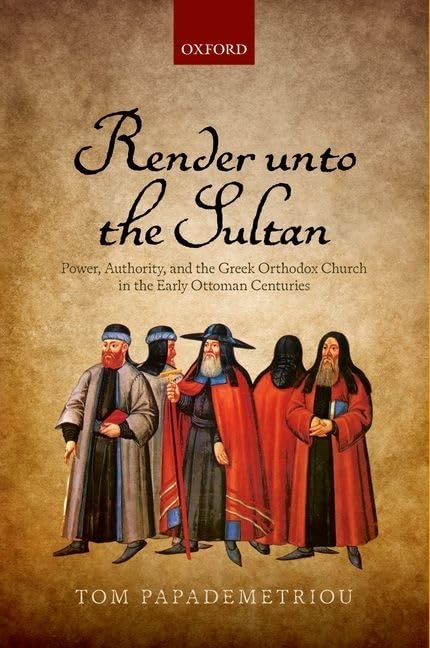
The received wisdom about the nature of the Greek Orthodox Church in the Ottoman Empire is that Sultan Mehmed II reestablished the Patriarchate of Constantinople as both a political and a religious authority to govern the postByzantine Greek community. However, relations between the Church hierarchy and Turkish masters extend further back in history, and closer scrutiny of these relations reveals that the Church hierarchy in Anatolia had long experience dealing with Turkish emirs by focusing on economic arrangements. Decried as scandalous, these arrangements became the modus vivendi for bishops in the Turkish emirates.Primarily concerned with the economic arrangements between the Ottoman state and the institution of the Greek Orthodox Church from the midfifteenth to the sixteenth century, Render Unto the Sultan argues that the Ottoman state considered the Greek Orthodox ecclesiastical hierarchy primarily as tax farmers (multezim) for cash income derived from the church's widespread holdings. The Ottoman state granted individuals the right to take their positions as hierarchs in return for yearly payments to the state. Relying on members of the Greek economic elite (archons) to purchase the ecclesiastical tax farm (iltizam), hierarchical positions became subject to the same forces of competition that other Ottoman administrative offices faced. This led to colorful episodes and multiple challenges to ecclesiastical authority throughout Ottoman lands.Tom Papademetriou demonstrates that minority communities and institutions in the Ottoman Empire, up to now, have been considered either from within the community, or from outside, from the Ottoman perspective. This new approach allows us to consider internal Greek Orthodox communal concerns, but from within the larger Ottoman social and economic context.Render Unto the Sultan challenges the long established concept of the 'Millet System', the historical model in which the religious leader served both a civil as well as a religious authority. From the Ottoman state's perspective, the hierarchy was there to serve the religious and economic function rather than the political one.
⚠️ WARNING (California Proposition 65):
This product may contain chemicals known to the State of California to cause cancer, birth defects, or other reproductive harm.
For more information, please visit www.P65Warnings.ca.gov.