If you have any questions, you are always welcome to contact us. We'll get back to you as soon as possible, withing 24 hours on weekdays.
Customer service
All questions about your order, return and delivery must be sent to our customer service team by e-mail at yourstore@yourdomain.com
Sale & Press
If you are interested in selling our products, need more information about our brand or wish to make a collaboration, please contact us at press@yourdomain.com
Help
If you have any questions, you are always welcome to contact us. We'll get back to you as soon as possible, withing 24 hours on weekdays.
Customer service
All questions about your order, return and delivery must be sent to our customer service team by e-mail at yourstore@yourdomain.com
Sale & Press
If you are interested in selling our products, need more information about our brand or wish to make a collaboration, please contact us at press@yourdomain.com
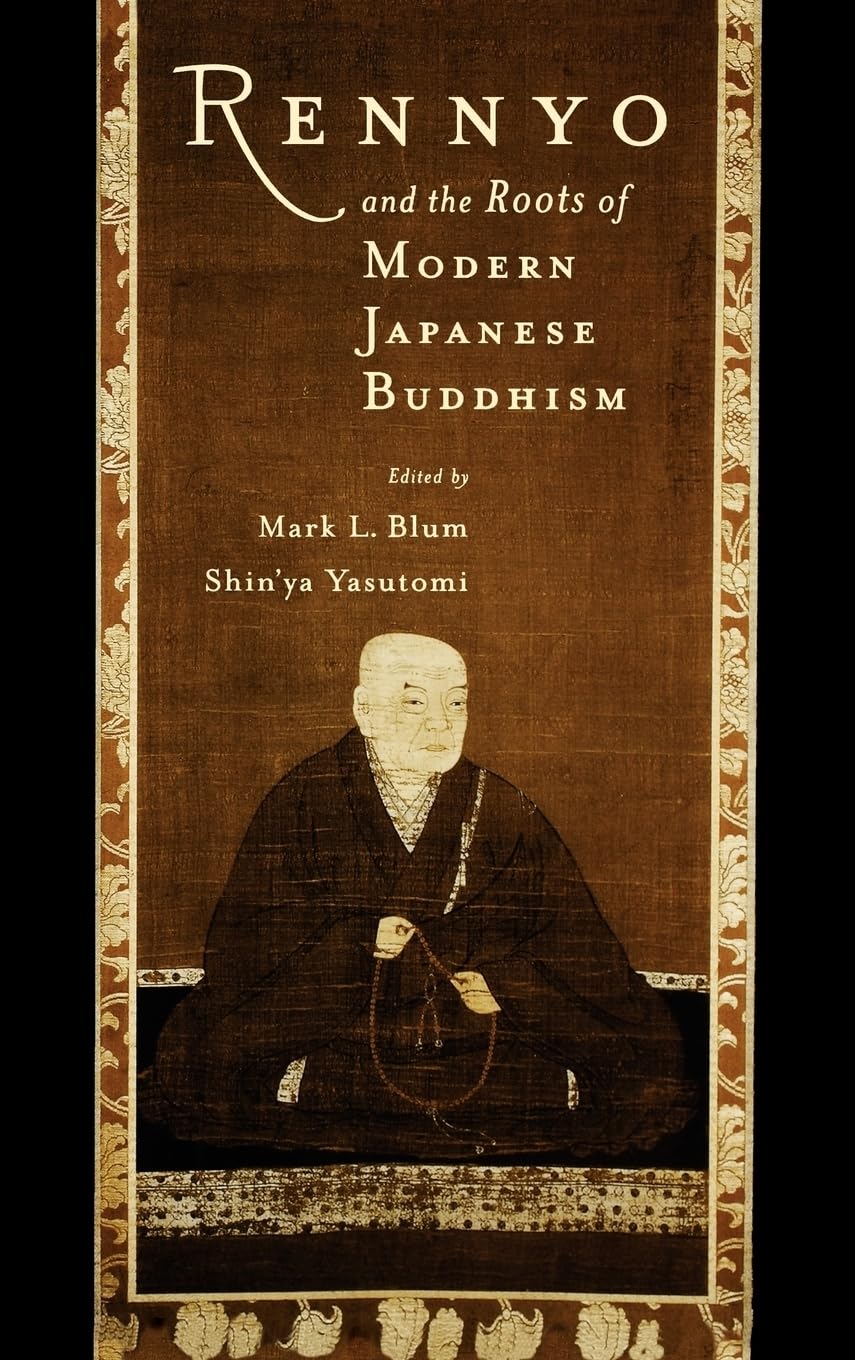
Rennyo Shonin (14151499) is considered the 'second founder' of Shin Buddhism. Under his leadership, the Honganji branch grew in size and power, becoming a national organization with great wealth and influence. Rennyo's success lay in conveying an attractive spiritual message while exerting effective administrative control. A savvy politician as well as religious leader, ennyo played a significant role in political, economic, and institutional developments. Though he is undeniably one of the most influential persons in the history of Japanese religion, his legacy remains enigmatic and largely overlooked by the West. This volume offers an assessment of Rennyo's contribution to Buddhist thought and the Honganji religious organization. A collection of 16 previously unpublished essays by both Japanese and nonJapanese scholars in the areas of historical studies, Shinshu studies, and comparative religion, it is the first book to confront many of the major questions surrounding the phenomenal growth of Honganji under Rennyo's leadership. The authors examine such topics as the source of Rennyo's charisma, the soteriological implications of his thought against the background of other movements in Pure Land Buddhism, and the relationship between his ideas and the growth of his church. This collection is an important first step in bringing this important figure to an audience outside Japan. It will be of significant interest to scholars in the fields of Japanese religion, Japanese social history, comparative religion, and the sociology of religion.
⚠️ WARNING (California Proposition 65):
This product may contain chemicals known to the State of California to cause cancer,
birth defects, or other reproductive harm.
For MAP (Minimum Advertised Price) violations and Intellectual Property (IP) or Trademark concerns, please contact:
support@ergodebooks.com
⚠️ California Proposition 65 Warning: Some products sold on this website may expose you to chemicals known to the State of California to cause cancer, birth defects, or other reproductive harm. For more information, visit www.P65Warnings.ca.gov.