
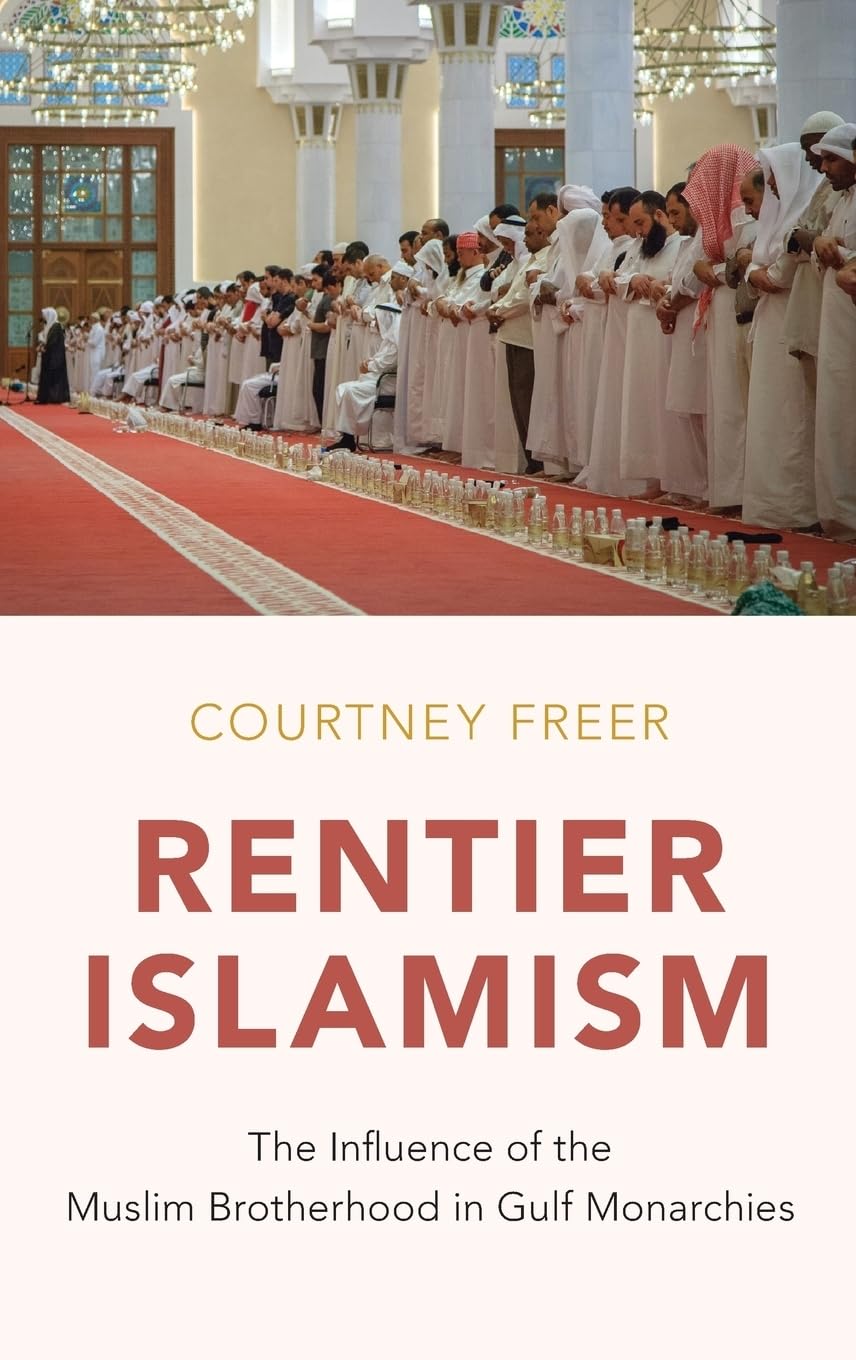
Title
Rentier Islamism: The Influence of the Muslim Brotherhood in Gulf Monarchies,Used
Sold by Ergodebooks, an authorized reseller.
Returns accepted within 30 days | support@ergodebooks.com
Shipping Information
- Free Standard Shipping — United States only
- Processing Time: 3–5 business days
- Estimated Delivery: 6–10 business days after dispatch
- Double-boxed, fully insured & discreetly packaged
- Tracking number sent via email once dispatched
Returns & Refund
Returns accepted within 30 days of delivery.
Damaged or Defective Item
Free return shipping + replacement or full refund
Wrong Item Received
Free return shipping + replacement or full refund
Change of Mind
Return shipping at customer's expense · 25% restocking fee applies
Payment Option

While scholars have long looked at the role of political Islam in the Middle East, it has been assumed that domestic politics in the wealthy monarchical states of the Arabian Gulf, socalled 'rentier states' where taxes are very low and oil wealth subsidizes the needs of citizens, are largely unaffected by such movements. However, the long accepted rentier theory has been shortsighted in overlooking the sociopolitical role played by Muslim Brotherhood affiliates in the superrentiers of Kuwait, Qatar, and the United Arab Emirates. While rentier state theory assumes that citizens of such states will form opposition blocs only when their stake in rent income is threatened, this book demonstrates that ideology, rather than rent, have motivated the formation of independent Islamist movements in the wealthiest states of the region.In the monarchical systems of Qatar and the UAE, Islamist groups do not have the opportunity to compete for power and therefore cannot use the ballot box to gain popularity or influence political life, as they do elsewhere in the Middle East. But, as this book points out, the division between the social and political sectors is often blurred in the socially conservative states of the Gulf, as political actors operate through channels that are not institutionalized. Simply because politics is underinstitutionalized in such states does not mean that it is underdeveloped; the informal realm holds considerable political capital. As such, the book argues that Brotherhood movements have managed to use the links between the social (i.e. informal personal networks) and political (i.e. government institutions) to gain influence in policymaking in such states.Using contemporary history and original empirical research, Courtney Freer updates traditional rentier state theory and argues that political Islam serves as a prominent voice and tool to promote more strictly political, and often populist or reformist, views supported by many Gulf citizens.
⚠️ WARNING (California Proposition 65):
This product may contain chemicals known to the State of California to cause cancer, birth defects, or other reproductive harm.
For more information, please visit www.P65Warnings.ca.gov.