
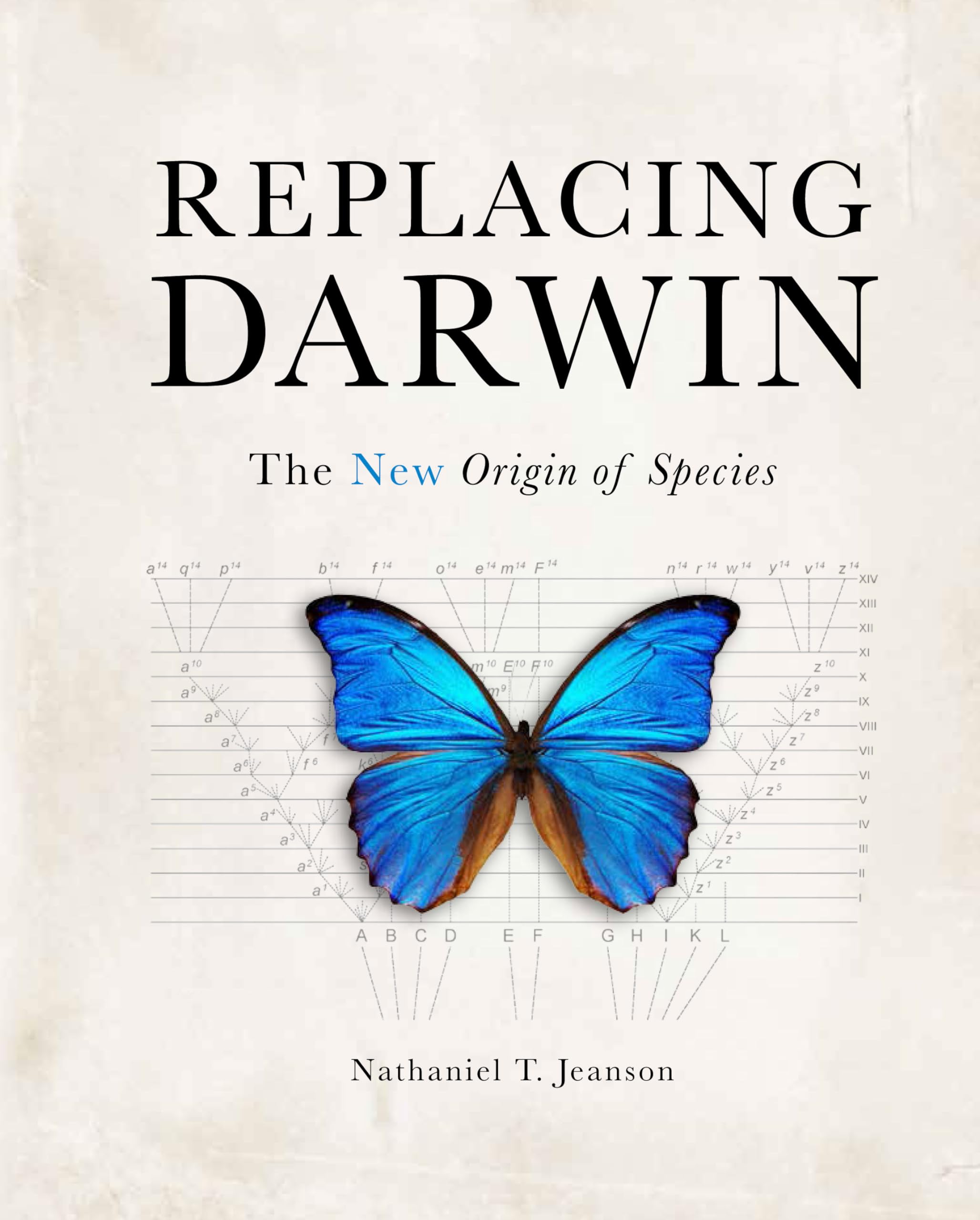
Title
Replacing Darwin: The New Origin of Species,New
Sold by Ergodebooks, an authorized reseller.
Returns accepted within 30 days | support@ergodebooks.com
Shipping Information
- Free Standard Shipping — United States only
- Processing Time: 3–5 business days
- Estimated Delivery: 6–10 business days after dispatch
- Double-boxed, fully insured & discreetly packaged
- Tracking number sent via email once dispatched
Returns & Refund
Returns accepted within 30 days of delivery.
Damaged or Defective Item
Free return shipping + replacement or full refund
Wrong Item Received
Free return shipping + replacement or full refund
Change of Mind
Return shipping at customer's expense · 25% restocking fee applies
Payment Option

If Darwin were to examine the evidence today using modern science, would his conclusions be the same?Charles Darwin's On the Origin of Species, published over 150 years ago, is considered one of history's most influential books and continues to serve as the foundation of thought for evolutionary biology. Since Darwin's time, however, new fields of science have emerged that simply give us better answers to the question of origins. With a Ph.D. in cell and developmental biology from Harvard University, Dr. Nathaniel Jeanson is uniquely qualified to investigate what genetics reveal about origins.The Origins Puzzle Comes TogetherIf the science surrounding origins were a puzzle, Darwin would have had fewer than 15% of the pieces to work with when he developed his theory of evolution. We now have a much greater percentage of the pieces because of modern scientific research. As Dr. Jeanson puts the new pieces together, a whole new picture emerges, giving us a testable, predictive model to explain the origin of species.A New Scientific Revolution BeginsSo what comes next? Darwin's theory of evolution may be one of science's longest standing, but the latest genetics research is casting doubt on it. Are these new discoveries cause to critically reexamine Darwin's theory? Replacing Darwin asks you to give serious consideration to modern scientific advances and reevaluate the problems that have surfaced in Darwin's theory of evolution.'
⚠️ WARNING (California Proposition 65):
This product may contain chemicals known to the State of California to cause cancer, birth defects, or other reproductive harm.
For more information, please visit www.P65Warnings.ca.gov.
- Q: What is the main premise of 'Replacing Darwin: The New Origin of Species'? A: The book explores whether Darwin's conclusions would still hold true today in light of modern scientific advancements, particularly in genetics.
- Q: Who is the author of this book? A: The author is Dr. Nathaniel Jeanson, who holds a Ph.D. in cell and developmental biology from Harvard University.
- Q: What are the key themes discussed in the book? A: Key themes include the limitations of Darwin's original theory, recent scientific discoveries in genetics, and the need to reevaluate evolutionary theory based on new evidence.
- Q: How many pages does the book have? A: The book contains 336 pages.
- Q: What is the binding type of the book? A: This edition of the book is available in hardcover.
- Q: When was 'Replacing Darwin' published? A: The book was published on October 9, 2017.
- Q: Is this book suitable for readers without a scientific background? A: Yes, the book is written for a general audience and aims to make complex scientific concepts accessible.
- Q: What are the major criticisms of Darwin's theory mentioned in the book? A: Dr. Jeanson discusses various modern genetic findings that challenge aspects of Darwin's theory, suggesting that it may not fully explain the origin of species.
- Q: Can this book be used as a reference for academic studies? A: Yes, it can serve as a reference for discussions on evolutionary biology, though it's recommended to consult multiple sources for a comprehensive understanding.
- Q: What makes this book different from traditional evolutionary texts? A: It presents a critical evaluation of Darwinian evolution through the lens of recent genetic research, proposing a new model for understanding species origins.